Flexport-Freightmate case tests ownership of AI freight data and workflows
The legal battle between Flexport and freight-tech start-up Freightmate is increasingly becoming a test case ...


HON: DEALS ON THE MENUEXPD: NEW RECORD XPO: THE REBOUNDCAT: PAYOUT UPDHL: LIGHTHOUSEMAERSK: ANOTHER UPGRADEFWRD: HEALTHY CORRECTION R: RYDER CEO SAYS R: AMAZON LTL ANNOUNCEMENTPLD: EV INFRASTRUCTURE PUSHDHL: RAMPING UP 'NEW ENERGY LOGISTICS' GXO: NEW WINAMZN: LTL SERVICE UPDATEGM: ENERGY PROVIDER MODEL
HON: DEALS ON THE MENUEXPD: NEW RECORD XPO: THE REBOUNDCAT: PAYOUT UPDHL: LIGHTHOUSEMAERSK: ANOTHER UPGRADEFWRD: HEALTHY CORRECTION R: RYDER CEO SAYS R: AMAZON LTL ANNOUNCEMENTPLD: EV INFRASTRUCTURE PUSHDHL: RAMPING UP 'NEW ENERGY LOGISTICS' GXO: NEW WINAMZN: LTL SERVICE UPDATEGM: ENERGY PROVIDER MODEL
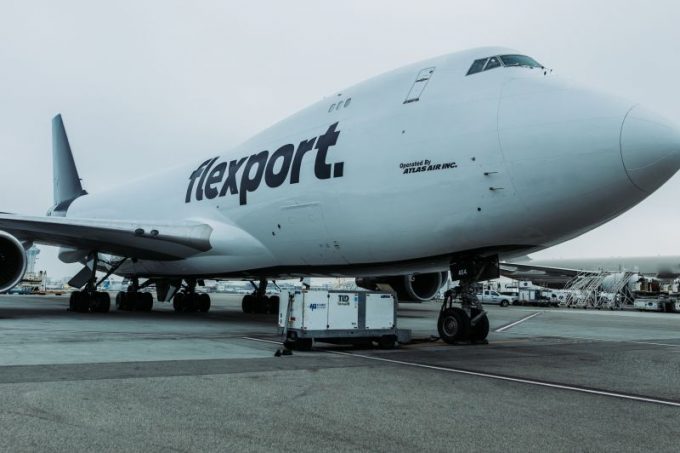
Double-digit changes in freighter capacity have revealed a swiftly adapting airfreight market, with companies such as Flexport developing new networks.
A 43% drop in low-value imports from China to the US in May, according to Aevean, has led to flurry of market changes as freighters turn away from China.
Flexport, which charters three 747Fs operated by Atlas Air, has had to make network changes – but its freighters are all busy.
“We had to change some of the routings, as they were heavily dependent on ecommerce,” explained president Sanne Manders.
“But they are in full rotation, and they fly for us 100%.”
While Flexport does not appear to have abandoned China altogether, with freighters visiting both Hong Kong and Shanghai in the past week, Seoul looks like a regular destination for all three aircraft, as does Taipei. Flexport is also serving Tokyo.
Earlier this year Flexport opened an office in Hanoi. But despite a reportedly strong market out of Vietnam, Flexport’s freighters have only served Hanoi once in the past week, in a routing which included Hong Kong, Seoul and Delhi.
Recent speculation that Flexport’s freighters had paused flying, based on one aircraft spending a few days on the ground, was rebuffed by Mr Manders.
“Sometimes they need maintenance, and here and there we do cancel a flight if needed. But they are in full rotation,” he confirmed. All have been active in the past week.
Vietnam to the US has seen a significant 15% bounce in freighter capacity in the last week, compared with an average of the previous four weeks, according to Rotate’s capacity database, while month on month it is up 16%. Capacity out of Vietnam last week versus the same period last year is up a staggering 291%.
Dimerco Express confirmed today that while rates are stable out of Vietnam, and the market is soft to Europe, freighter capacity out of the country to the US is on the rise.
“The 90-day suspension of the 46% US tariff on Vietnamese exports is set to expire on July 9 unless a new agreement is reached. As a result, airfreight rates may rise in early July.”
Taiwan to the US has seen capacity rise 5% in the past week, over the previous month’s average, with servers in high demand, while last week South Korea to US saw freighter capacity up 6%.
However, overall widebody capacity from Asia to North America last month was down 10% on the average of the previous four months, with freighter capacity down 13%. This was mostly due to less traffic on China-US, which saw a 20% fall in capacity last month – although last week it was up 1%.
Dimerco added that there is a backlog of cargo destined for Asia building at LAX, and rates on the routes are on the rise. It said that “perishable cargo outbound from LAX is being rerouted to San Francisco and Seattle, as freighters shift operations to handle increased volumes of fresh fruit”, while belly services are restricted, owing to summer passenger travel.
The drop out of China to the US has led to increased trade between Europe and Asia, with westbound capacity up 18% last month, while Asia-Middle East is up 17%. And the transatlantic has seen a boost of 7% westbound, and 2% eastbound.
Meanwhile the rush to get goods into the US ahead of the next tariff deadline in nine days is expected to lead to some congestion out of Singapore, said Dimerco, where manufacturing activity in electronics and garments has increased.
For uninterrupted access, sign in or sign up to The Daily News, Premium or The Loadstar Enterprise Plan.
Comment on this article