'Anchorage a mess': airlines look elsewhere as Canada pitches transpac role
Pressure is building on Anchorage’s role as the hub for transpacific cargo, as operational constraints ...


WTC: ANOTHER DIFFICULT WEEK CHRW: NEW PRODUCT LAUNCHDSV: LEADING THE DROP RXO: CRATERINGDSV: WHAT TO LIKEDSV: BULLISH BAMZN: 'AI EDGE'HD: HERE IS HOW IT LOOKSAMZN: REG RISKMAERSK: MOST HARMED
WTC: ANOTHER DIFFICULT WEEK CHRW: NEW PRODUCT LAUNCHDSV: LEADING THE DROP RXO: CRATERINGDSV: WHAT TO LIKEDSV: BULLISH BAMZN: 'AI EDGE'HD: HERE IS HOW IT LOOKSAMZN: REG RISKMAERSK: MOST HARMED
Forwarders have lambasted the Canadian government for its “late intervention” in the stand-off between dockers and their employers across the country’s ports.
Responding to labour minister Steve MacKinnon’s order to the Industrial Relations Board (IRB) this week to extend existing collective bargaining agreements and impose arbitration on all parties, one forwarder told The Loadstar: “The big question here is why the government waited until the damage was done before stepping in.
“It was clear to everyone they’d have to get involved and, once again, they waited until the strike was in full effect before coming to the rescue.
“Industry is pleased that goods will be moving again, but probably more annoyed that it’s kind of too late, the damage has been done.”
Despite the intervention, unions, including the Longshoremen’s CUPE Local 375 at the port of Montreal, have vowed to fight the action in the courts.
Similarly, the International Longshore and Warehouse Union Local 514, representing dockers in British Colombia, warned the government it would “not forget how employers and this federal Liberal government have attacked all of labour”.
The forwarder we spoke with said this action could impact the government’s relationship with unions, adding: “It’ll be interesting to see if the unions truly do remember this.”
Nor is this the first time Mr MacKinnon’s timing has been considered off, his August decision to use the IRB to resolve a dispute between rail workers and their employers was criticised.
As in the present situation, the labour minister forced members of the Teamsters Union into binding arbitration with railroads Canadian Pacific Kansas City (CPKC) and Canadian National (CN), again provoking unions, who said Mr MacKinnon had been “manipulated” by the carriers.
The forwarder said that situation had played out “almost exactly like this, with government getting involved too late… The difference here is timing, the port strike is in the busiest season”.
“I don’t think it’s a coincidence this has happened during the holiday rush. The impact will be significant. Unfortunately, the only ones who end up paying for all of this are consumers. That’s where all of the additional cost has to trickle down.”
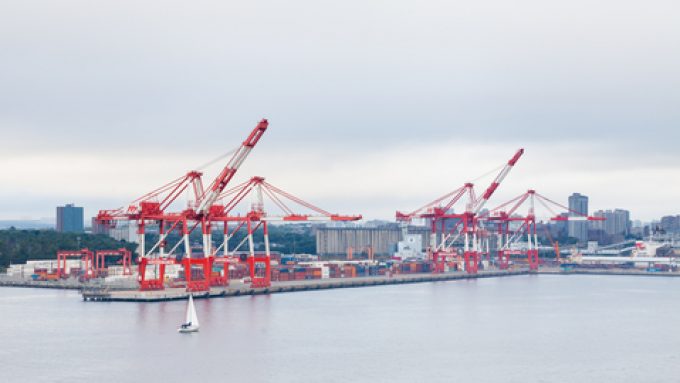
At Montreal, the dispute centres around terminals operated by Termont, responsible for some 40% of the port’s volume, and has been rumbling on since 31 October, with carriers having sought to bypass the situation by rerouting services into Halifax (pictured).
Warning “while there may be some progress” with this diversion, the forwarder said, carriers could face cargo backlogs there.
“It only works if union members in Halifax agree to offload the containers, because in previous scenarios other ports refused to accept ships originally destined for ports that were on strike.
“It’ll take weeks to clear the backlog and, during the holiday season rush to get goods on the shelves, a lot of them won’t make it on time, and the cost will increase significantly.”
In a warning to shippers, the forwarder noted that, while the cost may flow down to consumers, given the seasonality of products coming in, it may “be much more difficult to pass the cost on after the holiday rush”.

For uninterrupted access, sign in or sign up to The Daily News, Premium or The Loadstar Enterprise Plan.

Comment on this article