HMM upsizes plan to boost box shipping fleet with extra orders
HMM has decided it needs more ships to support its hub-and-spoke model for liner shipping. On ...

TFII: EARNINGS BEATCHRW: PUMMELED DSV: LACK OF TRUST WEIGHSDHL: NEW HIGH DHL: E-COMM DEAL SIGNEDF: NEW PROFIT STREAMCHRW: HEALTHY CORRECTIONDSV: TIME TO BUY INWTC: NO LUCKCHRW: 'NUCLEAR VERDICT'DSV: DEEP CUTKNIN: UPGRADED
TFII: EARNINGS BEATCHRW: PUMMELED DSV: LACK OF TRUST WEIGHSDHL: NEW HIGH DHL: E-COMM DEAL SIGNEDF: NEW PROFIT STREAMCHRW: HEALTHY CORRECTIONDSV: TIME TO BUY INWTC: NO LUCKCHRW: 'NUCLEAR VERDICT'DSV: DEEP CUTKNIN: UPGRADED
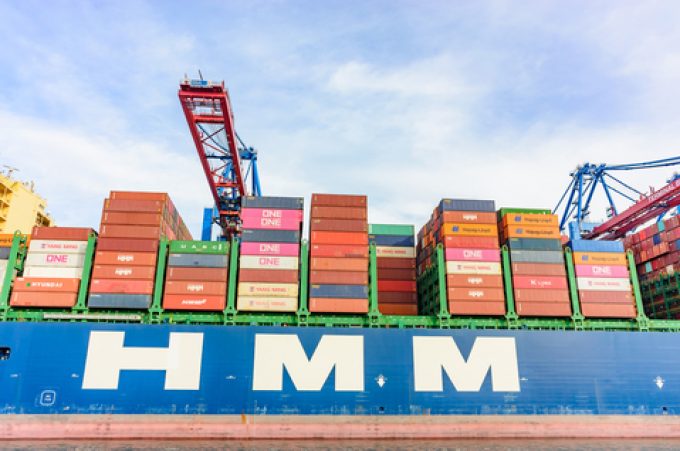
South Korea’s flagship container carrier HMM has designed its own online system to locate and exchange empty containers with other companies.
The company yesterday applied to patent its HMM Container Interchange Platform (HIP).
“HIP is a self-developed service to quickly exchange HMM’s containers with other companies’ to resolve the container imbalance by region,” said HMM.
It said an imbalance of container supply across regions remained a chronic problem, despite freight levels and port congestion having normalised. Back-haul shipments returning to Asia from Europe/North America are smaller than head-haul shipments, so empty containers pile up in Europe and North America.
And, as container processing was delayed during the height of the Covid-19 pandemic, there were contracts cancelled because domestic export companies could not find empty boxes.
Although the logistical bottlenecks have eased as global consumption and cargo volumes decreased, major ports and liner operators are still focusing on recovering containers by imposing demurrage fees if empty containers are not collected or returned on time.
In normal circumstances, shipping lines instruct logistics companies to return empty containers to depots. However, during the early wave of the pandemic, when there were insufficient yard workers to unpack them, certain ports found themselves overflowing with empty containers.
An HMM spokesperson told The Loadstar: “When we look through our service areas, not every location has sufficient container stock at all times. Shipping lines often experience an imbalance of containers between different regions. In that regard, we expect our container exchange platform will be beneficial to relocate our assets to container-deficient locations more efficiently.”
HMM said it believed exchanging empty containers in each region with other liner operators or forwarders through HIP would speed up container relocation, and plans to upgrade HIP to settle costs incurred in the container exchange process.
It added that developing HIP was part of the company’s KRW150bn ($119m), four-year digital transformation, which includes launching online reservation platform Hi Quote last year. Shippers can use Hi Quote to select a shipping schedule, load/discharge port, cargo type, container quantity, get a quote and make a reservation.
On 31 January, HMM also began piloting a chatbot service that enables customers to check their shipping schedule, reservation status, and cargo location. HMM plans to introduce AI-based fare solutions and inland transport services in the future.
For uninterrupted access, sign in or sign up to The Daily News, Premium or The Loadstar Enterprise Plan.
Comment on this article