South-east Asia the star exporter replacing ecommerce in air cargo
General cargo imports have emerged as the main driver of air freight demand on the ...


HD: HERE IS HOW IT LOOKSAMZN: REG RISKMAERSK: MOST HARMED KNIN: GO GREENDSV: CHANGING OF THE GUARD CHRW: OVERVALUEDGM: NEW BIZFDX: GROWING CAUTIOUSDHL: DOUBLE UPGRADEDSV: STOCK MARKET REACTION XOM: OIL INVENTORY WARNINGWTC: EBL DEAL DETAILSWTC: EBL DEAL
HD: HERE IS HOW IT LOOKSAMZN: REG RISKMAERSK: MOST HARMED KNIN: GO GREENDSV: CHANGING OF THE GUARD CHRW: OVERVALUEDGM: NEW BIZFDX: GROWING CAUTIOUSDHL: DOUBLE UPGRADEDSV: STOCK MARKET REACTION XOM: OIL INVENTORY WARNINGWTC: EBL DEAL DETAILSWTC: EBL DEAL
Rhenus Logistics is urging shippers to use its landbridge between Asia and Europe to ensure sufficient capacity during the peak season and Chinese new year.
But new data suggests that there could be less of a capacity crunch than in previous years.
Rhenus suggests that operational capacity in Asia is affected at Chinese new year, and points to its “guaranteed capacity” service.
“The landbridge service is perfectly positioned in the market to offer rapid and affordable distribution services for China and Europe,” said Spencer Davern, air & ocean director at Rhenus Logistics UK.
“Rhenus Landbridge offers an excellent alternative to air & ocean, while still providing door-to-door deliveries across China and Europe. With the busy months upon us, we advise customers to reach out and plan their deliveries in advance to ensure their goods get to where they need to be on time,” he added.
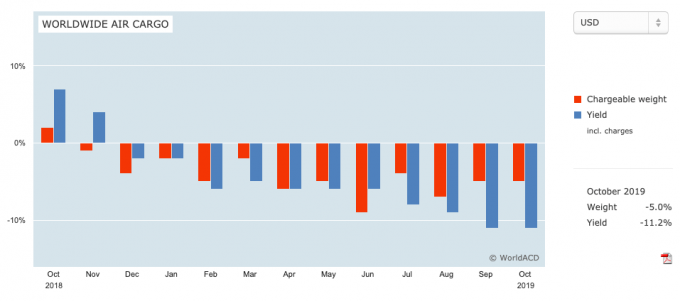
However, in air freight at least, data from WorldACD continues to indicate a soft market. While total chargeable weight increased 7% in October from September, the market remains 5% below last year’s volumes.
Yields in US dollars fell 11% year-on-year, while air cargo revenues were 16% lower. While the data does not reveal capacity, year-on-year lower demand would indicate that the market is softer than normal.
More recent data also revealed that volumes on Hong Kong to Europe at the start of November dropped from 7% lower year-on-year to 14% lower, in just two weeks. While capacity has dropped too, dynamic load factors remained the same, at 94%. Shanghai to Europe, meanwhile remained 11% lower than a year earlier, and with no capacity changes, the dynamic loadfactor stayed flat at 92%.
Between the two data sets, it seems likely that capacity, at a more reasonable price than during normal peaks, may not be too hard to come by.
Meanwhile, DHL’s Global Trade Barometer sees the overall trade environment contracting again.
For uninterrupted access, sign in or sign up to The Daily News, Premium or The Loadstar Enterprise Plan.
Comment on this article