Newbuild box ships bound for booming China-India trades
Containerships hitting the water this week have mostly gone to Far East-Mediterranean and Far East-Indian ...


VW: D-DAYPLD: KEEP PUSHINGDHL: NEW AIR SERVICEDHL: GUIDANCE UPGRADE REACTIONDHL: NEW HIGH TARGET ON THE STREET DSV: EXPECTATIONS RUN HIGH KNIN: DHL GUIDANCE UPGRADE READ-ACROSSKNIN: NEW OPENINGGM: TECH UPSIDEAMZN: BIG DEBT FUNDING ON ITS WAYDHL: 'STELLAR EXPRESS'DHL: UPDATEDHL: STRONG PRELIMINARY UPDATE
VW: D-DAYPLD: KEEP PUSHINGDHL: NEW AIR SERVICEDHL: GUIDANCE UPGRADE REACTIONDHL: NEW HIGH TARGET ON THE STREET DSV: EXPECTATIONS RUN HIGH KNIN: DHL GUIDANCE UPGRADE READ-ACROSSKNIN: NEW OPENINGGM: TECH UPSIDEAMZN: BIG DEBT FUNDING ON ITS WAYDHL: 'STELLAR EXPRESS'DHL: UPDATEDHL: STRONG PRELIMINARY UPDATE
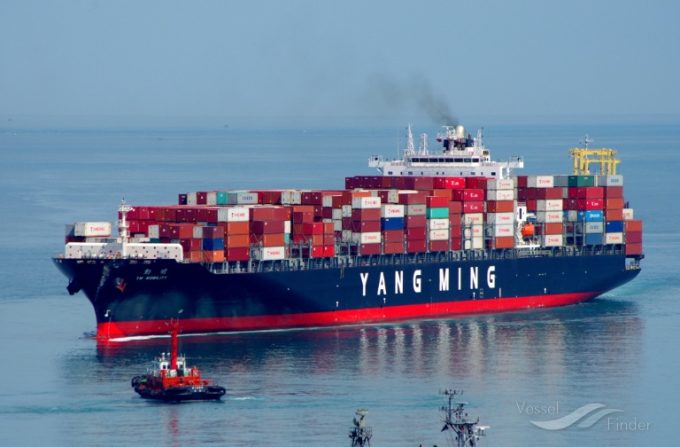
Late last week saw the release of a much-anticipated report on the explosion and fire on the 6,589 teu Yang Ming vessel YM Mobility at Ningbo port last August.
Engulfing nearby containers and warping the vessel’s structure, the fire was one of a salvo of ship fires that had also included a deadly engine room blaze on M/V Stride and, two months earlier, a week-long blaze on Maersk Frankfurt.
But the story of YM Mobility was rather different to that which shipping has, regrettably, become accustomed.
At precisely 1.46pm, a container on the ship’s starboard side exploded, taking several others with it, resulting in a fire that would burn through ten more.
The cause, according to the report, was a shipment of tert-butyl peroxybenzoate (TBPB), a Class 5.2 dangerous good, the chemical was packed in sealed 25-litre blue plastic drums and loaded in a reefer container.
The well-insulated reefer container was intended to keep the cargo cool, but, on this particularly hot day, the ambient temperatures were reaching extremes, in excess of 38°C. Loaded overnight, the reefer spent the morning on the deck in the sunshine, without being plugged in – and this was after it had spent some 15 days dwelling in the port, gathering heat.
As the container’s metal surface became warmer, its insulating thermal mass would have provided some protection for the cargo – to begin with. But with nowhere for the heat to escape, the container’s internal temperature would have shifted from that of a chiller to that of a broiler. And as the temperature rose, the TBPB underwent a process of heat decomposition.
At around 1.30pm, crew members on YM Mobility’s bow reported an odour and the sound of hissing from one of the containers. Soon after that, they observed yellowish-white smoke. The crew quickly evacuated.
Unable to cool, vent or release the building heat and pressure, the TBPB experienced rapid ‘thermal runaway’, generating its own heat, which fuelled the reaction in a sudden, exponential spike. Some 15 minutes after the chance observation by a crew member, like a vast high-explosive grenade, the container blew open, sending neighbouring containers careening over the side of the vessel.
CCTV footage from a building several blocks away shows a fireball and resulting mushroom cloud high enough in the sky to dwarf Ningbo’s STS cranes, while debris from obliterated containers rained down on the quayside. And the fire quickly spread to other containers on the ship, causing overall, some Rmb90m ($12.3m) of damage.
No one was reportedly injured – despite the crew having been on the bow moments before the blast, the evacuation had been a success.
Thermal runaway, particularly when associated with shipping, is generally discussed in the context of lithium-ion batteries. But the prolonged period without power, coupled with a heatwave with which port staff were unprepared to deal, enabled disastrous conditions to develop inside the reefer.
Indeed, compliance is mentioned extensively in the Chinese incident report, with indications that the relevant parties followed mandated procedures. But the incident is being held up as a case illustrating that compliance is not the same thing as safety.
Listen to our latest NIB Podcast to get up to date on the supply chain!

For uninterrupted access, sign in or sign up to The Daily News, Premium or The Loadstar Enterprise Plan.
Comment on this article
Joe Farrelly
April 22, 2025 at 2:28 pmThe container should have been pre cooled, prior to loading, gen set from warehouse to port and obviously plugged in at port and onboard.
How they can state procedure were followed, is quite unbelievable.
Kind Regards, Joe.