Transpacific trades in unchartered water, with tariff uncertainty at the helm
A declining sales-to-inventory ratio in the US has been one of the key reasons behind ...

PLD: PROPOSAL DETAILSPLD: FINAL OFFERDSV: ROAD CEO MATTERSDSV: VOLUME PROGRESSION IN SEA FREIGHT DSV: TIME TO INCREASE THE VOLUMES IN SEA FREIGHTDSV: HEADCOUNT DISCREPANCIESDSV: TRASHEDDSV: IT IS A MATTER OF TRUSTDSV: FREE CASH FLOW QUESTIONEDDSV: QUESTION TIMEDSV: CEO ON SCHENKER INTEGRATIONDSV: CFO PREPARED REMARKSDSV: CEO PREPARED REMARKSDSV: CONF CALL FWRD: SHOOTING UPKNX: TRADING UPDATE ON THE WAY GM: TRADING UPDATE OUTUPS: REMEMBER THE TAILWINDS
PLD: PROPOSAL DETAILSPLD: FINAL OFFERDSV: ROAD CEO MATTERSDSV: VOLUME PROGRESSION IN SEA FREIGHT DSV: TIME TO INCREASE THE VOLUMES IN SEA FREIGHTDSV: HEADCOUNT DISCREPANCIESDSV: TRASHEDDSV: IT IS A MATTER OF TRUSTDSV: FREE CASH FLOW QUESTIONEDDSV: QUESTION TIMEDSV: CEO ON SCHENKER INTEGRATIONDSV: CFO PREPARED REMARKSDSV: CEO PREPARED REMARKSDSV: CONF CALL FWRD: SHOOTING UPKNX: TRADING UPDATE ON THE WAY GM: TRADING UPDATE OUTUPS: REMEMBER THE TAILWINDS
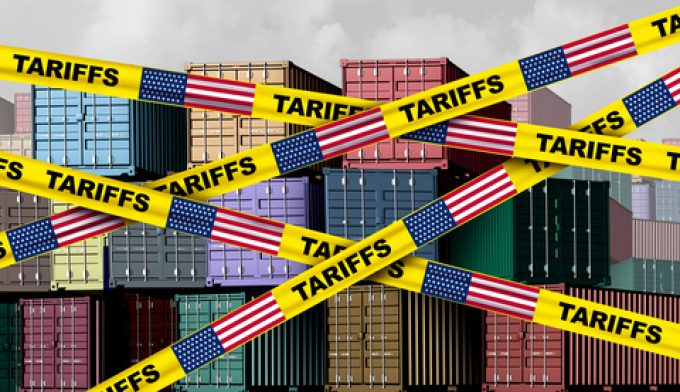
The US Supreme Court decision notwithstanding, the Trump White House is pushing ahead with its tariff policy, launching a “revitalised” inter-agency fraud task force to “aggressively” pursue those seeking to evade duties.
Announced by the Department of Justice (DoJ), the cross-agency Trade Fraud Task Force will comprise agents from Customs and Border Protection (CBP), the DoJ, and Immigration and Customs Enforcement (ICE).
Ivan Arvelo, assistant director at ICE for Global Trade, said: “Enforcing US international trade laws is one of our agency’s top priorities, and this revitalised and expanded Trade Fraud Task Force is a significant step in the right direction,”
“These enhanced efforts will undoubtedly add immense value and yield positive results in support domestic industry and businesses engaging in legal international commerce,” added Mr Arvelo.
The launch continues an administration theme of increased enforcement of breaches of the False Claim Act (FCA), with US law firm Arnold & Porter noting the DoJ had settled four cases related to trade fraud since the return of Donald Trump to the White House.
Two of those settlements related to an alleged failure of importers to correctly declare China as the origin of a shipment, the other two concerned an alleged misrepresentation of what the imports were – one of which resulted in a $12.4m penalty.
“The announcement suggests that DoJ’s task force will have a broad set of priorities for trade enforcement actions, including – but not limited to – the types of conduct seen in this year’s settlements,” the law firm added in a blog post.
“While it is likely to focus on attempts to evade tariffs, such as through mis-statements regarding country of origin, tariff classification, customs valuation, or application of additional duties, DoJ suggests it will not stop there.”
Law firm Morgan Lewis noted that, historically, the FCA had typically been called upon in relation to government contractors and the healthcare sector, but there had been a shift to being deployed against importers for purported customs violations.
Earlier this year, the DoJ stated that prosecuting tariff evasion had become one of its highest priorities, adding that it was expanding a ‘whistleblower’ scheme that rewarded those who provide leads relating to “trade, tariff, and customs fraud”.
For importers, the task force’s launch could not have come at a worse time, with a swirl of uncertainty surrounding the tariffs, including whether they will remain in place, and an absence of clarity over what precisely defined a transhipped good.
Writing on LinkedIn, customs platform Tru Identity CEO Hugh Pakula asked whether companies which manufacture overseas before shipping via a third country or split inventory for storage would be subject to these sanctions.
Given CBP’s long-standing difficulties in assessing duty on goods sent by those deliberately seeking to dodge country-of-origin rates, it is possible that this task force is in part a response to that.
For uninterrupted access, sign in or sign up to The Daily News, Premium or The Loadstar Enterprise Plan.
Comment on this article