Box ship attacked, Hormuz shut again, Middle East rates sail past pandemic peak
Gulf importers and their forwarders are once more turning to Middle East landbridge routes after ...


WTC: 'ONE RECORD'HLAG: EARNINGS GUIDANCE UPGRADE AAPL: GLOBAL SMARTPHONE SHIPMENTS VW: THE IMPACT VW: MASSIVE JOB CUTS CONFIRMEDEXPD: BULLISHCHRW: POSITIONING AHEAD OF EARNINGSAMZN: IN THE NUMBERSAMZN: PEOPLE MATTER UNTILVW: THE LAST CUT IS THE DEEPESTJBHT: GEARING UP VW: BUYING TIMER: BIG VOTE OF CONFIDENCEAAPL: BEARISH HEDGEYE
WTC: 'ONE RECORD'HLAG: EARNINGS GUIDANCE UPGRADE AAPL: GLOBAL SMARTPHONE SHIPMENTS VW: THE IMPACT VW: MASSIVE JOB CUTS CONFIRMEDEXPD: BULLISHCHRW: POSITIONING AHEAD OF EARNINGSAMZN: IN THE NUMBERSAMZN: PEOPLE MATTER UNTILVW: THE LAST CUT IS THE DEEPESTJBHT: GEARING UP VW: BUYING TIMER: BIG VOTE OF CONFIDENCEAAPL: BEARISH HEDGEYE
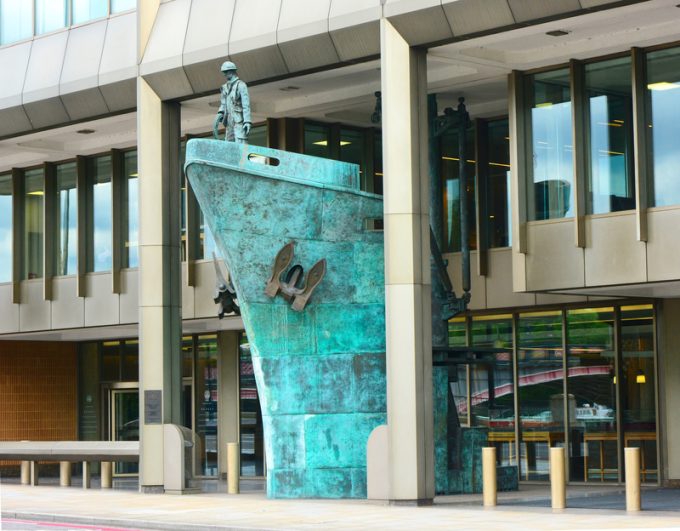
Council members of the International Maritime Organization found themselves bogged down in procedure at the start of this week’s hastily called extraordinary session, as they sought to beat some sort of path to easing the burden of the Hormuz crisis.
Having gathered at the UN body’s London HQ, it seemed some members – China and, somewhat more surprisingly, Cyprus, given the blows it has taken from Iran – questioned whether the situation warranted expedition of procedure.
Less surprising was the response from the likes of Qatar, Saudi Arabia, and the UAE, the latter coming out fighting, its representative to the IMO slamming “Iran’s malign actions” as “harmful to maritime activity and a threat to international security”.
The triumvirate supported moves for the IMO to provide some sort of framework that could help resolve the chaos for the maritime sector, as did Egypt, which said “the escalation we’re seeing in the region means we must use dialogue and diplomacy”.
Its representative added: “Egypt has sought to conduct extensive consultations with the various stakeholders and fraternal countries in the region, the ultimate goal is to protect the safety and security of international shipping and maritime routes.
“There must be a normal flow of traffic through these essential waterways. We restate a rejection of behaviour that hampers international shipping, because those hinderances are threat to stability in the region and to international trade.”
Perhaps reading too much into the phrase “these waterways”, The Loadstar speculated that Hormuz was secondary in the Egyptian representative’s mind, with the assault against Iran and the associated response upending a looming sense of hope for the country.
Officials at Egypt’s treasury had started the year buoyed that, perhaps, this may be the year Suez Canal transits resumed, and with those transits the billions in transit fees would swell the country’s coffers – but “that ain’t happening now”, one source said.
Where everyone agreed – and perhaps a show of hands demonstrating this agreement could have saved some time – was that “any attack on innocent seafarers or civilian shipping was totally unacceptable”.
To date, Iran’s response to the US/Israel war against it has resulted in the death of seven merchant mariners and left a further 20,000, across 3,000 vessels, trapped in the affected region.
What, however, can the IMO do?
As a UN body, its enforcement mechanism is in the hands of the UN Security Council – were one of that body’s veto wielders not the conflict’s primary aggressor, perhaps concord on a solution could be reached there. That seems unlikely now.
Had that veto wielding power (the US) not spent the past 15 months pummelling erstwhile (?) allies with insults and tariffs, perhaps it could find some support for a solution to ensure the safe and unimpeded passage of vessels.
The US certainly welcomed support of the IMO’s huddled masses in working out how to reopen the strait – it’s closure, in large part, being down to the actions the US has taken.
“We are looking to restore confidence and welcome complementary efforts to pursue the reopening of a safe maritime corridor and reopening the strait,” the US IMO representative said.
Creating a safe maritime corridor remains the aim for the UN body. Its capacity to achieve this will be tested by the mechanisms open to it and by the combatant parties involved in the strait’s closure.
Against this backdrop, it must be reiterated that lives have been lost, and lives and livelihoods are still very much at risk. At least the IMO hammered home the tool that maybe could have prevented the tragedy being borne out across the Middle East: dialogue.
Perhaps the dialogue set to take place over the coming 36 hours at the IMO’s London HQ could lead to some sort of solution that may even win the support of the government in Tehran.
For uninterrupted access, sign in or sign up to The Daily News, Premium or The Loadstar Enterprise Plan.

Comment on this article