Monopoly fears as MSC buys into Vizhinjam Port
Container transhipment momentum at India’s Vizhinjam Port is set to accelerate, with global liner leader ...


WMT: VERTICAL INTEGRATION IN LOGISTICSJBHT: HERE WE GOPG: STEADYEXPD: NEW RECORD BA: DELIVERIESMAERSK: BEAR CAMP MUSINGSCHRW: HIGHER HIGHS ON THE RADARWTC: 'ONE RECORD'HLAG: EARNINGS GUIDANCE UPGRADE AAPL: GLOBAL SMARTPHONE SHIPMENTS VW: THE IMPACT VW: MASSIVE JOB CUTS CONFIRMEDEXPD: BULLISH
WMT: VERTICAL INTEGRATION IN LOGISTICSJBHT: HERE WE GOPG: STEADYEXPD: NEW RECORD BA: DELIVERIESMAERSK: BEAR CAMP MUSINGSCHRW: HIGHER HIGHS ON THE RADARWTC: 'ONE RECORD'HLAG: EARNINGS GUIDANCE UPGRADE AAPL: GLOBAL SMARTPHONE SHIPMENTS VW: THE IMPACT VW: MASSIVE JOB CUTS CONFIRMEDEXPD: BULLISH
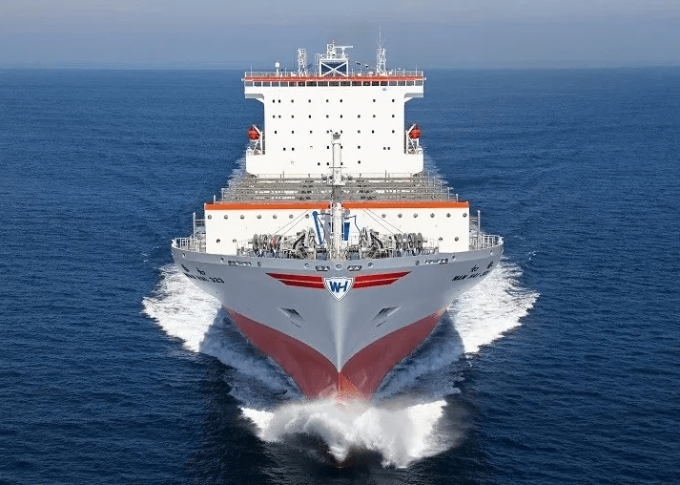
Fallout from the US-China tariff war is not stopping the container shipping ‘arms race’, as major shipping lines continue to invest heavily in large box ships.
Yesterday, Taiwan’s Wan Hai Lines ordered four 16,000 teu containerships in deals valued at around $800m.
Two will be built by HD Hyundai Samho and two by Samsung Heavy Industries, both South Korean shipbuilders.
The order underscores Wan Hai’s strategy to modernise and expand its fleet with larger, fuel-efficient vessels for long-haul trade routes and, while the transpacific has borne the brunt of US-China trade tension, Wan Hai is also active in the growing Asia-South America trade.
Wan Hai’s current fleet stands at 523,696 teu, the latest orders bring its orderbook to 34 ships totalling 380,000 teu capacity, bringing it closer to compatriot Yang Ming’s fleet of 711,393 teu and orderbook for eight ships of 101,500 teu.
While Wan Hai is clearly avoiding constructing ships in China, to steer clear of US president Donald Trump’s anger at Chinese shipbuilding prowess, major carriers MSC and Cosco do not intend to avoid Chinese shipyards, despite the growing geopolitical tensions.
MSC this week continued its aggressive fleet expansion programme, reportedly ordering six 22,000 teu ships from China’s Hengli Heavy Industry, at about $220m each. This follows an order in September by the Geneva-based carrier for 20 vessels at the same yard. With this latest deal, MSC edges closer to controlling a staggering 1,000 ships, maintaining its status as the world’s largest container carrier.
Cosco is also planning to commission additional box ships through Canadian tonnage provider Seaspan Corporation, which is expected to order 11,000 teu methanol dual-fuelled ships from China’s Shanghai Waigaoqiao Shipbuilding. The move appears a direct response to the recent actions by the US Trade Representative imposing fees on Chinese ship operators and China-built vessels.
For uninterrupted access, sign in or sign up to The Daily News, Premium or The Loadstar Enterprise Plan.
Comment on this article