Adani pushes to complete Mundra's fifth terminal as competition looms
Adani Ports (APSEZ) is pushing hard to open of its under-construction fifth container terminal (CT5) ...

GM: TRADING UPDATE OUTUPS: REMEMBER THE TAILWINDS PLD: NEW RELEASEPLD: OUCHVW: NEW PARTNERS SOUGHTEXPD: AIRCRAFT ON GROUND SERVICESTSLA: JUST AS VW STRUGGLESBA: NEW BIG ORDERBA: THE ORDERBOOK GROWSPLD: PUSHING FOR A DEAL PLD: TIME TO DEALEXPD: ANOTHER ALL-TIME HIGH CHRW: NEW RECORD DSV: AHEAD OF EARNINGS RELEASE JBHT: NEW HIGHS EVERYWHERE
GM: TRADING UPDATE OUTUPS: REMEMBER THE TAILWINDS PLD: NEW RELEASEPLD: OUCHVW: NEW PARTNERS SOUGHTEXPD: AIRCRAFT ON GROUND SERVICESTSLA: JUST AS VW STRUGGLESBA: NEW BIG ORDERBA: THE ORDERBOOK GROWSPLD: PUSHING FOR A DEAL PLD: TIME TO DEALEXPD: ANOTHER ALL-TIME HIGH CHRW: NEW RECORD DSV: AHEAD OF EARNINGS RELEASE JBHT: NEW HIGHS EVERYWHERE
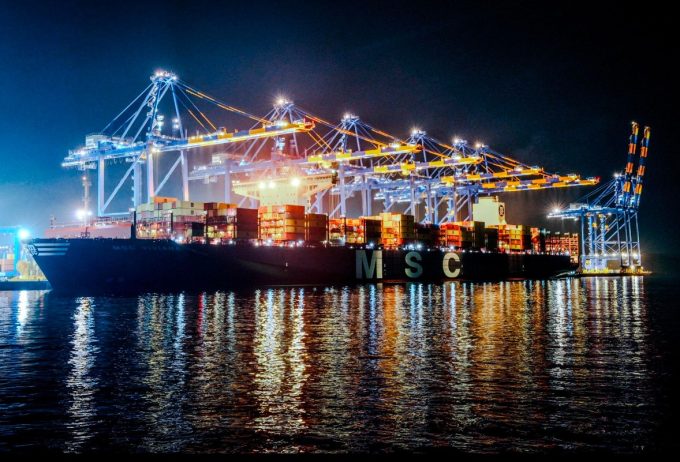
Container transhipment momentum at India’s Vizhinjam Port is set to accelerate, with global liner leader MSC agreeing to invest in Adani Ports’ flagship project.
A 49% stake buy, for some $1.4bn through MSC’s port arm, TiL, comes as Adani Ports (APSEZ) had embarked on a major phase 2 expansion programme at the new hub, costing some $1.7bn.
This will nearly quadruple box-handling capacity, from 1.6m teu to 5.8m teu by 2028.
MSC is already a terminal partner for APSEZ at Mundra and Ennore ports, driving significant synergistic benefits for both parties. Mundra is now a key regional hub for the Geneva-based carrier.
“The partnership [at Vizhinjam] enhances volume visibility and accelerates ramp-up at Vizhinjam port, supported by incremental cargo volumes,” APSEZ said in its announcement yesterday.
“The strategic collaboration represents the single largest foreign private investment in Indian port infrastructure and cements Vizhinjam’s emergence as a dominant transhipment gateway in the Indian Ocean region.”
APSEZ won 40-year concession rights from India’s Kerala state government for the development and operation of Vizhinjam in 2015, but was unable to kick-off phase 1 terminal operations until 2024, due to multiple hurdles, including pushback from the local fishing community.
The industry buzz around Vizhinjam’s potential stemmed from the site’s inherent strengths: an opportunity to accommodate mega-size containerships due to deep natural draught availability and close proximity to the international east-west shipping axis that requires minimal deviation for ships from their sailing routes.
The terminal is already operating at full capacity, as MSC’s transhipment vessel calls steadily shift away from Sri Lanka’s Colombo port.
“Vizhinjam port has emerged as a premier transhipment hub and ramped up at an unprecedented pace, becoming the first Indian port to earn the unique distinction of crossing 2 million teu within 18 months of operations,” said APSEZ CEO Ashwani Gupta.
Indian container industry players are also betting high on the collaboration, and believe MSC’s ownership involvement in Vizhinjam will boost India’s maritime hub ambitions to recapture cargo traditionally transhipped over other hubs, and gradually rebalance trade flows in South Asia.
Vizhinjam is touted as India’s first automated port, promising quicker vessel turnarounds. Last month, the port docked its 1,000th vessel, which included some 70 ultra-large container vessels (ULCVs).
However, the deal immediately generated some political controversy. State government leaders claimed no prior approval had been sought by APSEZ for the sale of its stake in the Vizhinjam terminal to a third party, as mandated by the concession agreement. Some also expressed concerns that a single shipping line operation at Vizhinjam could pose the danger of a monopoly forming in the long run.
For APSEZ, which has a pan-India network of 15 ports/terminals, leading terminal operations through strategic tie-ups with major container carriers is a tested model. The company commands some 15m teu of capacity across the Indian network, according to available data.
For uninterrupted access, sign in or sign up to The Daily News, Premium or The Loadstar Enterprise Plan.
Comment on this article