US rejects EU objections to proposed forced labour tariffs on imports
US trade representative (USTR) Jamieson Greer has pushed back on EU criticism that proposed tariffs ...


VW: D-DAYPLD: KEEP PUSHINGDHL: NEW AIR SERVICEDHL: GUIDANCE UPGRADE REACTIONDHL: NEW HIGH TARGET ON THE STREET DSV: EXPECTATIONS RUN HIGH KNIN: DHL GUIDANCE UPGRADE READ-ACROSSKNIN: NEW OPENINGGM: TECH UPSIDEAMZN: BIG DEBT FUNDING ON ITS WAYDHL: 'STELLAR EXPRESS'DHL: UPDATEDHL: STRONG PRELIMINARY UPDATE CHRW: STILL VERY BEARISH
VW: D-DAYPLD: KEEP PUSHINGDHL: NEW AIR SERVICEDHL: GUIDANCE UPGRADE REACTIONDHL: NEW HIGH TARGET ON THE STREET DSV: EXPECTATIONS RUN HIGH KNIN: DHL GUIDANCE UPGRADE READ-ACROSSKNIN: NEW OPENINGGM: TECH UPSIDEAMZN: BIG DEBT FUNDING ON ITS WAYDHL: 'STELLAR EXPRESS'DHL: UPDATEDHL: STRONG PRELIMINARY UPDATE CHRW: STILL VERY BEARISH
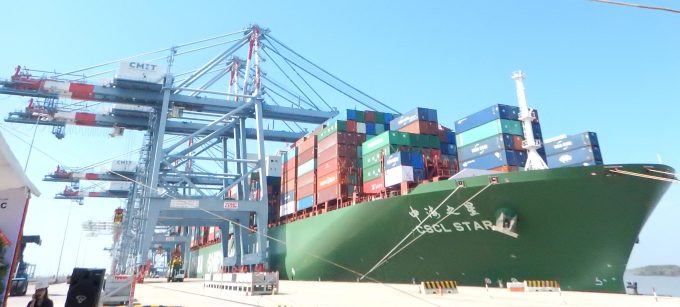
Reports have been circulating that the US Trade Representative (USTR) has designated the country’s Customs and Border Patrol (CBP) agency as responsible for collecting new fees the Trump administration has slapped on China-linked vessels calling at the nation’s ports.
By no means a particularly surprising piece of news, what marks it of particular interest is the absence of any official statement or confirmation – at least as far as The Loadstar and a bevy of shipping sources we contacted have been able to determine.
Indeed, while the reports note that the USTR has designated CBP responsible, they do not include any explanation, or redirect to a White House, USTR, or CBP statement; the best we’ve found being a Maritime Gateway story attributing the news to “industry sources”.
As myriad op-eds have noted, the absence of ‘officialdom’ appears part and parcel of this Trump administration and seen as providing the spectre of heightened costs and tariffs as a starting point for negotiations; so how does all this impact those vessel fees?
By way of a recap, from 14 October, Chinese-operated or owned vessels will face a $50 per net tonne fee, with Chinese-built vessels operated by non-Chinese carriers charged $33 per tonne or $250 per container, dependent on which generates the higher fee.
These charges will then rise to $140 for Chinese-operated and owned vessels and $33 per tonne or $250 per container for Chinese-built vessels operated by non-Chinese firms – with operational bans and the prospect of detained cargo for those that do not pay.
Chief analyst at eeSea Destine Ozuygur draws the two threads together by noting that vessel owners and operators now find themselves at a point where they are attempting to model possible service/trade structure fluctuations tethered to the fees.
“But it has become so hard to model on these announcements precisely because of a lack of official channels. Even when there is something akin to official notice, it’s touch-and-go, so what you model today might look completely different tomorrow,” she tells The Loadstar.
It is important to stress that the policy is not in itself universally reviled, many seeing it as a means to disrupt China’s pre-dominance in shipbuilding – it having landed 80% of all newbuild orders last year and holding 61% of the total global orderbook.
Others, of course, have expressed concern that the US slapping fees on 38% of the active box ship fleet will only serve to spike consumer costs, a situation which could worsen what has become something of a fragile global economic outlook.
And others still question if it will happen; sources having told The Loadstar they see it as just another Trump administration threat dangled in front of the Chinese to bring them, if not to heel, then certainly into a position the White House incumbent can sell as a win.
Asked if she could see any official announcement concerning CBP’s role in collecting fees, Ms Ozuygur described herself as a former “expert in US federal dataset navigation”, before noting that “they’ve really changed this around and cut back on crucial budgets”.
“I did find their weekly legal bulletins here, and this USTR bulletin from April on the proposed actions, but no updates,” she said, but if anyone out there has seen something formal from the administration, we at The Loadstar would love to see it.

For uninterrupted access, sign in or sign up to The Daily News, Premium or The Loadstar Enterprise Plan.
Comment on this article