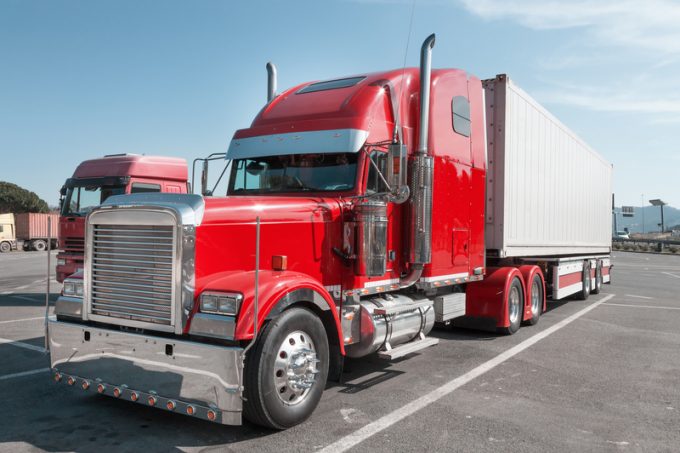
red US Truck with chrome parts
© Ilfede | Dreamstime.com

The troubled US trucking sector is showing unexpected signs of recovery.

According to the US Bank’s Freight Payment Index, shipment volumes rose 2.4% in the second quarter over Q1, while freight spend rose 1.2% – the first time in three years both segments have shown sequential gains.

Moreover, all five major US regions registered quarterly volume gains, led by a 6.7% increase in the south-west.

Year on year, however, the market was still down: shipment count sank 9.8%; while spend contracted 4.9%. However, the decrease in shipments was the smallest annual drop since Q3 23.

Bobby Holland, US Bank’s director of freight business analytics, described it as “a welcome shift after years of contraction”.

He added a note of caution, though, saying that “with all the tariff-related volatility potentially impacting trucking activity, it’s too soon to say if the market has turned the corner”.

Bob Costello, SVP and chief economist at the American Trucking Associations, also called the improvement “encouraging in light of uneven trends in manufacturing, port activity and housing”.

He added: “There are signs the industry is beginning to rebalance, even if the road ahead remains bumpy.”

The index authors suspected the rise in freight spend and volume over the first quarter was partly driven by tightening capacity, noting some fleets had exited the market and many large carriers had been taking steps to right-size capacity.

For much of the past 18 months, industry observers have suggested recovery would remain elusive until excess capacity had left the market. And the uncertain outlook in the wake of Washington’s trade policy may have accelerated the demise of struggling carriers.

According to the index, contract rates were unchanged from Q1, but spot rates retreated 1.4%. The authors attribute the fact that spend rose half as much as the increase in volume, in part to lower fuel surcharges. Year on year, the spend index was down 4.9%, while diesel prices retreated 7.8%.

The picture differed significantly across the regions. Year-on-year shipment counts rose 2.7% in the north-east and 1.3% in the west, but fell 9.2% in the Midwest, 10.8% in the south-east and a whopping 26% in the south-west. Sequentially, they all improved, ranging from 0.1% in the south-east to 6.7% in the south-west.

Spend in Q2 declined 0.7% in the west and 3.6% in the south-west, but increased in the north-east (up 1.3%), the Midwest (2.2%) and the south-east (3.8%). Year-on-year spend was up in the west (2.3%), the south-west (3.6%) and the north-east (3.7%), but fell 7.9% in the Midwest and 12.9% in the south-east.

Overall, the authors of the index concluded that “while it is too early to say the freight market has definitively turned the corner, the second quarter of 2025 was a very good step in the right direction”.

Other recently published indices look less promising, however. FTR’s Shippers Conditions Index (SCI) for May slipped 0.9%, after a -0.6% reading in April. For the past five months it has swayed between +1 and -1 values.

Avery Vise, FTR’s VP of trucking, explained: “The freight market was slightly weaker for shippers in May than the SCI might imply, because falling diesel prices offset mildly unfavourable capacity utilisation and freight rates. We expect more negative readings in the near term – in part due to higher fuel costs – but the outlook is more favourable for shippers by late this year.”

DAT’s most recent spot truckload numbers (for the week 20-26 July) indicate continuing softness. Average seven-day broker-to-carrier spot rates sank one cent for dry vans, reefer units, and flatbed trucks from the previous week. Van loads fell 6% and the line-haul rate slipped one cent, to $1.65 (excluding fuel). The loads-per-truck ratio was virtually unchanged.

If this is the road to recovery, it is a bumpy ride.

Comment on this article


You must be logged in to post a comment.
  • AAS USA

    August 17, 2025 at 6:05 am

    The U.S. trucking industry is indeed showing signs of recovery, but it’s a gradual and complex process rather than a sudden boom. After a challenging period marked by a freight recession and a glut of capacity, the market is slowly rebalancing.