Transpacific the top earner as a strong Q2 boosts OOCL revenue
OOCL’s second-quarter trading update has reinforced signs of a stronger-than-expected container shipping market, the carrier ...


PLD: TRADING UPDATE ON THE WAY KNIN: UPSIDEJBHT: STRONG TRADING UPDATE DSV: EVERY LITTLE HELPSJBHT: CEO REMARKS WMT: VERTICAL INTEGRATION IN LOGISTICSJBHT: HERE WE GOPG: STEADYEXPD: NEW RECORD BA: DELIVERIESMAERSK: BEAR CAMP MUSINGS
PLD: TRADING UPDATE ON THE WAY KNIN: UPSIDEJBHT: STRONG TRADING UPDATE DSV: EVERY LITTLE HELPSJBHT: CEO REMARKS WMT: VERTICAL INTEGRATION IN LOGISTICSJBHT: HERE WE GOPG: STEADYEXPD: NEW RECORD BA: DELIVERIESMAERSK: BEAR CAMP MUSINGS
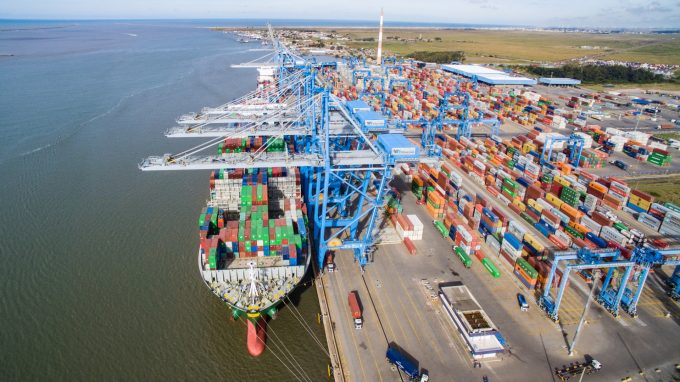
It has been something of a mixed bag on the Latin America-Europe trades this month, with forwarders seeing little in the way to inspire them, but the underlying figures suggest eastbound activity has maintained a healthy upturn on 2024’s numbers.
Per Container Trade Statistics (CTS), European volumes out to South American over the course of August and September – the latest months CTS has – remained broadly flat, a slight August uptick and slight September dip, between 161,000 and 163,000 teu.
AGL Cargo’s Jackson Campos told The Loadstar that as far as the Latin America-Europe trade was concerned, the situation was “stable”, as far as rates were concerned, but volume data suggested healthy European appetites.
Volumes out of South America to Europe have maintained a monthly growth of at least 4.1%, year on year, for the year to October, with upturns of 10.3% and 12.1% in March and April, respectively, leading to average monthly volumes of 176,400 teu.
At least for September the volume increase did not result in a marked increase in rates, with CTS pointing to a 1.5% year-on-year decline on the LatAm-Europe rates side after having recorded growth for the preceding five-month period.
Mr Campos said: “Rates are not surging but they are also not returning to their pre-pandemic lows, as carriers have been using blanked sailings and tight equipment control to prevent prices from falling.
“On Europe-LatAm, demand is steady, and space generally available, but schedule reliability is a bigger concern than cost. From Latin America, exports have remained strong and could create mild upward pressure on rates, depending on port conditions.”
At present, Mr Campos said, the real issue facing forwarders on the South America-Europe lanes was operational, noting that several Latin American ports are facing congestion and infrastructure limits that are affecting transit reliability.
This is confirmed by Hapag-Lloyd, which has updated its customer advisory for South America with a note that seven out of nine terminals in which it operates are contending with congestion and delays ranging from 15 to 74 hours.
Worst hit is Rio Grande’s Tecon Terminal, which is experiencing waiting times of 74 hours, which Hapag-Lloyd put down to yard congestion – it is at 83% utilisation – and “delays due to bad weather conditions”.
The classic rule of thumb is that yards operating above 75% are said to be congested, given the space needed to move boxes round – although, this figure differs on a yard by yard basis and by the make-up of the surrounding hinterland.
For uninterrupted access, sign in or sign up to The Daily News, Premium or The Loadstar Enterprise Plan.

Comment on this article