Gulf land bridge gains momentum as DHL, Oman Air and GWC expand capacity
Deal or no deal, logistics operators are expanding their Gulf land bridge offerings with DHL, ...

TSLA: JUST AS VW STRUGGLESBA: NEW BIG ORDERBA: THE ORDERBOOK GROWSPLD: PUSHING FOR A DEAL PLD: TIME TO DEALEXPD: ANOTHER ALL-TIME HIGH CHRW: NEW RECORD DSV: AHEAD OF EARNINGS RELEASE JBHT: NEW HIGHS EVERYWHEREPLD: STRONG DELIVERYJBHT: FAIR-VALUE CONSENSUS ESTIMATE AT ALL-TIME HIGH KNIN: AI TECH ADVANTAGEPLD: TRADING UPDATE ON THE WAY KNIN: UPSIDE
TSLA: JUST AS VW STRUGGLESBA: NEW BIG ORDERBA: THE ORDERBOOK GROWSPLD: PUSHING FOR A DEAL PLD: TIME TO DEALEXPD: ANOTHER ALL-TIME HIGH CHRW: NEW RECORD DSV: AHEAD OF EARNINGS RELEASE JBHT: NEW HIGHS EVERYWHEREPLD: STRONG DELIVERYJBHT: FAIR-VALUE CONSENSUS ESTIMATE AT ALL-TIME HIGH KNIN: AI TECH ADVANTAGEPLD: TRADING UPDATE ON THE WAY KNIN: UPSIDE
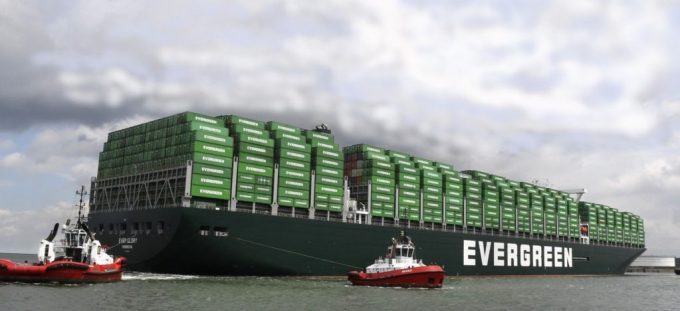
Evergreen’s fuel costs have risen 60% since the US/Israel-Iran war began on 28 February, but the seventh-largest liner operator believes a rebound in cargo volumes expected in Q2 will support long-haul freight rates.
The seventh-largest liner’s turnover in Q1 fell 21% on a year ago, to TW$65.6bn ($2.05bn), with freight revenue averaging $959 per teu, down 22% on Q1 25m said general manager Wu Kuang Huin on Friday.
Mr Wu said: “Transpacific cargo volumes were relatively weak in Q1 due to the US-China trade tensions. However, increased supply chain uncertainty has led shippers to stock up earlier, driving a rebound in cargo volumes expected in Q2, potentially bringing the peak season forward.
“We’re optimistic about our performance for Q2 and Q3, but fuel costs and geopolitical factors remain the biggest variables this year. Inflation could be pushed up if oil prices keep rising, further impacting on consumer demand, limiting visibility for Q4.”
He added that Evergreen would add capacity to emerging markets, where trade was growing faster than Asia-Europe and transpacific lanes.
TC Hsu, Evergreen’s EVP (operations), said bunkers now made up about 19% of the Taiwan line’s operating expenses, a proportion expected to increase in Q2 as oil prices rise.
However, Evergreen has relieved the impact of higher oil prices using a number of scrubber-fitted ships, which can burn cheaper high-sulphur fuel oil. It is said to have the highest proportion of these in the liner shipping industry, around 150, 72% of its owned fleet of 203 ships.
With the US and Iran blocking the Strait of Hormuz, three of Evergreen’s ships, two of 9,000 teu and one of 5,500 teu, are stranded in the gulf.
Evergreen’s planning head, Chen Wei-hsun, said the three ships were anchored in safe waters and have been receiving sufficient fuel and food.
Mr Chen added: “Although force majeure has been issued, the cargo has been unloaded at nearby ports and if customers are willing to pay, we can use local barges and land transport to deliver the containers to the destinations.”
He emphasised that cargo affected by the war accounted for only about 2% to 3% of Evergreen’s total volume, and ships on the original Far East-Persian Gulf services could be diverted to other routes, such as the Far East- Indian Subcontinent, with little impact on on services.
For uninterrupted access, sign in or sign up to The Daily News, Premium or The Loadstar Enterprise Plan.
Comment on this article