Fuel crisis drives hefty CMA CGM surcharges on India-Africa cargo
The increasing volatility of fuel prices is adding to logistics cost pressures for Indian exporters/importers. The ...

DHL: NEW HIGH TARGET ON THE STREET DSV: EXPECTATIONS RUN HIGH KNIN: DHL GUIDANCE UPGRADE READ-ACROSSKNIN: NEW OPENINGGM: TECH UPSIDEAMZN: BIG DEBT FUNDING ON ITS WAYDHL: 'STELLAR EXPRESS'DHL: UPDATEDHL: STRONG PRELIMINARY UPDATE CHRW: STILL VERY BEARISH PLD: 'MOST PREFERRED'ZIM: DEAL OR NO DEALWTC: MOMENTUMDAC: PAYOUTMAERSK: RETURN TO SUEZ
DHL: NEW HIGH TARGET ON THE STREET DSV: EXPECTATIONS RUN HIGH KNIN: DHL GUIDANCE UPGRADE READ-ACROSSKNIN: NEW OPENINGGM: TECH UPSIDEAMZN: BIG DEBT FUNDING ON ITS WAYDHL: 'STELLAR EXPRESS'DHL: UPDATEDHL: STRONG PRELIMINARY UPDATE CHRW: STILL VERY BEARISH PLD: 'MOST PREFERRED'ZIM: DEAL OR NO DEALWTC: MOMENTUMDAC: PAYOUTMAERSK: RETURN TO SUEZ
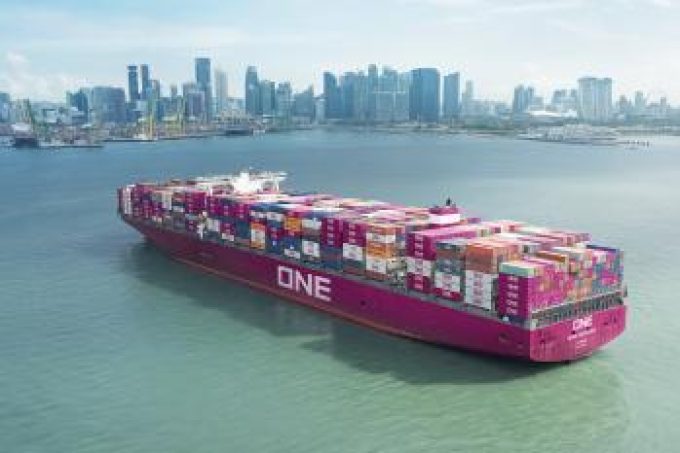
As debate over biofuels rages at IMO, ocean carrier group ONE and freight forwarder Yusen Logistics have launched a used cooking oil (UCO) biofuel service.
The ONE LEAF+ (low-emission-able freight) insetting scheme allows Yusen customers to specify their shipments be carried on ONE vessels using a 10% to 80% proportion of UCO biofuel, with a corresponding certificate.
ONE said the scheme would allow customers to reduce their Scope 3 emissions – those associated with their supply chains.
This week, the IMO meeting of its intersessional working group on greenhouse gases (ISWG-GHG 18) opened to conflict over the provenance of supposedly residual-based biofuels, whose supply chains are open to fraud, claim experts.
Quizzed on the origin of the fuels to be used for LEAF+, a ONE spokesperson told The Loadstar this morning the company would “source from companies which provide ISCC-certified UCOME (used cooking oil methyl ester), a second-generation biofuel fully compliant with the EU Renewable Energy Directive”.
Residual biofuels do not compete with food supplies and are, in theory, using waste products as feedstock. However, in practice it is suspected that virgin crop biofuels, such as palm oil, are being grown specifically to be fraudulently rebranded as residual-based biofuels.
These fraudulent fuels are likely making their way into both aviation, in the form of sustainable aviation fuel (SAF), and into shipping.
“The policy behind the energy transition needs to stop relying on industry-led, voluntary schemes to fight biofuel fraud,” said Sam Hargreaves, spokesperson for Transport & Environment (T&E). “These schemes are overly-dependent on auditing paperwork rather than actually testing products, and can be manipulated to the benefit of bad actors looking to game the system, as we have seen several times already.
“Relevant authorities at both national and EU level need to take control of the issue and not depend on third-party certifiers to do the policing for them.”
And consternation is growing over the use of crop-based biofuel. The decarbonisation potential of such fuels is dubious, and they may even serve to increase carbon emissions, as well as promoting deforestation and clearance of existing carbon sinks.
“What we really want to see, when it comes to shipping decarbonisation, is the uptake and use of the fuels with the greatest potential to reduce emissions while lowering impact on biodiversity; and that isn’t crop-based biofuels,” Nuala Doyle, policy officer at the SASHA Coalition, told The Loadstar.
It is clear that shipping will be competing with aviation for limited supplies of sustainable biofuels, added Ms Doyle.
“When looking at waste, non-crop sources of bio-feedstocks… these are very limited, and are also in demand from other sectors. We need to question whether supply will be available to meet demand across aviation and shipping.”
The alternative to biofuels is the e-fuels – green ammonia and green methanol – but adoption is slowing, and more momentum is needed, Ms Doyle said.
“We need a regulatory environment that does drive [e-fuels]. They come at a higher cost, and we will therefore need regulation encouraging shipowners to use them. If they can use a cheaper biofuel under the same regulation, why wouldn’t they?”
Listen to this clip of James Hookham, director, Global Shippers Forum and Bjorn Vang Jensen, EVP, Ocean, Easy Speed International Logistics, speaking about how shipping lines should add value for shippers if they want contract business in the midst of looming structural overcapacity:
This article is © The Loadstar. Reproduction, rewriting, or derivative use requires a license. Contact [email protected] for licensing enquiries.
For uninterrupted access, sign in or sign up to The Daily News, Premium or The Loadstar Enterprise Plan.
Comment on this article