French customs shake-up raises the bar rather than closing the door
Following France’s abolition of Regime 42 for non-EU businesses, UK shippers and freight forwarders are ...

PLD: OUCHVW: NEW PARTNERS SOUGHTEXPD: AIRCRAFT ON GROUND SERVICESTSLA: JUST AS VW STRUGGLESBA: NEW BIG ORDERBA: THE ORDERBOOK GROWSPLD: PUSHING FOR A DEAL PLD: TIME TO DEALEXPD: ANOTHER ALL-TIME HIGH CHRW: NEW RECORD DSV: AHEAD OF EARNINGS RELEASE JBHT: NEW HIGHS EVERYWHEREPLD: STRONG DELIVERYJBHT: FAIR-VALUE CONSENSUS ESTIMATE AT ALL-TIME HIGH
PLD: OUCHVW: NEW PARTNERS SOUGHTEXPD: AIRCRAFT ON GROUND SERVICESTSLA: JUST AS VW STRUGGLESBA: NEW BIG ORDERBA: THE ORDERBOOK GROWSPLD: PUSHING FOR A DEAL PLD: TIME TO DEALEXPD: ANOTHER ALL-TIME HIGH CHRW: NEW RECORD DSV: AHEAD OF EARNINGS RELEASE JBHT: NEW HIGHS EVERYWHEREPLD: STRONG DELIVERYJBHT: FAIR-VALUE CONSENSUS ESTIMATE AT ALL-TIME HIGH
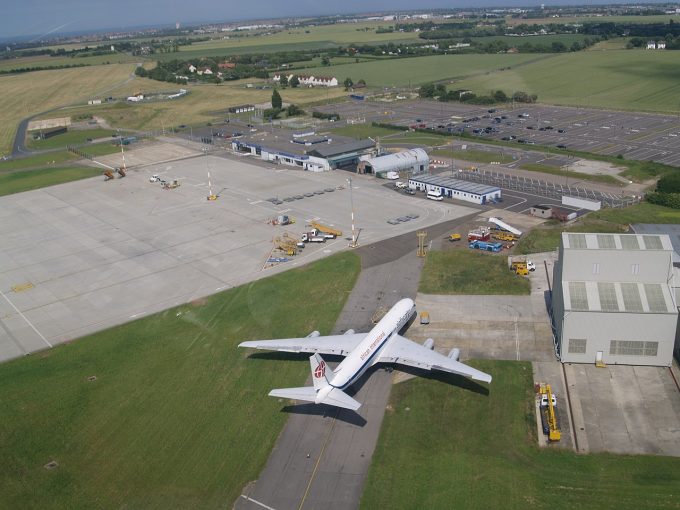
Plans to reopen Manston Airport as a dedicated cargo hub have moved a step forward, with RiverOak Strategic Partners launching the next stage of its airspace consultation process.
The consultation, running until June, invites communities to comment on proposed flight paths and operational procedures for the airport. It is a necessary regulatory milestone before Manston could reopen, following the government’s approval of its Development Consent Order in 2022.
If the project proceeds on its current timeline, construction could begin later this decade, with the airport potentially reopening towards the end of the 2020s.
But while the regulatory machinery moves forward, a more fundamental question is emerging across the cargo sector: by the time Manston is ready, will the UK actually need another freight airport?
Because the UK cargo landscape has changed significantly since the project first gained traction.
Over the past two years, regional airports have been absorbing much of the growth in freighter and ecommerce traffic that might once have flowed through the congested south-east.
East Midlands Airport remains the country’s dominant dedicated cargo hub, handling hundreds of thousands of tonnes annually and continuing to expand its infrastructure. The airport recently welcomed operations by SF Airlines’ own 747 freighter, a sign of strengthening long-haul cargo connectivity.
Further north, Glasgow Prestwick has rapidly developed into an ecommerce gateway linking the UK and China. The airport recently celebrated processing more than 25m parcels through its ecommerce facility since mid-2025, with regular widebody freighter services connecting Scotland directly to Chinese logistics hubs.
And today, Teesside International Airport marked the start of a new partnership bringing cross-continental cargo flights to and from Teesside, with European Cargo, which will bring five A340-600F flights a week from China.
Birmingham is also seeing renewed freighter activity, with Lufthansa Cargo’s A321 freighter operation linking Frankfurt, Birmingham and Dublin, and new widebody ecommerce services emerging in recent years.
Even smaller regional airports are moving into the cargo space. Bournemouth Airport has quietly built a freight operation around European Cargo’s A340 freighters, supported by new cargo infrastructure and warehouse facilities.
Taken together, these developments suggest that cargo growth in the UK is already being accommodated by existing regional airports.
Meanwhile Heathrow, the country’s largest cargo gateway, remains constrained by runway capacity and slot availability, meaning most of its freight growth comes through bellyhold capacity on passenger aircraft rather than new freighter services.
In other words, the system is evolving, but not necessarily in a way that obviously creates space for a brand-new cargo airport.
For Manston’s backers, the argument has long been that the south-east needs additional dedicated freight capacity. The airport’s uncongested location, long runway and proximity to continental Europe have been presented as key advantages.
Yet cargo logistics do not operate purely on airport geography. Freight follows distribution networks, road access and established handling ecosystems.
This is one reason integrator operators such as DHL, UPS and Amazon Air have concentrated their UK operations in the Midlands, where road networks allow access to most of the population within a few hours.
Against that backdrop, the question facing Manston is not simply whether it can reopen – the Development Consent Order already allows for that – but whether the commercial demand exists to sustain it.
Cargo airports rarely emerge without anchor customers. Integrator hubs are typically built around major operators, and even smaller freight gateways usually develop alongside long-term airline commitments.
At present, the UK cargo market’s expansion appears to be strengthening existing airports rather than creating demand for entirely new ones.
That does not necessarily mean Manston’s case is closed. Cargo markets evolve quickly, and ecommerce has repeatedly reshaped aviation networks over the past decade.
But it does raise an awkward strategic question: if the UK ultimately determines it does not need another cargo airport, what becomes of Manston?
For now, the site remains legally designated for aviation use, and the current consultation focuses squarely on flight paths and operational airspace design.
The airport’s Development Consent Order legally secures the site for aviation use, meaning a new use such as a large-scale housing redevelopment would require new planning approvals. If cargo demand ultimately fails to materialise, the long-term debate over the future of the land may inevitably resurface.
For the moment, however, the focus remains on airspace, and whether the skies over Kent will once again host commercial flights.
Check out this week’s News in Brief podcast, featuring Xeneta’s Peter Sand and Marco Forgione, director general of the UK’s Chartered Institute of Export & International Trade
For uninterrupted access, sign in or sign up to The Daily News, Premium or The Loadstar Enterprise Plan.
Comment on this article