Maersk and MSC's new plan to qualify to bid for Santos Tecon 10
APM Terminals and MSC-owned terminal operator TiL have reportedly submitted a proposal to Brazil’s competition ...

GM: TRADING UPDATE OUTUPS: REMEMBER THE TAILWINDS PLD: NEW RELEASEPLD: OUCHVW: NEW PARTNERS SOUGHTEXPD: AIRCRAFT ON GROUND SERVICESTSLA: JUST AS VW STRUGGLESBA: NEW BIG ORDERBA: THE ORDERBOOK GROWSPLD: PUSHING FOR A DEAL PLD: TIME TO DEALEXPD: ANOTHER ALL-TIME HIGH CHRW: NEW RECORD DSV: AHEAD OF EARNINGS RELEASE JBHT: NEW HIGHS EVERYWHERE
GM: TRADING UPDATE OUTUPS: REMEMBER THE TAILWINDS PLD: NEW RELEASEPLD: OUCHVW: NEW PARTNERS SOUGHTEXPD: AIRCRAFT ON GROUND SERVICESTSLA: JUST AS VW STRUGGLESBA: NEW BIG ORDERBA: THE ORDERBOOK GROWSPLD: PUSHING FOR A DEAL PLD: TIME TO DEALEXPD: ANOTHER ALL-TIME HIGH CHRW: NEW RECORD DSV: AHEAD OF EARNINGS RELEASE JBHT: NEW HIGHS EVERYWHERE
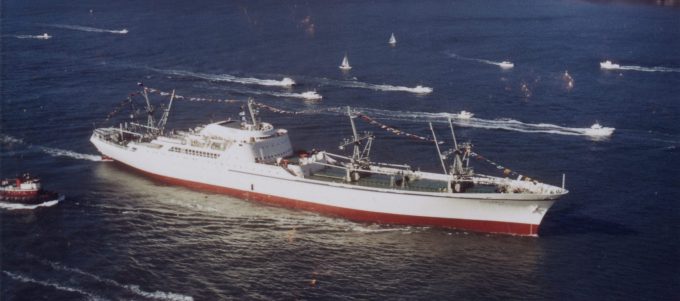
Maersk is participate in a study into putting nuclear reactors on ships, alongside Lloyd’s Register (LR) and nuclear advocate Core Power.
They will consider the regulatory feasibility of using a ‘fourth generation’ nuclear reactor on a feeder vessel in European waters – which would likely carry the added benefit of eliminating EU Emissions Trading System (ETS) fees for the ship.
Another major advantage of powering a feeder with a nuclear steam turbine or nuclear-electric drivetrain would be its ability to sail much faster, without concerns over fuel costs or increased emissions, giving the service greater ability to compete with road transport.
The strategy marks an interesting new avenue for Maersk, which has been criticised recently as new CEO Vincent Clerc u-turned on pledges over LNG made by his predecessor, Soren Skou.
Maersk head of fleet technology Ole Graa Jakobsen said: “Nuclear power holds a number of challenges related to, for example, safety, waste management and regulatory acceptance across regions and, so far, the downsides have clearly outweighed the benefits of the technology.
“If these challenges can be addressed by development of the new, so-called fourth-generation, reactor designs, nuclear power could potentially mature into another possible decarbonisation pathway for the logistics industry, 10 to 15 years in the future.”
Though it remains a vague criteria incorporating six reactor types, Gen IV reactors are generally thought to be intrinsically safer, due to moderation and safety cut-offs. The biggest potential leap forward, the molten salt reactor (MSR) – still theoretical – is thought to be the safest Gen IV design, as it loses reactivity the higher it goes over optimum temperature, protecting against meltdowns.
Few merchant vessels have been powered by reactors in the past, buit they include the famed US liner NS Savannah and the quasi-military Russian icebreaker, Sevmorput.
The high capital cost of reactors, each of which is a one-off, and greater labour costs for reactor technicians have been too high to justify the economics, thus far. But the notion has regained traction recently, with various proposals under consideration, including the Chinese KUN-24AP, a design for a 24,000 teu nuclear-powered containership.
It is thought that if a suitably safe reactor Gen IV reactor design is devised, a scaling-up of production could bring down the capital costs enormously, while increasing the speed at which breakthroughs are made in reactor safety and efficiency.
“A critical key to unlocking the vast potential for nuclear energy to transform how the maritime sector is powered is the standards framework for commercial insurability of floating nuclear power plants and nuclear-powered ships that would operate in nearshore environments, ports, and waterways,” said Core Power CEO Mikal Bøe.
“We’re immensely pleased to be working with two of Europe’s most respected industry participants to set out the conditions for how this can be achieved.”
For uninterrupted access, sign in or sign up to The Daily News, Premium or The Loadstar Enterprise Plan.
Comment on this article