Amazon chases US parcels spurned by FedEx, UPS
Amazon is stepping on the accelerator to ramp up its transport volumes. A month after ...

PLD: PROPOSAL DETAILSPLD: FINAL OFFERDSV: ROAD CEO MATTERSDSV: VOLUME PROGRESSION IN SEA FREIGHT DSV: TIME TO INCREASE THE VOLUMES IN SEA FREIGHTDSV: HEADCOUNT DISCREPANCIESDSV: TRASHEDDSV: IT IS A MATTER OF TRUSTDSV: FREE CASH FLOW QUESTIONEDDSV: QUESTION TIMEDSV: CEO ON SCHENKER INTEGRATIONDSV: CFO PREPARED REMARKSDSV: CEO PREPARED REMARKSDSV: CONF CALL FWRD: SHOOTING UPKNX: TRADING UPDATE ON THE WAY GM: TRADING UPDATE OUTUPS: REMEMBER THE TAILWINDS
PLD: PROPOSAL DETAILSPLD: FINAL OFFERDSV: ROAD CEO MATTERSDSV: VOLUME PROGRESSION IN SEA FREIGHT DSV: TIME TO INCREASE THE VOLUMES IN SEA FREIGHTDSV: HEADCOUNT DISCREPANCIESDSV: TRASHEDDSV: IT IS A MATTER OF TRUSTDSV: FREE CASH FLOW QUESTIONEDDSV: QUESTION TIMEDSV: CEO ON SCHENKER INTEGRATIONDSV: CFO PREPARED REMARKSDSV: CEO PREPARED REMARKSDSV: CONF CALL FWRD: SHOOTING UPKNX: TRADING UPDATE ON THE WAY GM: TRADING UPDATE OUTUPS: REMEMBER THE TAILWINDS
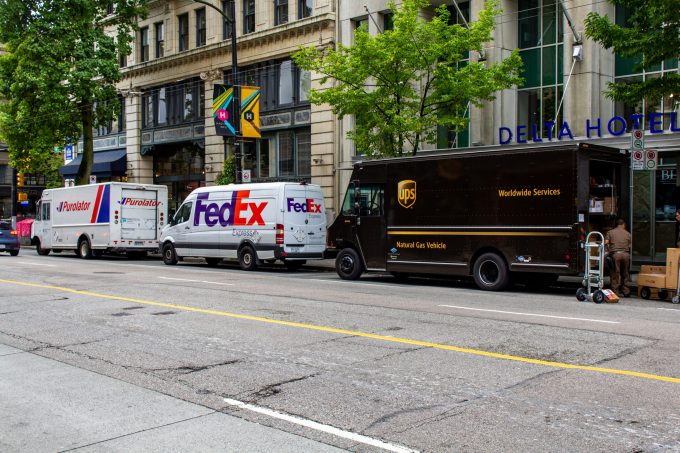
Parcel industry experts are wondering why UPS has not announced surcharges for the coming peak season so far.
While chief rivals have already unveiled extra charges, UPS’s uncharacteristic silence has prompted speculation that management may be aiming to give customers less time to react, and seek changes or alternative carriers.
Last year, UPS announced its extra levies for the peak season in mid-July.
FedEx (which had lagged UPS by a month in 2024) revealed its ‘demand surcharges’ on 8 July. They will run from 29 September until 18 January, rising through the 24 November to 28 December window before dropping back to their initial level.
The company raised its surcharges over last year’s levies, charging $0.40 on packages using its Ground Residential service (rising to $0.65 on 24 November), up from $0.30-$0.55 a year ago, while the levy on packages requiring additional handling rose to $8.25/$10.90 from $7.75-$10.
The US Postal Service (USPS) unveiled its peak season levies in early August for the period between 5 October and 18 January. On average, shippers have to pay 4.1% more for Priority Mail and 5.1% more for the Ground Advantage offering. According to management, this will bring prices in line with private sector competitors.
Amazon elevated its fulfilment fees for 15 October to 14 January, but said the surcharges would be equivalent to the levies imposed during the 2024 peak period.
Walmart bucked the trend by announcing it would be waiving its peak season storage fees this year. Instead of $1.50 per cubic foot per month for inventory stored over 30 days during this period, users of its Walmart Fulfillment Services and Multichannel Solutions are charged the standard fee of $0.75 per cubic foot.
Last year, both FedEx and UPS extended the period in which peak season charges applied, stretching it to about 111 days.
UPS’s silence leaves shippers guessing how their shipping costs will stack up. The earlier notices from FedEx, USPS and Amazon gave their customers time to assess the impact, negotiate discounts and waivers and to make alternative arrangements.
Thomas Andersen, partner and EVP of supply chain service of parcel shipping advisory firm LJM Group, warned that UPS customers could find themselves with little room to react to higher-than-anticipated pricing. The inability to forecast expenses undermines budgeting, contract negotiations and overall supply chain strategies, he added.
“Our belief is that UPS may be deliberately delaying the release of its demand surcharge schedule,” said Mr Andersen.
This would mark a step further down the road of the integrators’ tactics of leveraging surcharges designed to help them manage volume or cost fluctuations for commercial ends.
Cathy Morrow Roberson, founder and head analyst of Logistics Trends & Insights, wondered if the delay was a symptom of the challenges facing UPS management. It has zig-zagged on engagements with Amazon and the USPS, and declined to give guidance for the rest of year at its earnings call on Q2 results on 29 July.
“They’ve got some internal issues,” she said.
For uninterrupted access, sign in or sign up to The Daily News, Premium or The Loadstar Enterprise Plan.
Comment on this article
John Manzolillo
August 22, 2025 at 1:56 pmConsidering the size of UPS’s buyout of its drivers it may indicate the actual of excess capacity or bandwidth in its system, and point to its strategy to recover customers going forward; take reduced yield and make it up on volume going forward while it rethinks its strategy. Remember their peak season operational debacle several years ago.