India's exporters to LatAm struggle with lack of space and rising rates
Indian exporters and forwarders moving freight to Latin America are grappling with major supply chain ...

PLD: TRADING UPDATE ON THE WAY KNIN: UPSIDEJBHT: STRONG TRADING UPDATE DSV: EVERY LITTLE HELPSJBHT: CEO REMARKS WMT: VERTICAL INTEGRATION IN LOGISTICSJBHT: HERE WE GOPG: STEADYEXPD: NEW RECORD BA: DELIVERIESMAERSK: BEAR CAMP MUSINGS
PLD: TRADING UPDATE ON THE WAY KNIN: UPSIDEJBHT: STRONG TRADING UPDATE DSV: EVERY LITTLE HELPSJBHT: CEO REMARKS WMT: VERTICAL INTEGRATION IN LOGISTICSJBHT: HERE WE GOPG: STEADYEXPD: NEW RECORD BA: DELIVERIESMAERSK: BEAR CAMP MUSINGS
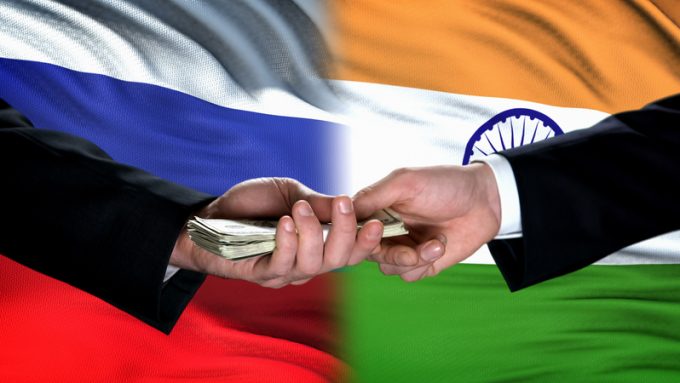
India seems unfazed by US tariff and other trade pressures for “doing business” with Russia, which is in the crosshairs of heightened western sanctions linked to its war on Ukraine.
Russian president Vladimir Putin is scheduled to arrive in New Delhi today for a two-day visit, setting the stage for trade and investment collaborations between the two long-time strategic partners.
That closer engagement comes as Indian exporters continue to face hefty US tariffs, including an additional 25% which Washington described as a punitive levy for India’s continued oil imports from Russia.
Amid the murky geopolitical environment, both India and Russia are now looking beyond typical military and oil-related deals, with supply chains at the centre of talking points.
“Both countries are looking to strengthen inter-regional cooperation, especially with the Russian Far East, and promote connectivity initiatives like the International North-South Transport Corridor, the Chennai-Vladivostok Eastern Maritime Corridor, and the Northern Sea Route,” the Indian government said.
“In the past two years, the bilateral trade has expanded significantly. There are discussions on ways to increase exports from India as well developing new models of co-operation.”
Two-way trade between the two nations hit a new high of some $69bn in fiscal year 2024-25, but New Delhi faces a large trade deficit as its exports were worth just $5bn against $64bn in imports.
That pattern has continued into the current fiscal (2025-26) year, with Indian exports to Russia by value, from April to August, pegged at $1.8bn, against $26.4bn worth of imports, data shows.
Both sides now want to push bilateral trade to $100bn by 2030, but narrowing the yawning trade gap with Russia is key to that target.
“There is lot of potential for exports to Russia in sectors like pharmaceuticals, engineering and electronics, agricultural products, auto and auto-components, and IT services, which are experiencing high demand due to changing market dynamics,” said SC Ralhan, president of the Federation of Indian Export Organisations.
Other asset-based collaborative signals are also emerging. Russia’s semi-public logistics entity, Delo Group, is said to be considering multiple investment options in India, primarily in the port terminal, inland waterways, and shipbuilding sectors.
There are indications that the group is keen to open a regular containerised ocean service between Novorossiysk, Russia’s largest gateway on the Black Sea, and Mormugoa (Goa) port in India.
Industry sources in India are betting on volume surges to Russia, as exporters look to diversify in the wake of US tariff pressures. An alternative Indian rupee-based payment mechanism, to overcome the traditional Swift network troubles, has been instrumental in keeping trade flowing at both ends.
On the ocean capacity front, MSC has remained active in connecting Indian export/import trade with Russia through transhipment, but NVO-backed ad-hoc vessel operators have been the frontline supply chain service providers.
Unifeeder is another notable participant in handling freight between India and Russia, according to market updates.
For uninterrupted access, sign in or sign up to The Daily News, Premium or The Loadstar Enterprise Plan.

Comment on this article