Ocean capacity is rising, demand is cooling, and 'the market is starting to turn'
Container spot freight rates on the main east-west ocean trades showed their first decline since ...

TSLA: JUST AS VW STRUGGLESBA: NEW BIG ORDERBA: THE ORDERBOOK GROWSPLD: PUSHING FOR A DEAL PLD: TIME TO DEALEXPD: ANOTHER ALL-TIME HIGH CHRW: NEW RECORD DSV: AHEAD OF EARNINGS RELEASE JBHT: NEW HIGHS EVERYWHEREPLD: STRONG DELIVERYJBHT: FAIR-VALUE CONSENSUS ESTIMATE AT ALL-TIME HIGH KNIN: AI TECH ADVANTAGEPLD: TRADING UPDATE ON THE WAY KNIN: UPSIDE
TSLA: JUST AS VW STRUGGLESBA: NEW BIG ORDERBA: THE ORDERBOOK GROWSPLD: PUSHING FOR A DEAL PLD: TIME TO DEALEXPD: ANOTHER ALL-TIME HIGH CHRW: NEW RECORD DSV: AHEAD OF EARNINGS RELEASE JBHT: NEW HIGHS EVERYWHEREPLD: STRONG DELIVERYJBHT: FAIR-VALUE CONSENSUS ESTIMATE AT ALL-TIME HIGH KNIN: AI TECH ADVANTAGEPLD: TRADING UPDATE ON THE WAY KNIN: UPSIDE
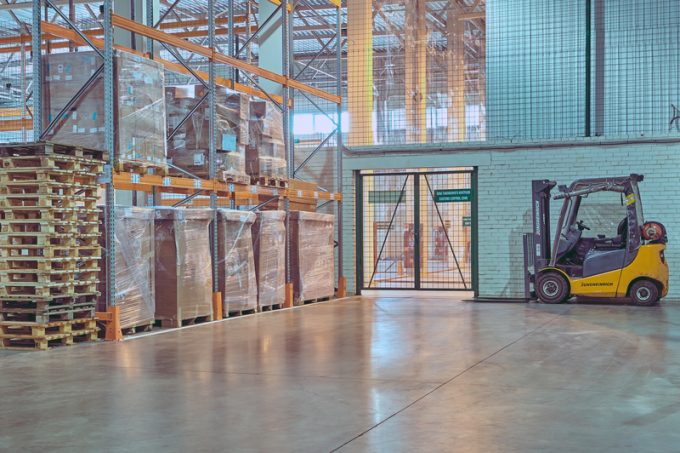
The trade policy unleashed this year by the US administration triggered a surge in front-loading as well as in interest in solutions that would allow importers to defer, and possibly ultimately avoid, eye-watering tariffs, notably bonded warehousing and foreign trade zones (FTZs).
In the ongoing uncertainty, what seemed a short-term reaction to temporary turmoil still remains a tool to navigate through a regulatory landscape that changes at short notice.
Shocked by the opening salvo of Washington’s trade war, US importers looked at bonded warehousing and FTZs, the latter an instrument created during the Great Depression of the 1930s to help keep companies competitive. Descartes reported that interest in FTZs has quadrupled.
“From our side it has probably more than quadrupled,” said Emily Faulkner, import operations and customs house brokerage director of AIT Worldwide Logistics.
For the most part customers wanted to get information about the concept to see if this would be a good choice for them, she said. Some did go down the FTZ route and others opted for bonded warehousing to hedge their bets that the duty rates would go down. Then there were some for whom the FTZ worked for a while, up to a point where they could see an increase was imminent and they could withdraw the goods in time.
There was interest across the spectrum of industries, Ms Faulkner observed. Initially it was very high in the hi-tech sector, but this abated when duties for this industry were deferred.
She reckons that verticals like the pharma industry, which is one of the administration’s targets for tariffs, should be looking at FTZs and bonded facilities.
For the most part, the momentum has not slowed, according to Bob Imbriani, EVP international of Team Worldwide, who has seen an increase in client moves to set up bonded warehouses in their facilities, or establish an FTZ. As the initial assumption of a relatively brief spell of tariffs being dropped as trade agreements were forged faded, the duty deferral aspect rose to prominence in companies’ use of such facilities, he said.
“Companies want to defer payments. They bring in some quantity to delay payment and withdraw goods as needed. This way they can take advantage of larger volumes and not have to incur the full duty amount,” he added.
Audio-Technica, a Japanese maker of audio equipment, set up its second distribution centre in the US in an FTZ in June, precisely to hold inventory duty-free and defer tariff payments until products leave the facility.
Bonded warehouses do not permit any manipulation of imported goods, so they work primarily for retailers and wholesalers. If they have to perform labelling for an outbound shipment, they can take out the goods a short period ahead of the shipping date, Mr Imbriani explained.
One of Team’s clients is in the aircraft engine repair business and uses an FTZ to receive, overhaul and send out engines without import duties levied.
In another of those twists in the US government’s trade policy, companies now have to pay tariffs on inputs – namely parts made of steel or aluminium, a new element of duties not shielded by FTZ designation.
Ms Faulker predicts that the list of dutiable inputs is going to grow, pointing out that copper was added a few days ago. She expects to see additions “probably later in September and then again in January”.
Arguably the biggest problem with Washington’s tariff moves is that they come with little notice and very tight implementation windows.
“They put something out on a Friday night and it’s effective on Monday morning, and nobody really has time to react,” Ms Faulker said.
This is in stark contrast with the time required to set up an FTZ or get bonded status for a warehouse.
“If you start from scratch [for FTZ designation] it’s extensive. The estimate used to be 10-12 months, now it’s more 18 months to two years,” Ms Faulkner said, adding that some locations are more supportive (FTZ applications have to be endorsed by a grantee – usually a community, a port or airport – that acts as an intermediary with the Department of Commerce). Even then, there is the blessing from US Customs & Border Control to be obtained, which takes time.
Applications for bonded facilities could be processed in 8-12 months, Ms Faulkner said.
This would stretch well beyond the time when the US Supreme Court is set to decide on the legality of the administration’s use of tariffs under emergency legislation, bypassing Congress. The court agreed to fast-track the case, looking to deal with it in November, which indicates a ruling by the end of the year, or early 2026.
If the court upholds the verdict of two previous courts on the issue, companies that have placed imports into bonded facilities, at the very least, would save the effort to reclaim duties paid.
Such a ruling would not mark the end of Washington’s push for tariffs, merely a slowdown – FTZs could be a useful hedge for a long time yet.
For uninterrupted access, sign in or sign up to The Daily News, Premium or The Loadstar Enterprise Plan.
Comment on this article