EXCLUSIVE: Kuehne + Nagel's deliberate path to an Apex listing
Breaking up is (not) hard to do

PLD: PROPOSAL DETAILSPLD: FINAL OFFERDSV: ROAD CEO MATTERSDSV: VOLUME PROGRESSION IN SEA FREIGHT DSV: TIME TO INCREASE THE VOLUMES IN SEA FREIGHTDSV: HEADCOUNT DISCREPANCIESDSV: TRASHEDDSV: IT IS A MATTER OF TRUSTDSV: FREE CASH FLOW QUESTIONEDDSV: QUESTION TIMEDSV: CEO ON SCHENKER INTEGRATIONDSV: CFO PREPARED REMARKSDSV: CEO PREPARED REMARKSDSV: CONF CALL FWRD: SHOOTING UPKNX: TRADING UPDATE ON THE WAY GM: TRADING UPDATE OUTUPS: REMEMBER THE TAILWINDS
PLD: PROPOSAL DETAILSPLD: FINAL OFFERDSV: ROAD CEO MATTERSDSV: VOLUME PROGRESSION IN SEA FREIGHT DSV: TIME TO INCREASE THE VOLUMES IN SEA FREIGHTDSV: HEADCOUNT DISCREPANCIESDSV: TRASHEDDSV: IT IS A MATTER OF TRUSTDSV: FREE CASH FLOW QUESTIONEDDSV: QUESTION TIMEDSV: CEO ON SCHENKER INTEGRATIONDSV: CFO PREPARED REMARKSDSV: CEO PREPARED REMARKSDSV: CONF CALL FWRD: SHOOTING UPKNX: TRADING UPDATE ON THE WAY GM: TRADING UPDATE OUTUPS: REMEMBER THE TAILWINDS
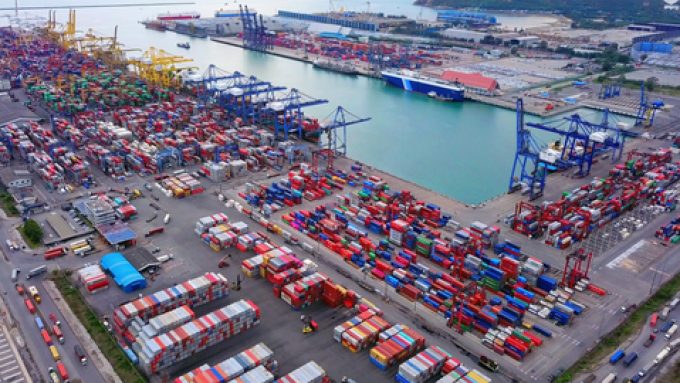
The world’s largest port operators increased their market share last year – container volumes growing at almost double the global growth rate.
According to Drewry’s new Global Container Terminal Operators Annual Review and Forecast 2026/27, the seven largest global terminal operators (GTOs) handled a combined equity-adjusted 401m teu in 2025, which represented 40.3% of global port throughput and up 8.3% on their 2024 total.
In comparison, Container Trade Statistics (CTS) recorded a 4.7% growth in total container volumes shipped last year, while the port volume figures also represent empty and transhipment container movements.
Together with the smaller 12 that make up Drewry’s list of genuine international port operators, the GTOs handled 496.1m teu, which accounted for 49.9% of all containers handled at quaysides.
However, as the table below shows, there was some disparity between the leading operators: while three achieved double-digit volume increases, all bar one saw volumes grow at a higher rate than the CTS average.

Source: Drewry
The laggard was Hong Kong-based Hutchison, which saw volumes rise just 1.5%.
According to sources, this was largely due to the dilution of its ownership in the Thai hub of Laem Chabang, as well as a poor performance at Felixstowe, which saw rival London Gateway make big gains in the UK market.
Another limiting factor was capacity constraints at Hutchison’s Yantian terminal, while Hong Kong volumes continued to decline – next year may be happier for the operator as the “new Yantian East terminal will unlock growth”.
Meanwhile, the report also noted that the industry had entered a new phase, as terminals concessioned during the first wave of port privatisation during the 1990s and early 2000s were “approaching the end of their initial concession tenure”.
“Given this, many GTOs are proactively managing their portfolio maturity and working closely with concessioning authorities well ahead of renewals to align objectives,” said the report.
It says the industry’s M&A activities are now subject to heightened regulatory scrutiny due to current geopolitics, “clearly illustrated by the stalemate situation that has emerged from the TiL-BlackRock bid for Hutchison Ports’ international portfolio”.
Nonetheless, capital investment undertaken by GTOs was up 23% last year over 2024, “with GTOs focusing on growing their portfolios, upgrading existing infrastructure, and expanding their automation and digital capabilities”. They are projected “to add a combined 186m teu capacity to their portfolios between 2025 and 2030”, it notes.
It also says “greenfield projects are also firmly back on the agenda”, led largely by what it terms “hybrid GTOs” – terminal operators majority-owned by shipping lines, which “are much better placed to guarantee volumes for greenfield developments due to matched ownership”.
However, fears that carrier-led terminal operators would push common-user operators out of the market “missed important nuances of the business”, report co-author Eirik Hooper told The Loadstar.
“While hybrid operators have enormously increased their share of the overall market in the past decade, accelerated by the abnormal profits from their shipping line arms since Covid, Drewry’s view is that this is still very market- or situation-dependent,” Mr Hooper said.
“Carrier participation is often seen as being useful for a greenfield development in an effort to reduce demand risk, but not as helpful in an established market with more stable demand characteristics.
“Indeed, it can sometimes be seen as anti-competitive, if it is determined that the hybrid operator could disadvantage third-party carriers,” he added.
For uninterrupted access, sign in or sign up to The Daily News, Premium or The Loadstar Enterprise Plan.
Comment on this article