African demand + capacity = import explosion feeding container growth
Terminals and more terminals


MAERSK: ANOTHER UPGRADEFWRD: HEALTHY CORRECTION R: RYDER CEO SAYS R: AMAZON ANNOUNCEMENTS RPLD: EV INFRASTRUCTURE PUSHDHL: RAMPING UP 'NEW ENERGY LOGISTICS' GXO: NEW WINAMZN: LTL SERVICE UPDATEGM: ENERGY PROVIDER MODELEXPD: LAYOFFS CONFIRMED DHL: DOWNSIDE RISKDHL: OVERVIEWDHL: DATE CENTRE PUSH IN APAC
MAERSK: ANOTHER UPGRADEFWRD: HEALTHY CORRECTION R: RYDER CEO SAYS R: AMAZON ANNOUNCEMENTS RPLD: EV INFRASTRUCTURE PUSHDHL: RAMPING UP 'NEW ENERGY LOGISTICS' GXO: NEW WINAMZN: LTL SERVICE UPDATEGM: ENERGY PROVIDER MODELEXPD: LAYOFFS CONFIRMED DHL: DOWNSIDE RISKDHL: OVERVIEWDHL: DATE CENTRE PUSH IN APAC
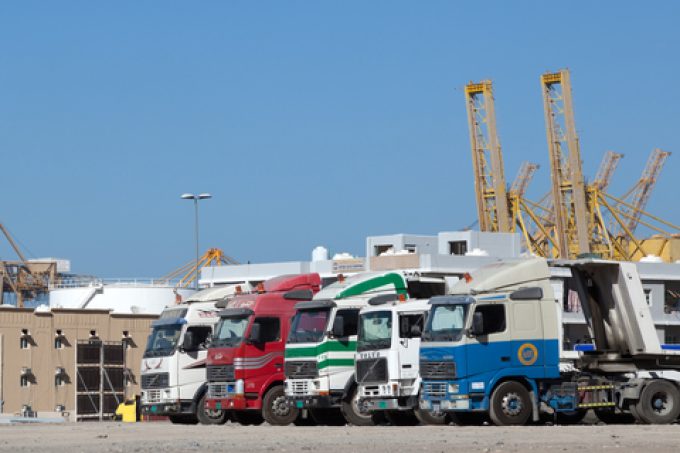
With tentative hopes of a reopening of the Hormuz Strait dashed by the wave of air strikes Iran and the US traded last night, Gulf importers trying to get goods into their markets may have to turn to all-road routes and the TIR system, as Middle East landbridges struggle to keep up with demand.
Mounting container congestion in the Saudi Red Sea gateways of Jeddah and King Abdullah (KAP) ports have left carriers unable to secure enough container haulage to fulfil shipments, with forwarders reporting huge delays in containers being gated out.
“We have cargo routed into Jeddah and KAP for onwards delivery to the Gulf via merchant haulage, and are seeing timelines of between six to eight weeks to secure release, drivers, and delivery into the Gulf,” one forwarder told The Loadstar.
He added that seasonal and administrative factors were increasing the pressure.
“The routing into Gulf countries via the Red Sea has become extremely congested due to the influx of transit cargo, plus the seasonal peak into this region related to the Hajj festival.
“It is not just the physical infrastructure that has become overwhelmed, but also the administrative services related to customs clearance and cargo release at the shipping lines and ports,” he explained.
Gemini partners Maersk and Hapag-Lloyd, which recently launched the Asia-Mediterranean AE19 service that includes a call at Jeddah (accessed via a southbound passage through the Suez Canal), announced at the beginning of June they had stopped accepting bookings to the UAE, Bahrain, Qatar, and Kuwait via Jeddah and KAP, and would instead route those shipments through Khor Fakkan and Salalah.
The Loadstar understands that MSC has also begun to route UAE-bound cargo through Khor Fakkan after it is transhipped over Colombo.
“We have been suggesting to active clients for several weeks to avoid the Red Sea routing and switch across to the Arabian Sea services (Salalah, Khor Fakkan, Sharjah etc) due to the congestion in the Red Sea region, and this is being actively taken up,” the forwarder added.

Source: The Loadstar
Haulage sources in the region confirmed the capacity problems at Saudi’s Red Sea ports, but added that they were not just happening there.
“Jeddah sea port is indeed running at full capacity, and some operators are experiencing delays on both entry and exit,” one said.
“Alternative ports closer to the Gulf are indeed being considered, such as Khor Fakkan and Sharjah, but they also face the same capacity issues as Jeddah, including the ‘administrative congestion’ issues.”
One silver lining, however, might be found in the all-road route from Turkey, which has reportedly seen a surge in traffic, most of which is running under the TIR (Transports Internationaux Routiers) system, which “enables goods to transit from a country of origin to a destination country in sealed load compartments, reducing the need for repeated customs inspections”, and is managed by the International Road Transport Union (IRU).
“There is a significant increase in direct truck movements connecting Turkey to the Gulf via Syria and Jordan,” Rami Karout, the IRU’s senior manager for TIR & transit development told The Loadstar.
“The market is witnessing significant movements in both directions, and the majority is operating under the United Nations TIR system, which streamlines customs procedures and delivers considerable cost and time savings for transport operators,” he added.
For uninterrupted access, sign in or sign up to The Daily News, Premium or The Loadstar Enterprise Plan.

Comment on this article