Container shipping lines today – are they too big to fail?
Have container shipping lines simply become too big to fail? The news today that the 10 ...


GXO: NEW WINAMZN: LTL SERVICE UPDATEGM: ENERGY PROVIDER MODELEXPD: LAYOFFS CONFIRMED DHL: DOWNSIDE RISKDHL: OVERVIEWDHL: DATE CENTRE PUSH IN APACMAERSK: HAVE A LOOKTSLA: TAILWINDS FDX: PAYOUT ADJUSTMENT UPDATEKNIN: AIR FREIGHT NETWORK EXPANSION
GXO: NEW WINAMZN: LTL SERVICE UPDATEGM: ENERGY PROVIDER MODELEXPD: LAYOFFS CONFIRMED DHL: DOWNSIDE RISKDHL: OVERVIEWDHL: DATE CENTRE PUSH IN APACMAERSK: HAVE A LOOKTSLA: TAILWINDS FDX: PAYOUT ADJUSTMENT UPDATEKNIN: AIR FREIGHT NETWORK EXPANSION
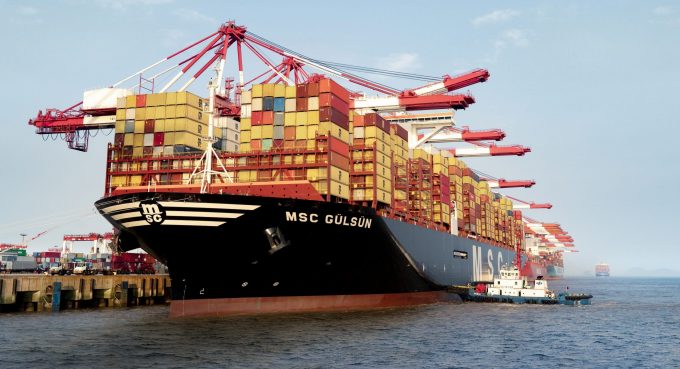
MSC has become the first container shipping line to command a global liner market share of more than 20%, on the back of an extraordinary fleet expansion programme, in place since the pandemic.
According to new analysis from Alphaliner, by the end of May, the world’s largest shipping line operated 21.5% of all capacity on the water, after seeing its fleet size effectively double over the past 15 years.
“No carrier has ever achieved such a quota, with the only other to come close, Maersk, achieving 19.3% of the market in 2018,” Alphaliner writes today.
“Geneva-based MSC continues to eat into the market share of other lines, and it was the only top-ten carrier to reach a high in its market share this year.
“The world’s largest container carrier has effectively doubled its market share since 2010,” it adds.

Source: Alphaliner
MSC’s recent strategy has stood in stark contrast to that of second-ranked Maersk, which for the past couple of years has signalled that its global fleet capacity of around 4.2m teu had hit a self-imposed ceiling.
However, Alphaliner also notes that this means Maersk’s market share today is at its lowest for 20 years, at 13.7% of globally operated capacity – “the lowest point since the Danish group bought P&O Nedlloyd in 2005″.
“Maersk’s deliberate decision to cap its fleet at 4.1m teu-4.3m teu from early 2024, combined with the relentless growth in the overall container fleet, has condemned the company to a falling market share.
The analyst noted: “The Danish carrier said it would prioritise decarbonised fleet replacement and integrated logistics to achieve its strategic and financial objectives.”
However, according to Alahaliner, Maersk’s operated capacity stands at just under 4.7m teu, with 1.84m teu of that being chartered; MSC’s overall capacity is just under 7.4m teu.
Third-placed CMA CGM, which operates 4.3m teu of capacity, also saw its market share decline marginally, from a high of 12.9% in 2023 to 12.5% today.
However, the ten largest container lines have consolidated their grip on the global liner trades, and their combined operating capacity is within touching distance of the previous record, of controlling 84.8% of capacity, achieved in January 2021 – in the depths of the pandemic.
“Nearly 500,000 teu in newbuilding tonnage was handed over to the top ten carriers in the December-April (2026) period. This tonnage injection has pushed the carriers’ fleet capacity to 84.7% of the total market at end May, just 0.1% shy of the record,” Alphaliner writes.
“The rise was mainly driven by capacity increases for MSC, CMA CGM, and Ocean Network Express (ONE).”
For uninterrupted access, sign in or sign up to The Daily News, Premium or The Loadstar Enterprise Plan.

Comment on this article