Challenge joins India cargo rush as Europe-bound demand stays strong
Challenge Group is expanding its presence in India and China with new freighter services from ...


VW: THE LAST CUT IS THE DEEPESTJBHT: GEARING UP VW: BUYING TIMER: BIG VOTE OF CONFIDENCEAAPL: BEARISH HEDGEYE AAPL: THE BEAR CASEFDX: LIFE SCIENCES ORG UNVEILEDWTC: UPS AND DOWNSWTC: ASX ANNOUNCEMENT REGARDING DSV PARTNERSHIP VW: D-DAYPLD: KEEP PUSHINGDHL: NEW AIR SERVICEDHL: GUIDANCE UPGRADE REACTION
VW: THE LAST CUT IS THE DEEPESTJBHT: GEARING UP VW: BUYING TIMER: BIG VOTE OF CONFIDENCEAAPL: BEARISH HEDGEYE AAPL: THE BEAR CASEFDX: LIFE SCIENCES ORG UNVEILEDWTC: UPS AND DOWNSWTC: ASX ANNOUNCEMENT REGARDING DSV PARTNERSHIP VW: D-DAYPLD: KEEP PUSHINGDHL: NEW AIR SERVICEDHL: GUIDANCE UPGRADE REACTION
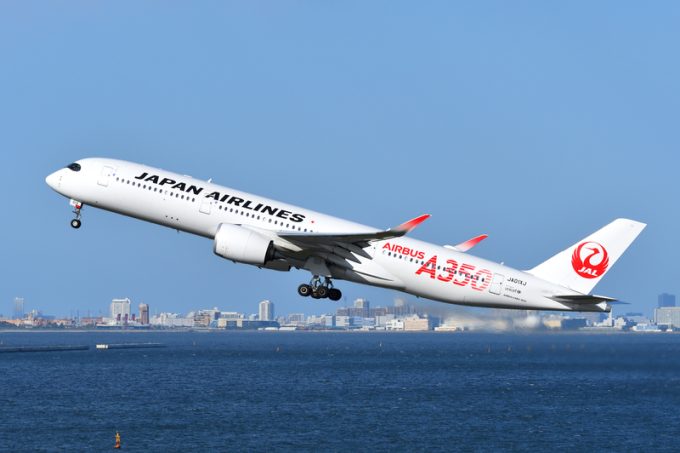
Japan Airlines (JAL) is reshaping its cargo business around a hybrid, asset-light model, combining rail, partner-operated freighters and bellyhold capacity to expand its network without significantly increasing its own fleet.
The carrier has moved to boost capacity on key long-haul routes through partnerships, increasing Narita-Chicago freighter services operated by Kalitta Air from five to six weekly flights from April, as it targets sustained demand across the Pacific.
It has also deepened ties with Cargolux, adding access to Luxembourg as a major European cargo hub and extending its reach across Asia-Europe and transatlantic flows.
However, despite growing cargo demand, JAL operates only a very small in-house freighter fleet, three 767Fs, relying heavily on third-party capacity to scale its network.
This makes its recent push into rail-air logistics particularly significant.
Earlier this year, JAL launched a service with JR East that integrates Japan’s high-speed rail network with its international cargo operations, allowing time-sensitive shipments such as seafood and pharmaceuticals to move from regional cities onto long-haul flights via Tokyo.
The product not only cuts transit times, but also addresses structural constraints in Japan’s domestic supply chain, including driver shortages, while offering a lower-emissions alternative to trucking.
Taken together, these moves point to a clear strategic shift: rather than investing heavily in freighter aircraft, JAL is building what amounts to a “virtual” cargo network.
Its latest summer cargo schedule reinforces this approach. Freighter capacity across Asia remains largely unchanged, with only minor adjustments to routes such as Taipei and Tianjin, suggesting that growth is being driven through partnerships and network optimisation rather than fleet expansion.
The airline itself has highlighted the importance of combining dedicated freighters with passenger flights into a “flexible network”, underlining its reliance on a mix of owned and outsourced capacity.
For JAL, this model offers a way to respond quickly to shifts in demand, particularly on major trade lanes such as Asia–North America, without the capital intensity of operating a large freighter fleet.
It also aligns with the group’s broader strategic direction. Under its newly unveiled 2035 management vision, JAL is placing greater emphasis on partnerships, digital investment and expansion into wider mobility and logistics services.
In that context, the combination of rail integration, partner-operated freighters and limited in-house capacity suggests JAL is positioning itself less as a traditional cargo airline and more as an orchestrator of a multi-modal logistics network.
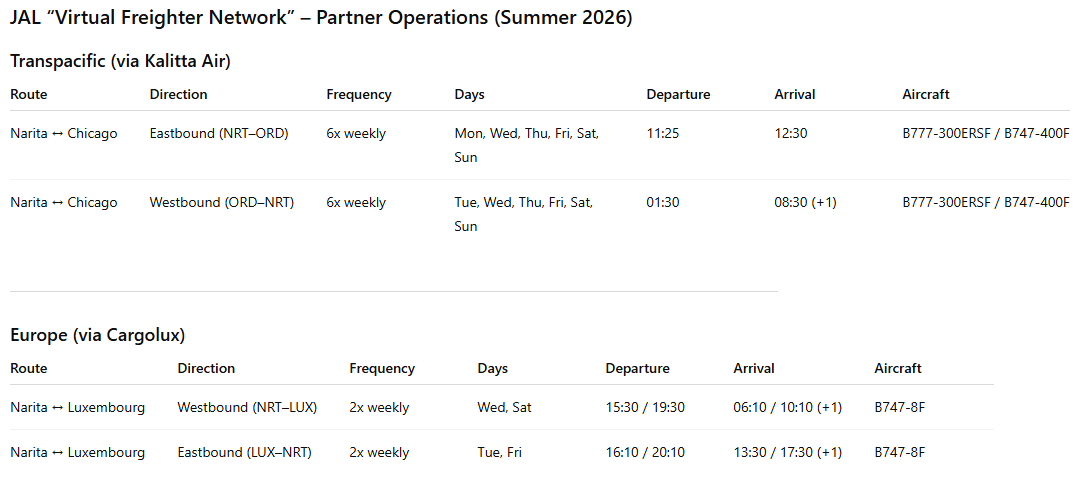
Source: JAL, Kalitta Air, Cargolux

For uninterrupted access, sign in or sign up to The Daily News, Premium or The Loadstar Enterprise Plan.
Comment on this article