Flexport-Freightmate case tests ownership of AI freight data and workflows
The legal battle between Flexport and freight-tech start-up Freightmate is increasingly becoming a test case ...


HON: DEALS ON THE MENUEXPD: NEW RECORD XPO: THE REBOUNDCAT: PAYOUT UPDHL: LIGHTHOUSEMAERSK: ANOTHER UPGRADEFWRD: HEALTHY CORRECTION R: RYDER CEO SAYS R: AMAZON LTL ANNOUNCEMENTPLD: EV INFRASTRUCTURE PUSHDHL: RAMPING UP 'NEW ENERGY LOGISTICS' GXO: NEW WINAMZN: LTL SERVICE UPDATEGM: ENERGY PROVIDER MODEL
HON: DEALS ON THE MENUEXPD: NEW RECORD XPO: THE REBOUNDCAT: PAYOUT UPDHL: LIGHTHOUSEMAERSK: ANOTHER UPGRADEFWRD: HEALTHY CORRECTION R: RYDER CEO SAYS R: AMAZON LTL ANNOUNCEMENTPLD: EV INFRASTRUCTURE PUSHDHL: RAMPING UP 'NEW ENERGY LOGISTICS' GXO: NEW WINAMZN: LTL SERVICE UPDATEGM: ENERGY PROVIDER MODEL
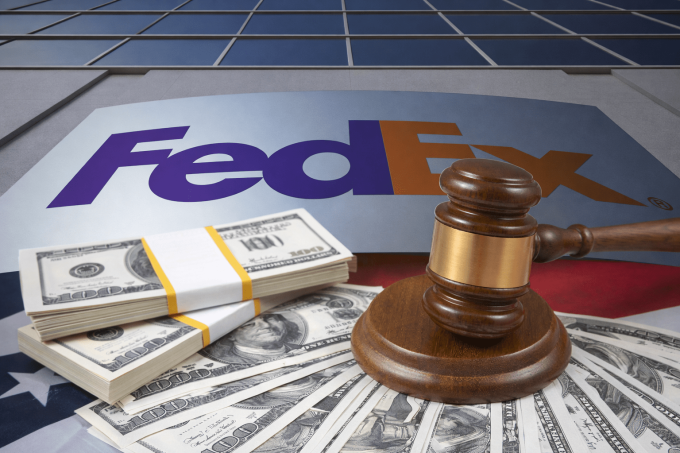
FedEx is facing a growing wave of US class actions over “unlawful” tariff charges, as litigation over the collapse of IEEPA duties spreads from importers to consumers.
At the centre is Ross v. FedEx Corporation, a $5bn lawsuit filed in New York yesterday, which could become the lead case in what is expected to be a surge of claims.
The complaint alleges FedEx charged customers import duties that were later ruled illegal by the US Supreme Court, and is now refusing to return the money.
According to the filing, the charges were “unlawful, invalid, and void”, with FedEx having “charged, collected, and retained tariff-related fees” without legal authority.
Crucially, FedEx is accused of invoicing customers after delivery for tariff charges linked to international shipments, creating a clear, itemised fee that plaintiffs say should now be refunded.
The case has already triggered near-identical filings.
In Crespo Rosado v. FedEx, another New York class action filed this month, the plaintiff is seeking to recover just $13.74 in duties and fees – a small sum that highlights the scale of potential exposure when multiplied across millions of shipments.
The claim argues the payment was made “under the mistaken belief” the tariffs were lawful and “would not have been made” had their illegality been known.
The emergence of multiple, overlapping complaints suggests a coordinated push by plaintiff firms to establish a nationwide class action, and FedEx has become the obvious defendant.
Unlike retailers, which bury tariffs in product prices, FedEx operates as a customs broker, paying duties upfront and billing customers separately after delivery.
That structure leaves a paper trail – and a line item – that plaintiffs can easily challenge.
More awkwardly, FedEx is also suing the US government to recover the same tariffs, a point seized on in the complaints, which note the company “has sued the US government… but passed the cost… onto consumers”.
The lawsuits mark a new phase in the fallout from the Supreme Court’s decision that IEEPA does not authorise tariffs.
The first wave has seen importers pursue refunds from the government, with the US Court of International Trade now ordering Customs to unwind the duties – a move that could trigger billions of dollars in repayments.
But as that process unfolds, attention is shifting down the supply chain.
FedEx has already filed its own claim at the trade court, reportedly seeking between $200m and $600m in refunds. Now, customers are asking why those costs were passed on – and why they have not been returned.
At the TPM conference in Long Beach this month, Baker Tilly’s director of global trade advisory services, Pete Mento, warned the refund battle could be long and contested.
“They owe us money,” he said. “And they’re trying to find every possible way to weasel out of not paying you what you’re owed.”
The litigation is also beginning to spread beyond logistics.
In Illinois, a lawsuit against Fabletics (Flaherty v. Fabletics) alleges the retailer unlawfully passed tariff costs through to consumers, breaching state consumer protection law.
However, cases against retailers may prove harder to sustain, as they focus on pricing rather than clearly itemised charges.
At its core, the dispute is simple, but unresolved: who ultimately bears the cost of tariffs that should never have existed?
Plaintiffs say companies must refund customers. Companies say they simply passed on costs they were required to pay at the time.
With billions of dollars at stake and multiple lawsuits already filed, FedEx now finds itself at the centre of that fight – and unlikely to be alone for long.

For uninterrupted access, sign in or sign up to The Daily News, Premium or The Loadstar Enterprise Plan.

Comment on this article