Wan Hai targets 14% rise in transpac contract rates as trade shifts reshape outlook
Wan Hai Lines GM Tommy Hsieh said that the company expects to secure higher contract ...


HD: HERE IS HOW IT LOOKSAMZN: REG RISKMAERSK: MOST HARMED KNIN: GO GREENDSV: CHANGING OF THE GUARD CHRW: OVERVALUEDGM: NEW BIZFDX: GROWING CAUTIOUSDHL: DOUBLE UPGRADEDSV: STOCK MARKET REACTION XOM: OIL INVENTORY WARNINGWTC: EBL DEAL DETAILSWTC: EBL DEALEXPD: 'READ MY LIPS'
HD: HERE IS HOW IT LOOKSAMZN: REG RISKMAERSK: MOST HARMED KNIN: GO GREENDSV: CHANGING OF THE GUARD CHRW: OVERVALUEDGM: NEW BIZFDX: GROWING CAUTIOUSDHL: DOUBLE UPGRADEDSV: STOCK MARKET REACTION XOM: OIL INVENTORY WARNINGWTC: EBL DEAL DETAILSWTC: EBL DEALEXPD: 'READ MY LIPS'
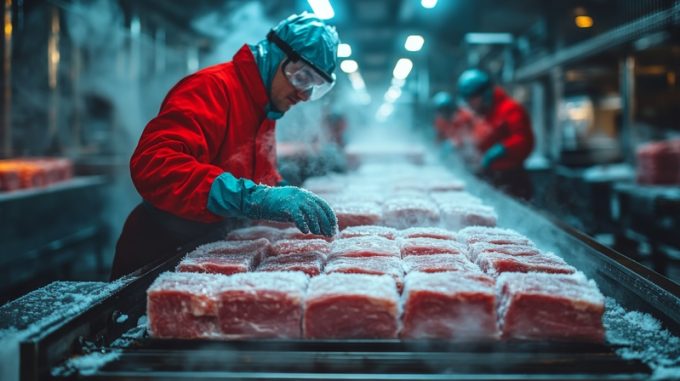
Private equity company Stonepeak has launched a logistics platform revealing its ambitions in Asia – and in the cold chain.
Peregrine Cold Logistics might look like another routine infrastructure announcement, but there is more to it. It reveals a signal about where the next decade of logistics investment is heading.
With a new platform headquartered in Singapore and spanning Asia Pacific and the Gulf Cooperation Council (GCC) nations, Stonepeak is moving into a space that has historically been fragmented, underfunded, and ripe for consolidation: temperature-controlled logistics.
Peregrine will target cold-storage assets across ASEAN, North Asia and the GCC, markets experiencing simultaneous rising incomes, rapid urbanisation, and a sharp shift in food consumption patterns.
The platform’s first move, the acquisition of Pinnacle Cold Storage in the Philippines, signals that Stonepeak intends to build from the ground up, and from the periphery to the core in one of the region’s most supply-constrained markets.
At the same time, Stonepeak is framing cold chain not as a niche logistics segment, but as “a pillar of regional food security and consumer growth”.
MD Michael Chan said: “The sector continues to benefit from long-term structural tailwinds in the region, including the continued impact of rapid urbanisation, rising incomes, and growing consumption, all of which drive calorie intake and protein consumption.
“With the cold storage industry landscape across much of Asia still highly fragmented, we believe there is an opportunity to build a specialist platform of scale to serve the growing needs of the region.
Peregrine’ CEO and co-founder Jeff Hogarth, previously president Asia Pacific for Lineage Logistics, was even more expansive, describing a mission to “redefine cold chain logistics” with purpose-built infrastructure and a focus on sustainability.
The launch of Peregrine appears to be part of a strategic development at the PE company. Stonepeak, based in New York but operating across the US, Europe, Asia Pacific and the Middle East, has become a maajor infrastructure investment firm. With some $80bn in assets under management, it specialises in “defensive” hard-asset sectors, like digital infrastructure, energy transition, transport and logistics. Its model mixes long-term capital, operational discipline and a strong appetite for platforms that can scale through acquisition.
Cold chain is the perfect match for that formula. It is both essential and somewhat overlooked. Most Asian and Middle Eastern cold storage is fragmented, much with outdated equipment, or too slight to meet structurally rising demand. Meanwhile, changing consumer habits, such as more meat, more frozen food, more ecommerce, are driving demand for higher-quality cold capacity and more reliable temperature-controlled transport. But few local operators have access to the kind of capital needed for modernisation, automation or regional expansion.
Stonepeak does. And that, it says, explains the launch of Peregrine.
The real question now is what will Stonepeak do next? It seems likely it will acquire, build, and repeat. The platform is likely to have a pipeline in mind, and Stonepeak has previously taken on sub-scale operators and integrated them into regional leaders.
It would not be far-fetched to expect a series of bolt-on acquisitions across ASEAN, starting with Vietnam and Thailand, two of the fastest-growing and most under-served cold chain markets. Vietnam in particular is an obvious next step: booming consumer demand, high export flows, and a landscape dominated by family-owned cold stores that often lack expansion capital. Operators such as New Era Cold Storage or niche providers like Arctic Wolf Global would offer immediate footholds. The Philippines, where Pinnacle sits, also contains a long tail of one-to-three-warehouse firms that would be relatively easy to consolidate.
In the GCC, Stonepeak will likely move carefully but decisively. Saudi Arabia, where food security is a national priority, could be a key target. Privately held companies such as Global Star Cold Storage are large enough to matter but small enough to acquire without political entanglement. In the UAE, a group like Tameem Logistics, which runs both cold storage facilities and a large reefer fleet, would give Peregrine the transport backbone it needs to execute on its “integrated logistics” promise.
Alongside acquisitions, there could also be development in high-growth corridors: Ho Chi Minh City; Bangkok’s eastern seaboard; Johor; the Manila periphery; Dubai South; and Riyadh’s emerging logistics districts. Purpose-built, energy-efficient facilities could allow Peregrine to differentiate on reliability and sustainability, two weaknesses of much of the region’s existing cold chain stock.
The implications for the market are significant. If Stonepeak executes its playbook, Peregrine could quickly become one of the most consequential cold chain networks in Asia and the Gulf. For shippers, food producers and retailers, that promises modern capacity and better service. For competitors, it signals that the era of small, standalone cold stores may be ending.
The cold chain is heating up. And Stonepeak has announced it intends to lead from the front.
For uninterrupted access, sign in or sign up to The Daily News, Premium or The Loadstar Enterprise Plan.
Comment on this article