Hormuz 'definitely shut', landbridges under pressure – TIR to the rescue?
With tentative hopes of a reopening of the Hormuz Strait dashed by the wave of ...


MAERSK: ANOTHER UPGRADEFWRD: HEALTHY CORRECTION R: RYDER CEO SAYS R: AMAZON ANNOUNCEMENTS RPLD: EV INFRASTRUCTURE PUSHDHL: RAMPING UP 'NEW ENERGY LOGISTICS' GXO: NEW WINAMZN: LTL SERVICE UPDATEGM: ENERGY PROVIDER MODELEXPD: LAYOFFS CONFIRMED DHL: DOWNSIDE RISKDHL: OVERVIEWDHL: DATE CENTRE PUSH IN APAC
MAERSK: ANOTHER UPGRADEFWRD: HEALTHY CORRECTION R: RYDER CEO SAYS R: AMAZON ANNOUNCEMENTS RPLD: EV INFRASTRUCTURE PUSHDHL: RAMPING UP 'NEW ENERGY LOGISTICS' GXO: NEW WINAMZN: LTL SERVICE UPDATEGM: ENERGY PROVIDER MODELEXPD: LAYOFFS CONFIRMED DHL: DOWNSIDE RISKDHL: OVERVIEWDHL: DATE CENTRE PUSH IN APAC
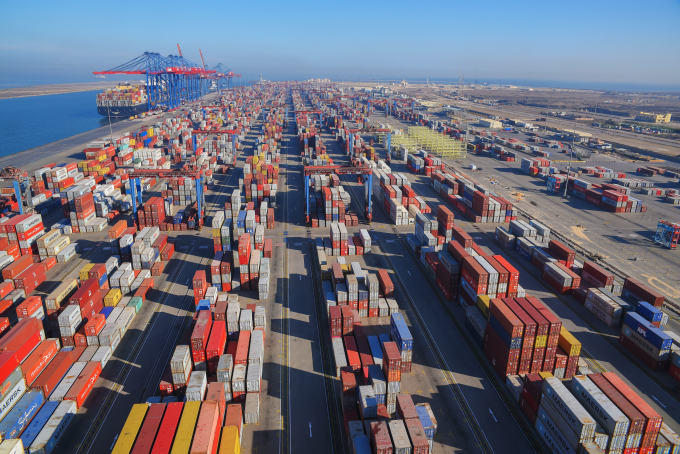
APM Terminals officially opened the latest expansion to its Suez Canal Container Terminal (SCCT) over the weekend, releasing some 2m teu of annual terminal capacity into the east Mediterranean transhipment market.
However, with a new terminal also shortly due to open in Damietta, the east Mediterranean transhipment market is set to see a sudden upsurge in capacity.
The SCCT expansion added just under 1km of new quay and 510,000sq metres of yard space, equipped with 12 quay cranes, 30 electric RTGs, and more than 90 trucks, and increases capacity by 2.2m teu annually, raising SCCT’s total capacity to 7m teu, and taking overall capacity in Port Said – including the Port Said West Terminal – up to 8m teu.
The facility is one of the key ports in the Gemini Cooperation network between APM Terminals’ sister company Maersk and Hapag-Lloyd.
“SCCT is one of eight specially selected APM Terminals hub terminals forming the backbone for the East-West network by AP Moller–Maersk and Hapag-Lloyd,” an APM Terminals statement said.
“The network was designed to ensure schedule reliability, competitive transit times and resilient operations with fewer stops, and exceptional terminal performance.”
Despite the Red Sea crisis and the widespread absence of Suez Canal transits, container traffic at SCCT has held up remarkably well – it handled 4.5m teu in 2021, at the height of the pandemic-induced demand spike, which fell to 4.2m teu the following year and to 3.95m teu in 2023.
However, in 2024, the first full year of the Red Sea crisis, volumes were a very respectable 3.9m teu, largely as result of the fact that the Gemini partners continued to call there on their four Asia-Mediterranean loops, one India-Europe service and five Mediterranean shuttle services. The partners also introduced three Mediterranean-Jeddah “bridge” services since the Red Sea crisis to serve the Saudi import gateway.
While the new capacity at SCCT was clearly built on a long-term basis, and with a presumption that Suez Canal transits will resume at some point, both the Gemini partners and their alliance competitors are set to face an increasing amount of options in designing how their east Mediterranean transhipment networks will operate, as Port Said is locked in a three-way battle with the competing Egyptian hubs of Alexandria and Damietta.
Currently it is an easy split – there are the Gemini hubs at SCCT; Damietta serves two of the Premier Alliance’s Asia-Mediterranean service they operate jointly with MSC; while CMA CGM’s Terminal 55 in Alexandria hosts the Ocean Alliance’s MED5 Asia-Mediterranean service, with Cosco’s Greek hub at Piraeus generally the preferred regional transhipment hub.
However, with the Damietta Container Terminal 2, also known as DACT [Damietta Alliance Container Terminals] shortly set to be opened, in which Hapag-Lloyd holds a 39% stake and a flagship project for its nascent ports arm Hanseatic Global Terminals, these arrangements could change once more.
DACT, built as a “dedicated east Mediterranean transhipment hub”, will add a further 3.3m teu capacity to a market that is set to be characterised by considerable overcapacity in the next few years, as the table below, largely sourced from the eeSea liner database, shows:

Source: eeSea/The Loadstar
In theory, DACT would offer the Gemini partners the same key advantage that SCCT offers – dedicated terminal capacity – but it is also clear that given current volume levels, the partners don’t require both ports.
It may nonetheless present a golden opportunity to kickstart its volumes should Suez Canal transits resume next year, as has been suggested recently. The new capacity at Damietta could find itself with urgent demand if Europe’s Mediterranean ports find themselves swamped with boxes, as predicted.
For uninterrupted access, sign in or sign up to The Daily News, Premium or The Loadstar Enterprise Plan.

Comment on this article