Strengthening customs enforcement
The White House STRENGTHENING CUSTOMS ENFORCEMENT June 3, 2026 By the authority vested in me as President by ...


CHRW: OVERVALUEDGM: NEW BIZFDX: GROWING CAUTIOUSDHL: DOUBLE UPGRADEDSV: STOCK MARKET REACTION XOM: OIL INVENTORY WARNINGWTC: EBL DEAL DETAILSWTC: EBL DEALEXPD: 'READ MY LIPS' HON: DEALS ON THE MENUEXPD: NEW RECORD XPO: THE REBOUNDCAT: PAYOUT UP
CHRW: OVERVALUEDGM: NEW BIZFDX: GROWING CAUTIOUSDHL: DOUBLE UPGRADEDSV: STOCK MARKET REACTION XOM: OIL INVENTORY WARNINGWTC: EBL DEAL DETAILSWTC: EBL DEALEXPD: 'READ MY LIPS' HON: DEALS ON THE MENUEXPD: NEW RECORD XPO: THE REBOUNDCAT: PAYOUT UP
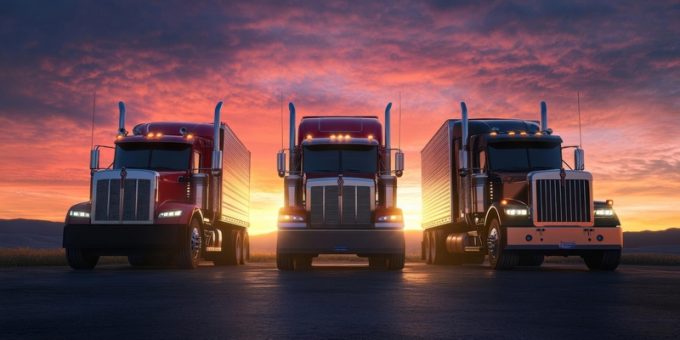
The White House has released more details on its sweeping new import tariffs on medium- and heavy-duty trucks and parts – a move that could reshape supply chains and push up costs for US companies.
Under a presidential proclamation issued on Friday, the US will impose a 25% tariff on imported medium- and heavy-duty vehicles (MHDVs) and specified vehicle parts from Saturday 1 November. The duties mirror those already applied to cars and light vehicles earlier this year, extending the administration’s “national security” rationale into the commercial vehicle sector.
The government argues that the US has become too dependent on foreign suppliers for trucks and components essential to its economy and defence. Imports now account for around half of all Class 8 heavy-duty trucks sold in the US, and more than 40% across the wider MHDV market.
The Department of Commerce concluded that such reliance “threatens to impair national security”, as foreign disruptions could cripple freight and emergency operations.
Domestic truck builders will receive partial relief through an offset mechanism: manufacturers that assemble vehicles in the US can apply for a credit worth 3.75% of their production value between 2025 and 2030. The administration assumes that about 15% of a US-assembled truck’s total value comes from imported components, such as engines and transmissions. Since those parts will now face a 25% duty, domestic producers can claim an offset equal to that cost burden: 25% × 15% = 3.75%.
Vehicles and components that qualify under the United States-Mexico-Canada Agreement (USMCA) will have the 25% duty applied only to non-US content, potentially sparing some North American supply chains. However, so-called “knock-down kits” – where vehicles are shipped in parts for assembly in the US – will still be taxed in full.
The measures are expected to benefit US-based manufacturers, but could impact importers and logistics operators reliant on foreign-built vehicles. Mexico is the largest supplier of heavy trucks to the US and, together with Canada, they supply 90% of US imports, although the USMCA content rules offer some relief.
Analysts warned the tariffs could raise acquisition costs for fleets and slow equipment replacement.
Industry groups, including the American Trucking Associations (ATA), warned that tariffs could add $35,000 to the cost of a new tractor unit and “reduce freight volumes and increase costs for motor carriers”. Supply chains for critical parts, such as transmissions and battery systems, may need rapid restructuring to source more from US suppliers.
The administration’s stated goal is to lift the US-produced share of heavy-duty vehicle sales to around 80%, while “bolstering industrial resilience and creating high-quality manufacturing jobs”.
But the result will also reignite tensions with trading partners, and add cost.
Catch up with today’s News in Brief podcast!
For uninterrupted access, sign in or sign up to The Daily News, Premium or The Loadstar Enterprise Plan.
Comment on this article