Freight rate recovery 'more about demand than blanked sailings'
Container spot rate pricing momentum was firmly behind Asia-Europe carriers this week, with double-digit increases ...


KNX: TIME TO SAY GOODBYEODFL: SET THE BAR HIGHBA: PIPELINEBA: SUPPLY CHAIN TESTAMZN: AI WAVESDHL: THE FRENCH CONNECTIONJBHT: MIND THE SPREADMAERSK: GAUGE THE UPSIDE DSV: UP AND DOWNCHRW: FIRST OF ITS KINDMFT: TAKING PROFIT
KNX: TIME TO SAY GOODBYEODFL: SET THE BAR HIGHBA: PIPELINEBA: SUPPLY CHAIN TESTAMZN: AI WAVESDHL: THE FRENCH CONNECTIONJBHT: MIND THE SPREADMAERSK: GAUGE THE UPSIDE DSV: UP AND DOWNCHRW: FIRST OF ITS KINDMFT: TAKING PROFIT
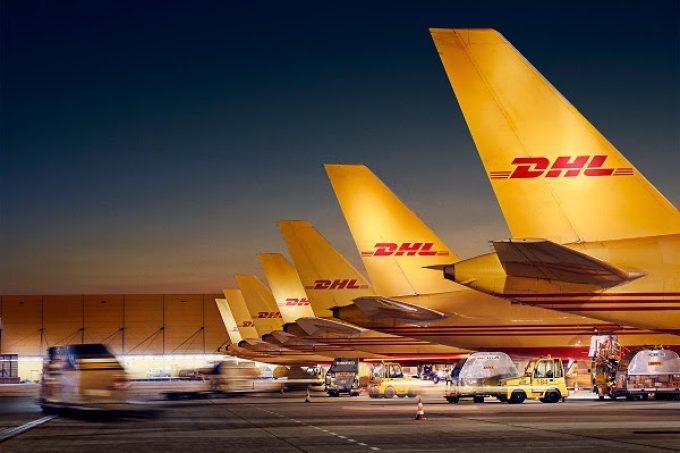
With rumours swirling around what exactly is happening with former chief Tim Scharwath – did he retire or was he pushed? – DHL posted its Q2 results yesterday, with the core profit-generating division Express seemingly all anyone wanted to talk about.
Looking at the financials, one could be forgiven for wondering why Global Forwarding got so little attention, with its revenue down 5.3%, to €4.6bn ($5.34bn), and ebit down a whopping 29.7% year on year, to €196m.
But focus was very on the 20% fall in Express volumes, the reason for this, and the long-term implications of the cost-cutting measures under the Fit for Growth branding that allowed the division to post a 6.9% ebit uptick on the back of 5.7% drop in revenue.
Group CFO Melanie Kreis agreed the volume drop had been high, but noted that this had resulted from the “significant decline on the transpacific” after the US abolition of the de minimis exemption for Chinese and Hong Kong exporters.
Ms Kreis told investors: “That is also what our competitors have talked about; clearly, after 2 May, there has been a significant decline on the transpacific. I think for us, the impact of that has been a bit different to competition.
“This is because we had already started managing down those volumes, because, for us, they were not the most profitable. So we see a combination of the de minimis impact and regular yield management.”
That “managing down” came by way of the Fit for Growth programme – cutting some €1bn from the group’s costs by 2027, to contend with the rising global economic uncertainty, including DHL’s decision to cull its Express capacity.
However, while cost-cutting has bolstered the group’s numbers, UBS’s Cristian Nedelcu was among investors expressing concern overDHL Express’s capacity to meet demand in the event of a turnaround or return of de minimis excemption.
Ms Kreis responded: “Yes, when volumes come back, we’ll also increase capacity again. What we have traditionally seen is that this is quite a sweet spot period, where volumes then tend to come back quicker than we add capacity, giving us good operating leverage.”
Looking ahead, Ms Kreis warned that DHL was working on the basis that the “worst case scenario” provoked by the end of de minimis was an “all-inclusive” €200m ebit loss for Express.
She said de minimis had been “obviously one of the most volatile topics of the last few months”, noting that the US had said the exemption would remain in place for the rest of the world until summer 2027.
“Just four weeks later, we get an executive order which foresees the abolishment of de minimis by August. So there are still many moving parts; for example, the whole question of the postal implementation of the de minimis abolishment,” she added.
“That is why we now have to really watch and see – will it be implemented the way it was announced? What will be the details, what will that mean for trade flow substitution effects? [Will there be] opportunities which could also arise from the whole thing?”

For uninterrupted access, sign in or sign up to The Daily News, Premium or The Loadstar Enterprise Plan.
Comment on this article