Canada looks on as Mexico and US formally talk USMCA renewal
Canada was looking in from the outside as formal negotiations on the future of the ...

DSV: UPSIDEKNX: TIME TO SAY GOODBYEODFL: SET THE BAR HIGHBA: PIPELINEBA: SUPPLY CHAIN TESTAMZN: AI WAVESDHL: THE FRENCH CONNECTIONJBHT: MIND THE SPREADMAERSK: GAUGE THE UPSIDE DSV: UP AND DOWNCHRW: FIRST OF ITS KINDMFT: TAKING PROFIT
DSV: UPSIDEKNX: TIME TO SAY GOODBYEODFL: SET THE BAR HIGHBA: PIPELINEBA: SUPPLY CHAIN TESTAMZN: AI WAVESDHL: THE FRENCH CONNECTIONJBHT: MIND THE SPREADMAERSK: GAUGE THE UPSIDE DSV: UP AND DOWNCHRW: FIRST OF ITS KINDMFT: TAKING PROFIT
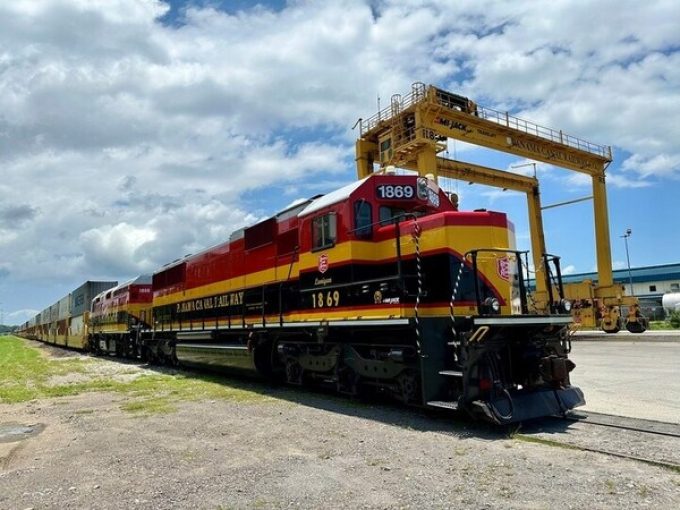
Three weeks can be a long time – especially if they stretch to more than two months. A system cutover in the Canadian Pacific Kansas City (CPKC) rail network in early May triggered a spike in dwell times that has proven more difficult to correct than expected. Moreover, it has rippled beyond the legacy KCS network across the border into Mexico.
Two years into the integration of the two North American Class I carriers, which had gone without significant problems, the pair moved on 3 May to replace the legacy KCS management control system in its former territory with CP’s TYES system, a step that had been planned long in advance.
Almost immediately problems occurred at the yards in New Orleans and Shreveport, the two biggest hubs for switching volumes on the KCS map, manifesting themselves in escalating dwells. At Shreveport dwell had surged from 35 hours to 68 hours by the end of the week.
Initially the problems appeared to be localised operating issues affecting Louisiana, eastern Texas and parts of Mississippi, but disruption continued to spread. On 21 May CPKC CEO Keith Creel told investors that the railway faced “wrinkles we had to iron out across the network”, adding that “in two or three weeks it’ll be in the rearview mirror and everything will be normalised”.
Shippers reported that the system was not processing waybills, rail car location visibility was lost and interchanges jumped from normally 24-48 hours to up to seven days. Some had to divert traffic to other routes avoiding the affected sectors in the KCS network.
To industry insiders the problems are not a huge surprise. One analyst noted that cutovers are “notoriously fraught”, citing a litany of such efforts causing serious repercussions.
The CPKC difficulties have been serious enough to get the Surface Transportation Board involved, which has been monitoring the situation and wrote to the carrier on 17 June, pointing out that its data showed elevated dwell times, slower average velocity and a drop in on-time performance.
CPKC management responded three days later in writing to the regulator, stating that it was working to restore network fluidity. It took steps to bypass Shreveport and deployed cross-functional SWAT teams to restore missing inventories, assist customers and train CPKC staff on the TYES system and interfaces. On a broad level it was working to update inventory data in order to generate waybills and restore fluidity.
Data quality and insufficient interchange data have been key issues, as this meant that work orders could not be created until data had been re-worked in a manual process, resulting in congestion at customer facilities as well as at rail yards, which aggravated the problems as it became more difficult to locate rail cars in congested yards.
These efforts yielded partial progress. Fluidity had improved at Jackson by 20 June, but the situation at Shreveport had actually deteriorated. Four days later CPCK reported new bottlenecks in Louisiana and Mississippi, which had knock-on effects on flows across the border to Mexico. As a result, velocity declined at three rail points in Mexico, including Monterrey, which registered a 15-week high in dwell times.
Monterrey is a critical piece in CPKC’s rail operations in Mexico. The yard has struggled to cope with volumes for some time, with no space to expand into. CPKC has put much emphasis in its marketing on its network covering all three USMCA countries and worked to beef up its capabilities in this corridor with plans to mount a cold chain service this month in partnership with cold storage provider Americold.
CPKC management now expects operations to be back to normal halfway through this month. While progress has been made, it has been patchy, noted Rick Paterson, MD of Loop Capital Markets, adding that “railroad recoveries are almost always uneven”.
“The nature of Class I networks, with all the inherent feedback loops, make these things very difficult to forecast in terms of timing,” he remarked.
For uninterrupted access, sign in or sign up to The Daily News, Premium or The Loadstar Enterprise Plan.
Comment on this article