
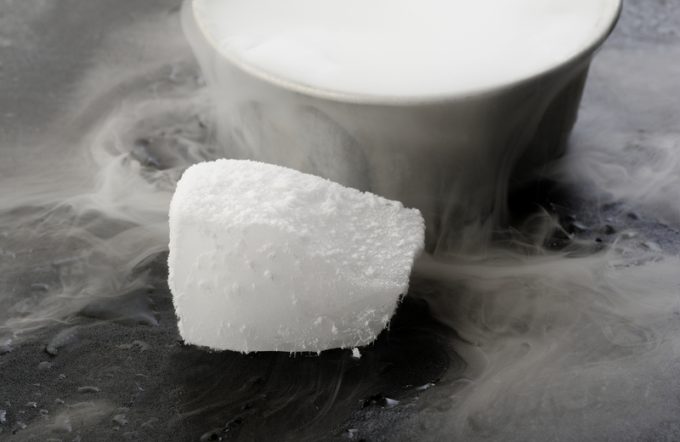
Dry ice – an integral part of many cool chains – has occasionally been in short supply in regional markets – and long-term trends point to a structural shortage as early as next year.
Indeed, in October, brewers in California faced the prospect of having to throttle-back production because the supply of beverage-grade carbon-dioxide (CO2) was reduced to a trickle by permanent and temporary closures of major sources of the gas – worries not confined to the west coast.
“Many regions in the US could face similar disruptions in the coming years. The long-term outlook for the availability of beverage-grade CO2 remains fragile,” warned the Brewers Association.
Nor, of course, is the problem limited to the beverage industry. Dry ice – ubiquitous in cold chains from pharmaceuticals to food – is made of CO2, and shortages, mostly associated with shutdowns of production facilities, have repeatedly put a strain on supply chains.
In 2022, surging Covid vaccine shipments sent demand for dry ice soaring, causing bottlenecks and rising prices – spot prices have surged as much as 300%.
Later that year and early in 2023, perishables and pharma exporters in New Zealand were struggling to export their goods, after a refinery that had produced CO2 as a byproduct in 2022, closed, leaving the nation with a single production facility for food-grade CO2 – and that was shut down in December because of safety issues.
In January this year, the national Customs Brokers and Freight Forwarders Federation (CBAFF) reported members had not been able to ship exports by air. One company that would normally use between seven and ten tons of dry ice in a week for airfreight, could only muster 200kg, and importers re-used dry ice on incoming shipments for domestic legs.
The CBAFF called on the government to explore options to increase domestic production.
Despite such crises, and legal restrictions such as the amount admitted on aircraft, dry ice has remained the prime choice for cold chains. According to industry experts, it is unmatched by other options, as it combines strong cooling capability with relatively long life spans, and the absence of spills (as it changes from solid state to gas without turning liquid) with relatively low cost – considerably cheaper than gel packs or other cooling solutions.
However, these advantages are losing their lustre with supply shortages on a road to change from isolated regional problems to a structural issue. Demand is rapidly outpacing the expansion of CO2 production capacity.
In the US, where dry ice production currently averages about 4,600 tons a day, according to Intelligas Consulting, demand has grown by about 5% a year for nearly ten years, whereas production has inched up by a mere 0.3% a year.
Growth has been hampered by refinery closures as, well as the high cost of establishing new facilities. On top of this, the industry is facing plans to sequester CO2 from ethanol production. So far bio-fuel development has been viewed as a promising source.
The US and NZ are not the only areas where CO2 output looks tenuous against rising demand: the UK and Europe are also heavily dependent on a small number of producers, according to a market report from Thermosafe, The Dry Ice Market in 2025: Dynamics, Challenges & Industry Responses.
Demand has been strong. According to a forecast for the coming six years Dry ice production equipment market – global forecast 2025-2032, the food and beverage sector is the biggest user, with seafood the most prominent sub-sector, accounting for 18% of global dry ice output. Pharmaceuticals account for about 30%. Dry ice use for medical applications has been growing by 5.8% a year, propelled by vaccine transport requirements.
At the same time, industrial blast cleaning has expanded by nearly 8% a year to become a rapidly growing contender for dry ice, putting further strain on slow-growing supply.
All these dynamics point to structural bottlenecks before long. One industry observer warned that this could begin to show as early as next year.
Cold chain solutions providers have been experimenting with alternatives to dry ice – from recyclable gel packs and phase change materials to battery-powered coolers and advanced insulation solutions. However, so far nobody is showing signs of heading for an all-out replacement.
Instead the trend – at least for now – is to layer in these solutions to reduce the amount of dry ice needed.
Comment on this article