French customs shake-up raises the bar rather than closing the door
Following France’s abolition of Regime 42 for non-EU businesses, UK shippers and freight forwarders are ...

TSLA: JUST AS VW STRUGGLESBA: NEW BIG ORDERBA: THE ORDERBOOK GROWSPLD: PUSHING FOR A DEAL PLD: TIME TO DEALEXPD: ANOTHER ALL-TIME HIGH CHRW: NEW RECORD DSV: AHEAD OF EARNINGS RELEASE JBHT: NEW HIGHS EVERYWHEREPLD: STRONG DELIVERYJBHT: FAIR-VALUE CONSENSUS ESTIMATE AT ALL-TIME HIGH KNIN: AI TECH ADVANTAGEPLD: TRADING UPDATE ON THE WAY KNIN: UPSIDE
TSLA: JUST AS VW STRUGGLESBA: NEW BIG ORDERBA: THE ORDERBOOK GROWSPLD: PUSHING FOR A DEAL PLD: TIME TO DEALEXPD: ANOTHER ALL-TIME HIGH CHRW: NEW RECORD DSV: AHEAD OF EARNINGS RELEASE JBHT: NEW HIGHS EVERYWHEREPLD: STRONG DELIVERYJBHT: FAIR-VALUE CONSENSUS ESTIMATE AT ALL-TIME HIGH KNIN: AI TECH ADVANTAGEPLD: TRADING UPDATE ON THE WAY KNIN: UPSIDE
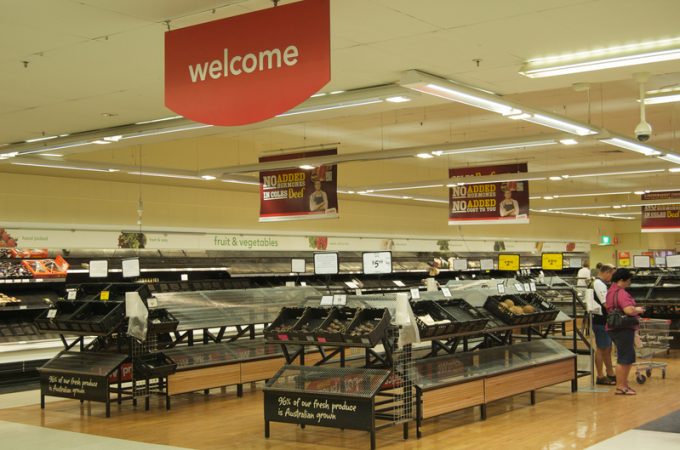
Research has called into question the UK’s ability to feed itself in the event of “shocks” which become increasingly likely as the effects of climate change set in, amid petitions for the government to have a “stockpiling” plan in place.
The report, Just in Case: narrowing the UK civil food resilience gap, features interviews with 70 experts from the food industry, government and academia, highlighting that the UK food supply is dependent on imports and is likely to be brittle in the face of future crises. Vectors for future food shortages include poor water quality, biodiversity loss and the risk of disease, which has increased since the UK lost access to EU monitoring systems.
One senior executive interviewed in the study suggested that “the co-existence of a number of difficulties such as Covid, labour shortages, post-Brexit adjustment, container shortages, long-term sickness” in 2021 led to food shortages, and that the “situation has not really improved much ever since”.
Around 23% of UK food consumption in 2022 came from the EU, the report found. The UK provides 58% of its own food needs and the report’s author Tim Lang, emeritus professor of food policy at City St George’s, University of London, suggested this needs to be more.
“There is a gap between the official risk and resilience framework which presents a picture that all is okay… there is too much complacency about UK food security and civil food resilience barely features at all in forward planning,” he said.
The UK government should examine “…options for stockpiling at the national, regional, local and household levels”, the study recommends. “The UK currently has no national food policy or strategy other than those inherited from the previous Conservative government reaffirming business-as-usual. The Labour UK government should legislate for a new comprehensive plan for food security and resilience stressing the importance of feeding all the people well for good and bad times.”
Meanwhile, another report, Modelling the effects of closer UK-EU cooperation and of US tariffs, co-authored by Frontier Economics and Best for Britain, projects that closer economic co-operation and ‘deep regulatory alignment’ in exports could help to shield both the UK and EU member nations from the effect of US tariffs.
The study listed several scenarios where the US either imposes 20% export tariffs on Europe, or not; and whether the UK undertakes ‘deep regulatory alignment’ with the EU, or not. The study projects that if the government is willing to align some regulations with the EU, the UK could claw back 2.2% ($21.9bn) of exports for the UK annually, even in the event of US-imposed tariffs. Without new US tariffs, the figure is 3.3% ($32.9bn).
Closer ties would reduce the impact to EU member states to -1.8%. If the UK does decide to go it alone, however, it will likely suffer a -1% ($10.3bn) hit to exports if the US imposed tariffs.
Taking into account the changes from tariffs, EU member states would collectively suffer -2.2%, with the Italian economy hit the hardest at -2.4%, while the UK economy is spared the worst.
In a business-as-usual scenario, the industrial sector would be the hardest hit by tariffs in the UK , possibly losing -2.8% (-$27.8bn). However, a marked 2% ($19.3) increase is expected in the provision of services.
“Tariffs reduce UK goods exports, but services exports increase, because tariffs increase trade costs affecting goods relative to those affecting services, inducing a substitution from goods to services,” the report explained. “The effect is observed in the EU as well, but is stronger for the UK given the greater importance of services in overall UK trade.”
Re-aligning UK regulation with the EU could help to claw back some of the GDP losses suffered since Brexit, said Best for Britain. “The Office for Budget Responsibility (OBR) estimated that transitioning from EU membership to TCA arrangements would lead to a long-run fall of 4% in real GDP,” said the study. “[Our] results suggest that the alignment scenarios could help recover between a quarter to a half of this loss. They also suggest that the regulatory scenarios provide security to the UK against long-run effects of US tariffs on growth.”
“No other policy proposal or infrastructure investment has the potential to move the economic dial on this scale in this timeframe. It not only falls within the Prime Minister’s stated red lines for his Brexit reset, but appeals to the voters he won from the Conservatives at the last election and whose support he needs to keep,” said Naomi Smith, chief executive of Best for Britain.
“Deeper regulatory alignment with our largest market offers growth to every corner of the UK and is the change Britain has been waiting for. Voters want it, businesses need it, the time is right for the government to commit to it,” she added.
For uninterrupted access, sign in or sign up to The Daily News, Premium or The Loadstar Enterprise Plan.
Comment on this article