
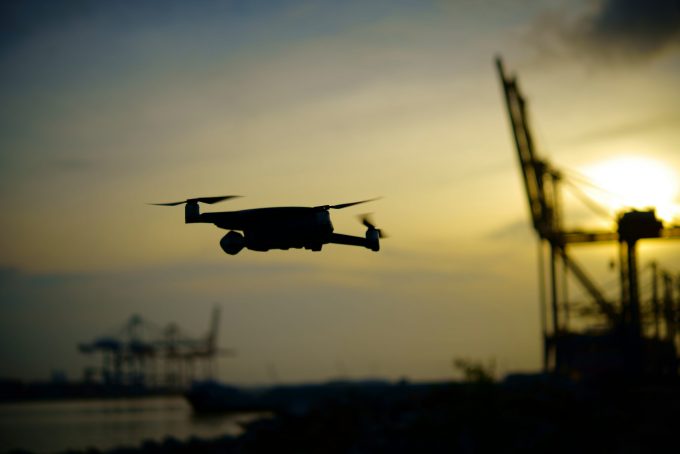
Washington is closing the door on foreign drones, just as the cargo sector is poised for take-off.
The US Federal Communications Commission (FCC) has banned all new foreign-made drones and critical components.
The ban does not affect any drones hitherto purchased, nor the import, sale, or use of any existing models the telecoms regulator previously authorised, only new or upgraded models.
The FCC justified this step on the grounds that foreign-made drones “pose an unacceptable risk to US national security”, an argument air cargo industry executives have dismissed as ‘BS’, noting that existing technology allows spying through other means, like hacking into US-made drones.
The broad perception is that the ban is targeting Chinese drones, which have dominated the US scene, being used by private owners to firefighters and police departments. Industry leader DJI commands an estimated 70% of the global drone market.
Chinese authorities have criticised the move and indicated they would be ready to take steps to safeguard the legitimate rights of Chinese enterprises in the US. DJI, which had offered full collaboration with US authorities in addressing security concerns, complained that the FCC had not released any information “regarding what information was used by the executive branch in reaching its determination”.
Industry observers have pointed out that the ban marked a significant change for operators in terms of how they can plan and purchase their fleets.
Cargo drone companies in Canada and Europe contacted by The Loadstar for comment had not responded by the time of publication.
In September the US Department of Commerce signalled that it was intending to issue rules to restrict Chinese drones that could extend beyond the FCC’s ban.
These decisions come at a juncture when drone operations in the US are poised to enjoy significantly more freedom. Last summer the US Department of Transportation proposed a rule that would allow routine drone operations beyond ‘line of sight’. To date, this is only possible on the basis of individual waivers, which seriously constricts commercial operations.
According to a study published by SkyQuest last October, the global cargo drone market is headed for rapid growth. The report valued the global market in 2024 at $1.53bn and projected growth to $8.29bn by 2030, expanding at a rate of 34.2% CAGR that would propel the global fleet from 445 units in 2024 to 2,746.
The authors predict the fastest growth would be in the Asia Pacific region, increasing at 40.3% CAGR.
In the US, cargo drone developer Elroy Air performed its first delivery flight on 10 December. Its hybrid electric Chaparral VTOL drone moved a load of 213lbs 2.6 miles in California. The aircraft is designed to carry payloads of up to 300lbs up to 300 km.
Elroy has been working closely with the US Air Force and Marine Corps as well as with FedEx, which became involved in the venture in 2022.
The integrated express carriers are at the forefront of cargo drone trials in the US, alongside Amazon and Walmart. UPS’s Flight Forward arm has been operating with Zipline under limited exemption.
Amazon suspended tests last year, owing to some technical issues, but resumed trials later in the year. Walmart, which had been pushing its drone programme with partner DroneUp aggressively, slowed down after two years, in 2024 closing drone hubs in Arizona, Utah and Florida to concentrate efforts in the Dallas/Fort Worth area.
DroneUp CEO Tom Walker commented that smaller-scale operations were not sustainable and that the focus was shifting to automation and the development of a drone with higher payload capacity and longer range.
These difficulties indicate that the existing technology is not quite ready to unfold its potential, but Washington’s plans to open the door to routine operations beyond line of sight have, presumably, added impetus to developers to come up with improved solutions – without having to worry about foreign competitors.

Comment on this article