CULines snaps up SeaLead tonnage to expand Middle East services
China United Lines has capitalised on SeaLead Shipping downsizing to expand its Far East-Middle East ...

PLD: PROPOSAL DETAILSPLD: FINAL OFFERDSV: ROAD CEO MATTERSDSV: VOLUME PROGRESSION IN SEA FREIGHT DSV: TIME TO INCREASE THE VOLUMES IN SEA FREIGHTDSV: HEADCOUNT DISCREPANCIESDSV: TRASHEDDSV: IT IS A MATTER OF TRUSTDSV: FREE CASH FLOW QUESTIONEDDSV: QUESTION TIMEDSV: CEO ON SCHENKER INTEGRATIONDSV: CFO PREPARED REMARKSDSV: CEO PREPARED REMARKSDSV: CONF CALL FWRD: SHOOTING UPKNX: TRADING UPDATE ON THE WAY GM: TRADING UPDATE OUTUPS: REMEMBER THE TAILWINDS
PLD: PROPOSAL DETAILSPLD: FINAL OFFERDSV: ROAD CEO MATTERSDSV: VOLUME PROGRESSION IN SEA FREIGHT DSV: TIME TO INCREASE THE VOLUMES IN SEA FREIGHTDSV: HEADCOUNT DISCREPANCIESDSV: TRASHEDDSV: IT IS A MATTER OF TRUSTDSV: FREE CASH FLOW QUESTIONEDDSV: QUESTION TIMEDSV: CEO ON SCHENKER INTEGRATIONDSV: CFO PREPARED REMARKSDSV: CEO PREPARED REMARKSDSV: CONF CALL FWRD: SHOOTING UPKNX: TRADING UPDATE ON THE WAY GM: TRADING UPDATE OUTUPS: REMEMBER THE TAILWINDS
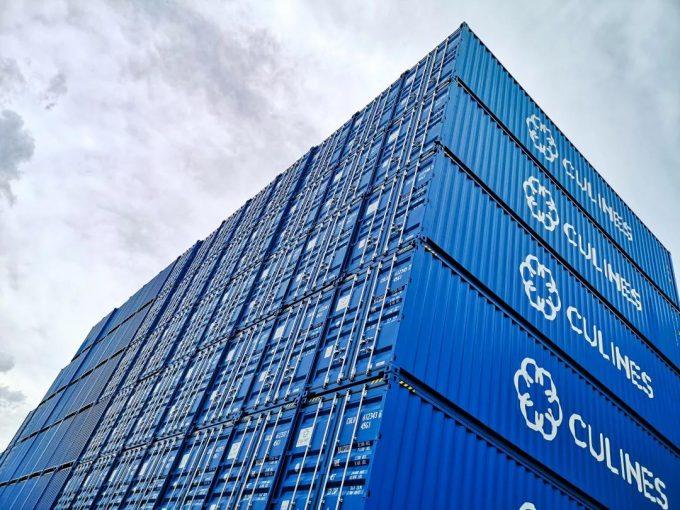
More Chinese container lines are pouring capacity into the Indian market, as trades between the two major Asian economies rapidly expand despite recent confrontations around long-standing border disputes.
CULines, Sinotrans, and SITC now have multiple services out of Indian ports along the east and west coasts – the latest a two-string intra-Asia network announced by CULines for August.
The weekly services have been branded China –Subcontinent Express (CSX) and China India West Coast Service (CWS).
CSX has a rotation of Qingdao-Xiamen-Nansha-Port Klang-Nhava Sheva-Mundra-Port Klang-Qingdao, with the Herta, launching from Nhava Sheva on 18 August. CWS’s rotation is Shanghai-Ningbo-Shekou-Singapore-Port Klang-Nhava Sheva-Karachi-Mundra-Port Klang-Hong Kong-Shanghai, debuting at Nhava Sheva on 23 August.
Shanghai-headquartered CULines began operations out of India in 2015 and has a network of services connecting China, South-east/West Asia, the Middle East and the Red Sea.
Signalling regional trade ambitions, CULines recently opened a subsidiary entity in India to handle its agency functions.
“As a major global economy, India holds immense market potential,” it said. “CULines will continue to invest resources to optimise its route network, and is committed to providing customers with more efficient and high-quality logistics solutions, injecting vitality into regional shipping development.”
Meanwhile, Sinotrans and SITC have a vessel-sharing agreement (VSA) with other Asian carriers, including SeaLead and TS Lines, for a Far East-India loop, known as FIX, which rotates Qingdao-Shanghai-Ningbo-Shekou-Chennai-Visakhapatnam-Port Klang-Shekou-Qingdao.
Trade diversification in Asia has resettled regional supply chain dynamics, with carriers expanding market coverage in tandem with the changing demand.
Intra-Asia ocean capacity for India has traditionally thrived on China-origin cargo, mostly industrial for manufacturing verticals and white goods for the burgeoning consumer market, and have gained considerable pace in recent months, strengthening rate levels.
To illustrate, Q1 (April-June) Indian imports from China soared 16% year on year, to reach some $30bn, versus the $4bn for the reverse trade, according to available data.
Fiscal year 2023-24 two-way trade stood at some $118bn, making China India’s largest trading partner.
Average cargo booking rates from Shanghai to Nhava Sheva are now in the range of $2,200 to $2,300 per 40ft, matching levels being reported for the prominent “westbound or export-centric tradelane” from India to the US, data from industry sources shows.
India-Red Sea trades have been a new major attraction for regional and feeder operators. Turkey-based Turkon and Arkas have dipped their toes into this tradelane, producing excess capacity that has weakened India-Middle East rates considerably.
For uninterrupted access, sign in or sign up to The Daily News, Premium or The Loadstar Enterprise Plan.
Comment on this article