News in Brief Podcast | Week 27 2026 | Air forwarder liability and Maersk optimism
This week on the News in Brief podcast, we unpack one of the biggest changes to ...

JBHT: NEW HIGHS EVERYWHEREPLD: STRONG DELIVERYJBHT: FAIR-VALUE CONSENSUS ESTIMATE AT ALL-TIME HIGH KNIN: AI TECH ADVANTAGEPLD: TRADING UPDATE ON THE WAY KNIN: UPSIDEJBHT: STRONG TRADING UPDATE DSV: EVERY LITTLE HELPSJBHT: CEO REMARKS WMT: VERTICAL INTEGRATION IN LOGISTICS
JBHT: NEW HIGHS EVERYWHEREPLD: STRONG DELIVERYJBHT: FAIR-VALUE CONSENSUS ESTIMATE AT ALL-TIME HIGH KNIN: AI TECH ADVANTAGEPLD: TRADING UPDATE ON THE WAY KNIN: UPSIDEJBHT: STRONG TRADING UPDATE DSV: EVERY LITTLE HELPSJBHT: CEO REMARKS WMT: VERTICAL INTEGRATION IN LOGISTICS
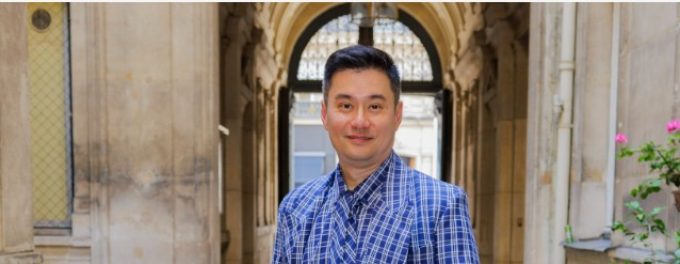
When Frosti Lau left Cathay Pacific after 20 years to become chief executive of Hong Kong Air Cargo Terminals (Hactl), many in the industry were surprised.
Long-serving staff at Cathay tend to stay – or switch to shareholder Swire Group – but not Mr Lau, whose most recent postings have been in Singapore and Australia.
“I wanted to move back to Hong Kong for family reasons,” he told The Loadstar. “I wanted to spend more time with my mum and my family.
“Hong Kong is my home. I just want to continue to help it grow.”

Joining Hactl also offered something different.
“The CEO role is a very good opportunity,” he said. “Not just internationally, but because I feel I can make an impact on the Hong Kong community.”
That community focus runs throughout Mr Lau’s vision for Hactl as it celebrates its 50th anniversary. While many logistics executives talk first about automation, infrastructure, or growth, he repeatedly returns to ‘people’.
His own journey into logistics began unusually early: “When I was 10, my father gave me a typewriter,” he laughed. “He wanted me to type import and export forms, because it cost him money to have someone else do it.”
“I don’t know why,” he said, “but cargo just came naturally to me.”
That early introduction eventually led to a career that included six years with Dragonair and spanned Asia and South Africa, giving him experience across cargo (in which he has spent 16 years and counting), passengers, and digital transformation, before returning home to lead Hactl.
But, under Mr Lau, will Hactl ever expand beyond Hong Kong?
“There is a need to look at diversification, but of course, Hong Kong is our home,” he said, noting the current HK$1bn investment in its facilities.
“This is the biggest market, and we have the most sophisticated facilities, so we will definitely continue to invest in Hong Kong.”
But, he added: “We will keep looking at other options, but many of the bigger locations already have scale. One of the things I keep thinking about is where would be a good location for us.
“Wherever we go, whatever we do, we have to ensure a good management team, and be able to support financial decisions between property, operations, and investment. We will look at what we can scale.”
But for now, he says, his priorities are clear.
“There are three things I’m really interested in,” he explained. “Partnerships, AI and digital, and talent development.”
Partnerships, he believes, should extend far beyond commercial relationships. He wants Hactl to work more closely with airlines, customers, and organisations such as the Hong Kong Trade Development Council, while also exploring staff exchanges with airline partners, so employees gain a better understanding of customers’ operations and culture.
Technology also has an important role to play, but not at the expense of people.
“I’m doing a master’s in AI,” he said, “but technology should empower people, not replace them.”
Instead, he believes, artificial intelligence should remove repetitive work and help solve operational problems, leaving people responsible for oversight and decision-making.
He explained that technology would help Hactl “to stay relevant”, and also find new customers.
“I think that’s one big opportunity. Hactl has always been a very technology-driven company with very experienced people. How can we enhance [that], and how can we further deploy AI and digital? We need to continue to push for efficiency. Hong Kong is not a cheap place to operate, so we must continue to improve, and also stay relevant to the customers. More customers are now demanding digital partnerships.”
He added that his experience at Cathay could help. “Can we use AI to address any problems? We have a very, very sophisticated multi-story operation, but I also experienced digital transformation at Cathay Cargo, which might help us bring up different questions.”
The third priority, talent development, is perhaps the one he speaks about most passionately.
“I want people to feel valued,” he said. “You want people to be reasonably compensated, but more importantly you want them to grow together.”
That philosophy appears well suited to Hactl, where many employees have spent decades with the company.
Asked why staff remain for so long in an industry often associated with high turnover, Mr Lau points to culture.
“We take care of our people,” he said.
He cites everything from committees that allow staff to influence the quality of food in the company cafeteria, to practical measures that help employees cope with Hong Kong’s intense summer heat while working on the terminal floor.
“They feel they belong,” he said. “Many people have grown together with Hong Kong Airport.”
As Hactl modernises its facilities over the next 15 years, Mr Lau believes that culture will become even more important.
“My mission is for us to be the most trusted partner, the most innovative, and the most sustainable operator,” he said. “All these need to be empowered by people.”
Hactl has earned a reputation for producing leaders who speak as readily about people and culture as they do technology and infrastructure. If his first weeks in the job are any indication, Mr Lau is very much cut from the same cloth.
This article is © The Loadstar. Reproduction, rewriting, or derivative use requires a license. Contact [email protected] for licensing enquiries.
For uninterrupted access, sign in or sign up to The Daily News, Premium or The Loadstar Enterprise Plan.

Comment on this article