Indicted liner chairman Teo stands down from top industry jobs
Embattled Singamas Container Holdings executive chairman Teo Siong Seng said today he would take leave ...


DSV: STOCK MARKET REACTION XOM: OIL INVENTORY WARNINGWTC: EBL DEAL DETAILSWTC: EBL DEALEXPD: 'READ MY LIPS' HON: DEALS ON THE MENUEXPD: NEW RECORD XPO: THE REBOUNDCAT: PAYOUT UPDHL: LIGHTHOUSEMAERSK: ANOTHER UPGRADEFWRD: HEALTHY CORRECTION R: RYDER CEO SAYS
DSV: STOCK MARKET REACTION XOM: OIL INVENTORY WARNINGWTC: EBL DEAL DETAILSWTC: EBL DEALEXPD: 'READ MY LIPS' HON: DEALS ON THE MENUEXPD: NEW RECORD XPO: THE REBOUNDCAT: PAYOUT UPDHL: LIGHTHOUSEMAERSK: ANOTHER UPGRADEFWRD: HEALTHY CORRECTION R: RYDER CEO SAYS
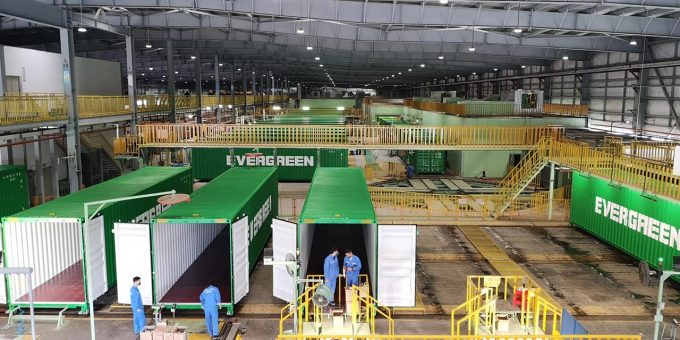
A pair of US class-action lawsuits has pulled back the curtain on what could become one of the most consequential antitrust cases ever to hit the container equipment sector, alleging that the world’s biggest box manufacturers colluded to restrict output, inflate prices and police each other’s behaviour during the pandemic supply chain crisis.
The complaints, filed in a California federal court – one on behalf of US shipper CA Spalding, and the other on bechalf of trucking firm Daybreak Express – follow a US Department of Justice criminal case against container manufacturing giants including CIMC, Dong Fang, CXIC and Singamas.
At the centre of the allegations is the claim that the manufacturers, which together produce 95% of global dry containers, agreed to limit output just as demand for containers surged.
According to the lawsuits, executives from CIMC, Dong Fang, CXIC and a co-conspirator met in Shenzhen in November 2019 and agreed to restrict production by limiting factory shifts and working hours, refusing to build new manufacturing capacity and introducing monitoring systems to ensure compliance.
The most eye-catching detail is a written agreement allegedly known as the “Shenzhen Moon Gazing Equity Investment Fund”, or the “Moon Gazing Fund”.
According to the Daybreak Express complaint, CIMC circulated a draft of the contract to other defendants in early 2020, before the companies held a ceremony around March 2020 to execute a final version. The fund allegedly included a mechanism to financially penalise any company that cheated on the output-restriction agreement.
The complaint also claims the manufacturers installed about 87 surveillance cameras across 49 production lines to monitor whether competitors were sticking to agreed output restrictions. One filing includes a screenshot of surveillance footage allegedly used in a June 2021 audit of production lines.
But it is the internal communications cited in the filings that provide the most revealing glimpse into the alleged cartel.
After a December 2019 meeting attended by the manufacturers, a Singamas executive allegedly reported that participants had discussed limiting shifts and hours, building “no new production lines”, installing CCTV in all production lines and requiring each factory to submit a deposit that would be deducted “if any factory break [sic] the agreement”.
The executive then allegedly warned colleagues: “I have reminded them not to be high profile since it might violate the Monopoly Law or being accused of price manipulation by our customers.”
In another exchange, a Singamas board member allegedly reacted to the report by writing: “The discussion appeared to be anti-competition to me. I feel very uneasy reading your report. May be [sic] we should delete this string of emails after reading?”
Singamas chief executive SS Teo, who was last month indicted by the Department of Justice over the claims and has had to step down from his roles, allegedly replied: “Yes I feel the same.”
The lawsuits further allege executives sought to sanitise internal presentations to avoid attracting antitrust scrutiny.
In one example, a draft presentation referred to a “Manufacturing sector official and unofficial association/alliance”, to which one participant reportedly responded: “Please delete ‘alliance’ as it is quite sensitive under anti-trust law.”
Another executive allegedly advised against including references to “market discipline” in an investor presentation because of potential antitrust concerns. Mr Teo allegedly replied that he would amend the slide and “take out” words.
The allegations suggest the arrangement became increasingly sophisticated over time.
Initially focused on limiting factory operating hours, the alleged conspiracy later evolved into formal production quotas. One presentation cited in the complaint set out “total allowable capacity” and “allowable quota” for participating manufacturers, allocating production volumes among companies and factory lines.
Executives are also alleged to have exchanged confidential information through emails, WeChat groups and regular in-person meetings. The complaint claims manufacturers used surveillance footage from rival factories to audit compliance.
The alleged conduct did not stop at dry containers.
According to the filings, CIMC vice-president Tianhua Huang emailed the chief executive of a competing reefer manufacturer in May 2020, stating that dry container manufacturers had “reached a consensus and established industry self-discipline actions” and suggesting reefer manufacturers should “follow the dry box practice”.
That proposal included “No capacity increase” and a requirement that “all standard reefer manufacturers run one shift only”.
The invitation was allegedly rejected, with the recipient responding that “any such coordination is strictly forbidden by the compliance policies” of his company.
The alleged conspiracy unfolded during one of the most chaotic periods in container shipping history, when supply chains were stretched to breaking point and equipment shortages became a defining feature of global trade.
It also followed one of the worst years for container manufacturers, who issued a slew of profit warnings to investors over 2019’s financial performance – CIMC’s profit for the year was over 50% down on 2018, while Singamas swung from a $72m profit to a $95m loss in the same period.
However, according to the Daybreak complaint, the price of a standard 20ft dry container more than doubled as the pandemic unfolded, rising from roughly $1,600 in 2019 to more than $3,500 by 2021. Prices for a 40ft box are alleged to have climbed from around $2,800 to more than $5,900 over the same period.
The lawsuits claim those overcharges were passed through the supply chain, affecting buyers of transport services whose costs incorporated inflated container prices.
Manufacturers allegedly enjoyed a windfall. One filing claims CIMC’s container manufacturing profits rose from RMB137m in 2019 to RMB11.3bn in 2021, while Singamas recorded a $187m profit in 2021.
The financial stakes are potentially enormous. The complaint does not put a dollar value on the claim, but seeks damages, restitution and disgorgement on behalf of a nationwide class.
Under US antitrust law, any proven damages may be trebled, significantly increasing any eventual award.
For uninterrupted access, sign in or sign up to The Daily News, Premium or The Loadstar Enterprise Plan.
Comment on this article