News in Brief Podcast | Week 25 2026 | Surcharges and software outage
This week on News in Brief, host Charlotte Goldstone is joined by The Loadstar‘s managing editor, ...


CHRW: BOLT-ON DEAL TIMEDHL: GO GREENDSV: BULLISH DSV: NOTE TO INVESTORSKO: TAX FIGHTDSV: STILL 'OVERWEIGHT'WTC: HAMMEREDWTC: MOUNTING TROUBLEWTC: ANOTHER DIFFICULT WEEK CHRW: NEW PRODUCT LAUNCH
CHRW: BOLT-ON DEAL TIMEDHL: GO GREENDSV: BULLISH DSV: NOTE TO INVESTORSKO: TAX FIGHTDSV: STILL 'OVERWEIGHT'WTC: HAMMEREDWTC: MOUNTING TROUBLEWTC: ANOTHER DIFFICULT WEEK CHRW: NEW PRODUCT LAUNCH
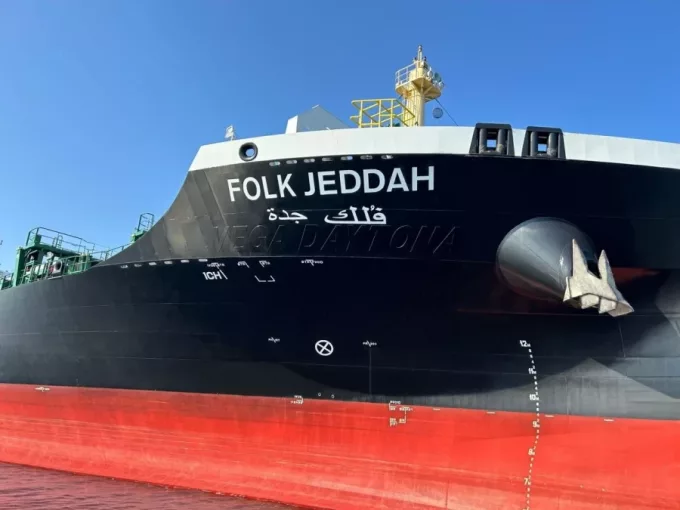
With the Strait of Hormuz remaining effectively closed to the vast majority of container ships, Saudi Arabian carrier Folk Maritime has said it is redeploying its vessels on its India-Gulf (IGS) service away from the region to focus on shipments into the country’s Red Sea ports.
“The CEO of Folk Maritime indicated that the company has taken the initiative to reroute its shipping lines and intensify its presence along the Red Sea, in line with the ongoing shifts in maritime transport routes, thereby enhancing operational efficiency and the continuity of supply chains,” a communique from the state-owned carrier said.
“Amid the rapid shifts in regional maritime transport and the increasing rerouting of shipping away from the Arabian Gulf, Red Sea ports, particularly Jeddah Port, are emerging as key hubs for accommodating container traffic and enhancing the stability of supply chains in the region.
“In this context, Paul Hestback, CEO of the Public Investment Fund-owned company Folk Maritime, confirmed that while Folk does not have significant operational cross-border connections with the Strait of Hormuz, its services on the Arabian Gulf coast have been directly impacted by recent developments,” it added.
According to Xeneta’s eeSea liner database, Folk Maritime currently operates three services – two of which are Red Sea feeders out of its Jeddah home port, while the third is the IGS service on which CMA CGM charters slots.
The IGS string has a pro forma port rotation of Mundra-Nhava Sheva-Sohar-Dammam and deploys two Folk Maritime vessels, the Folk Jeddah and Folk Dammam, both of which are 1,900 teu capacity.
However, according to AIS data, the Folk Jeddah is now in the Red Sea and en route to Jeddah having performed a call at the Jordanian port of Aqaba, and the Folk Dammam has departed Nhava Sheva and is understood to have set a course of Jeddah.
Meanwhile, liner shipping analysts are beginning to sketch out how shipping may return to the region when the conflict cools.
A report issued this morning by Maritime Strategies International (MSI), argues that an optimistic base case scenario would see “naval support for partial passage through the SoH at 70% of the pre-war volume in Q2 before transits normalise in H2.
“In this scenario, we see the near-term disruption and network inefficiencies mirroring, but falling short of, the dynamics seen in the Red Sea.
“This represents the sweet spot for container shipping and the scenario in which liners have maximum pricing power.
“Freight rates would likely rise further over the coming quarter and only ease once networks have stabilised,” MSI writes.
However, it added that a prolonged conflict would inevitably hit consumer demand on which so much of container shipping depends and have consequent effects for non-operating shipowners.
If Hormuz was closed for longer, it warned “the global energy price shock would have a greater negative impact on containership rates and asset prices, with inflation and weaker consumption growth weighing on container demand.
“At best this scenario sees upsides capped, but a long and severe energy price shock could be very negative for global container demand, with an initial rise in spot freight rates giving way to a weakened market in H2 with both time-charter rates and freight rates falling,” MSI adds.

For uninterrupted access, sign in or sign up to The Daily News, Premium or The Loadstar Enterprise Plan.

Comment on this article