New cargo insurance products another chance for a 'quick cash grab'
Forwarders appear less concerned than insurance firms at the present state of cargo coverage, amid ...


CHRW: OVERVALUEDGM: NEW BIZFDX: GROWING CAUTIOUSDHL: DOUBLE UPGRADEDSV: STOCK MARKET REACTION XOM: OIL INVENTORY WARNINGWTC: EBL DEAL DETAILSWTC: EBL DEALEXPD: 'READ MY LIPS' HON: DEALS ON THE MENUEXPD: NEW RECORD XPO: THE REBOUNDCAT: PAYOUT UP
CHRW: OVERVALUEDGM: NEW BIZFDX: GROWING CAUTIOUSDHL: DOUBLE UPGRADEDSV: STOCK MARKET REACTION XOM: OIL INVENTORY WARNINGWTC: EBL DEAL DETAILSWTC: EBL DEALEXPD: 'READ MY LIPS' HON: DEALS ON THE MENUEXPD: NEW RECORD XPO: THE REBOUNDCAT: PAYOUT UP
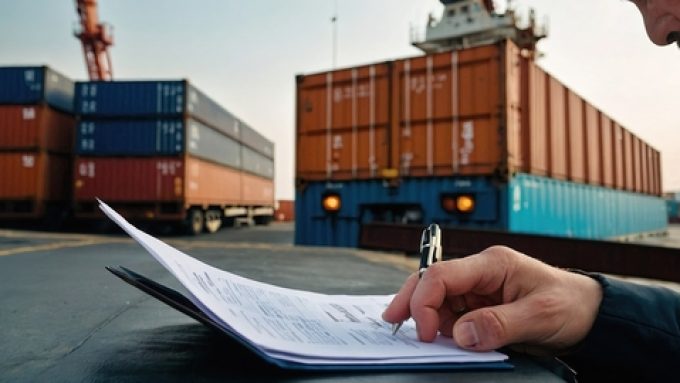
The conflict in the Middle East means insurers and shippers are reassessing their exposure to the disruption in air and sea.
According to supply chain insurance provider Otonomi, the uncertainty has triggered a noticeable increase in enquiries from shippers seeking cover beyond traditional cargo policies.
“When uncertainty spikes, so does the realisation that traditional cargo insurance doesn’t cover what shippers actually lose in a disruption,” an Otonomi spokesperson told The Loadstar.
While war-risk cargo insurance and hull cover typically cover physical damage or loss of goods, it won’t necessarily compensate shippers for delays caused by diversions, congestion, or operational disruption.
These are all scenarios that have become increasingly common this week, with vessels forced to divert to avoid conflict zones, seeing extended waits at anchor or requiring last-minute changes to routes.
“War-risk and hull coverage tells you whether your ship is insured to transit,” the spokesperson explained. “Cargo delay insurance tells you whether your supply chain is insured when it doesn’t arrive on time.”
The marine war-risk market is already sensitive to instability in the region. Following initial Houthi attacks in late 2023, war-risk premiums for Red Sea transit surged dramatically, from near-zero to several percentage points of a vessel’s value almost overnight.
“And they were slow to come back down, even as the tactical picture shifted,” the spokesperson added. “The marine war-risk market has a long memory. Underwriters will want sustained evidence of safe passage – multiple transits with no incidents – before they reprice premiums down.”
Major ocean carriers like Maersk and CMA CGM did resume transits through contested areas when coverage became available, at prices “they could absorb or pass on to customers”, but the lag between improved security conditions and premium reductions remains a defining feature of the sector.
The International Union of Marine Insurance (IUMI) said: “The granting of war cover for the Persian Gulf and Red Sea is and will remain available under specific agreement on a single voyage basis as long as navigation is authorised by governments and flag states.
“In the current fast-paced situation, insurers will regularly re-examine their ability and willingness to that provide cover,” it added.
The IUMI explained that in circumstances such as these, some insurers will serve a ‘Notice of Cancellation’ in relation to the cover their customers have in place to enable the insurer to “reassess the risk” and then “reinstate the cover at adjusted terms”.
“It is important to recognise that a Notice of Cancellation does not, necessarily, end the cover. War cover remains available for owners and operators wishing to take it,” the union stated.
But while maritime insurance costs tend to attract the most attention during conflicts, the impact on air cargo insurance operates differently.
“Premium adjustments for hull and liability in aviation war-risk do occur, but they’re less visible to shippers than vessel surcharges,” said the spokesperson.
Airlines typically avoid high-risk areas when airspace is deemed unsafe, rerouting flights in response to rapid regulatory updates, “so the physical risk is largely managed at the operational level”, they explained.
“But here’s what doesn’t get talked about enough – risk of delays in air freight is absolutely affected by conflict escalation, just differently.
“Iran’s airspace is a major corridor for Europe-Asia freight. When airspace closures force rerouting, flights add hours, and sometimes additional connections. That drives missed delivery windows, spoilage for perishables, and supply chain penalties,” the spokesperson explained.
“What Otonomi covers, regardless of mode, is the downstream consequence – the delay itself. Whether it’s a vessel going around the Cape or a freighter rerouting around Iranian airspace, if your cargo doesn’t arrive when it was supposed to, that’s an insurable event with us.”
For uninterrupted access, sign in or sign up to The Daily News, Premium or The Loadstar Enterprise Plan.
Comment on this article