EXCLUSIVE: More high-profile exits at Ceva Logistics
Down the (C-suite) ladder…


CHRW: DEAL TIMEDHL: GO GREENDSV: BULLISH DSV: NOTE TO INVESTORSKO: TAX FIGHTDSV: STILL 'OVERWEIGHT'WTC: HAMMEREDWTC: MOUNTING TROUBLEWTC: ANOTHER DIFFICULT WEEK CHRW: NEW PRODUCT LAUNCHDSV: LEADING THE DROP
CHRW: DEAL TIMEDHL: GO GREENDSV: BULLISH DSV: NOTE TO INVESTORSKO: TAX FIGHTDSV: STILL 'OVERWEIGHT'WTC: HAMMEREDWTC: MOUNTING TROUBLEWTC: ANOTHER DIFFICULT WEEK CHRW: NEW PRODUCT LAUNCHDSV: LEADING THE DROP
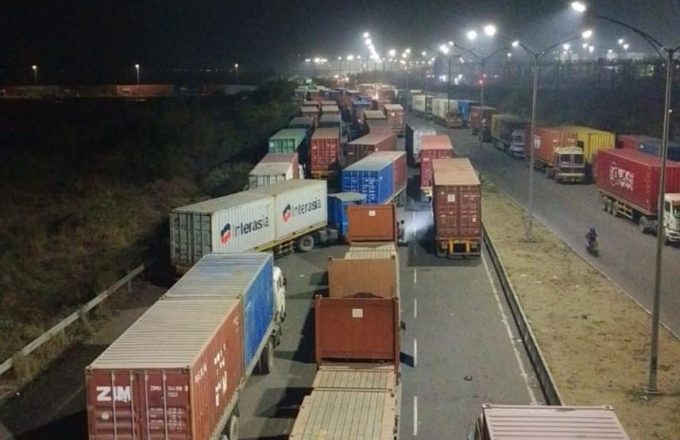
The pace of container trucks into India’s Nhava Sheva port (JNPA) remains a trade concern, as volumes swing for any terminal.
In the past few weeks, Nhava Sheva Freeport Terminal (NSFT) — a joint-venture between CMA CGM (CMA Terminals) and local partner JM Baxi Group, now part of Hanseatic Global Terminals, for concession rights won in 2022 — has incurred the wrath of truck owners over long turnaround delays for vehicles.
The Nhava Sheva Container Operators’ Welfare Association (NSCOWA), representing truckers handling local container moves between terminals and off-site storage depots, complained that truck waits outside the terminal had stretched to 15 to 20 hours for gate-in.
“The most serious concern is that, due to this congestion, many import containers are not being delivered on time, and export containers are missing their cut-off times,” NSCOWA told the terminal authority.
“This has a direct and negative impact on the country’s import-export trade.”
However, the terminal claimed the unusual rush of export freight reporting was driven by vessel-bunching.
“This situation has arisen due to three mainline service vessels coming in later, by almost 24 to 36 hours, than their proforma, thereby resulting in a simultaneous export gate cut-off,” it explained.
Additionally, the terminal sought more transparent and disciplined operations from truck drivers and their supervisors to remedy the problem.
According to local shipping sources, the logjam was rooted in a sudden consolidation of volumes at NSFT, after the terminal began to operate at enhanced capacity from early this year, following mandated infrastructure upgrades.
With the expansion, CMA CGM switched most of its services and calls, including its India-US east coast Indamex, to its dedicated terminal, for greater operational flexibility.
To relieve growing pressure on the land side, the terminal authority yesterday announced a series of cargo gate-in reforms it believed would help smooth the export/import cycle.
“To facilitate uninterrupted movement and reduce congestion at the terminal gate, NSFT will allow all pre-advised containers already in the queue to enter the terminal even after the gate cut-off time, up until vessel berthing,” the terminal said in a trade advisory.
“This measure is intended to avoid trailer turn-backs post-cut-off and support a seamless gate-in experience.”
The terminal also said reefer boxes would be allowed to gate-in without the normal special service request process until the time of vessel berthing.
NSFT’s rapid traffic growth is reflected in the latest port data: the terminal nearly doubled volumes last month, handling 77,815 teu compared with 40,425 teu in November 2024.
Any volume buildup and congestion at one terminal typically creates a knock-on effect on cargo flowing through other facilities in the harbour, which includes those operated by PSA, DP World, and APM Terminals.
“Brisk truck management across the terminals is critical for the trade, as over-the-road traffic contributes the lion’s share of freight handled by the port,” one industry observer told The Loadstar.
JNPA saw a slight drop in throughput in November, down to some 665,000 teu from 680,000 teu in October, data shows.

For uninterrupted access, sign in or sign up to The Daily News, Premium or The Loadstar Enterprise Plan.

Comment on this article