MSC buys controlling stake in Ukraine's Yuzhny box terminal
MSC is reported to have expanded its European port network this week, acquiring a majority ...


KNX: TIME TO SAY GOODBYEODFL: SET THE BAR HIGHBA: PIPELINEBA: SUPPLY CHAIN TESTAMZN: AI WAVESDHL: THE FRENCH CONNECTIONJBHT: MIND THE SPREADMAERSK: GAUGE THE UPSIDE DSV: UP AND DOWNCHRW: FIRST OF ITS KINDMFT: TAKING PROFIT
KNX: TIME TO SAY GOODBYEODFL: SET THE BAR HIGHBA: PIPELINEBA: SUPPLY CHAIN TESTAMZN: AI WAVESDHL: THE FRENCH CONNECTIONJBHT: MIND THE SPREADMAERSK: GAUGE THE UPSIDE DSV: UP AND DOWNCHRW: FIRST OF ITS KINDMFT: TAKING PROFIT
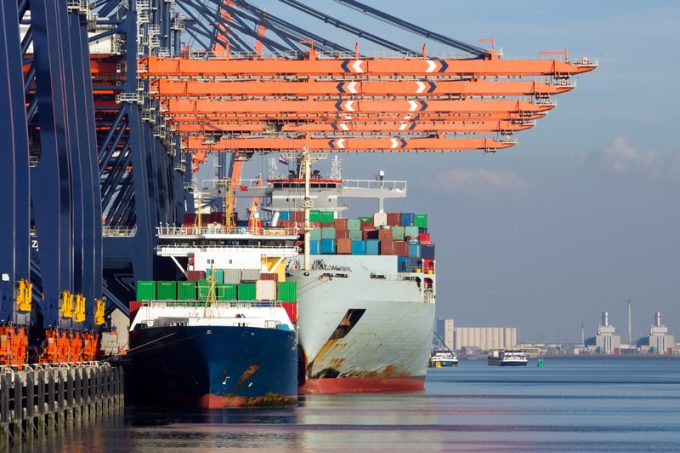
At least one major ocean carrier alliance could be seeking to revamp the port calls on its services from Asia to avoid congestion at some of Europes biggest gateways.
But they will “need to get their skates on” to give BCOs the clarity to sign contracts.
One shipper contact told The Loadstar port congestion was “a massive issue”, and pointed to the port of Rotterdam as the main concern.
“It was a big point of discussion when I was having contracting talks, especially with the Premier Alliance and the terrible on-time performance [of the member liners].”
And, according to the source, there is talk of the alliance – comprising ONE, HMM and Yang Ming – removing Rotterdam from “one or two” loops on their direct services from Asia in a bid to mitigate delays.
Instead, they suggested the carriers could opt for a hub and spoke model as employed by the Gemini Cooperation of Maersk and Hapag-Lloyd.
“A carrier’s head of trade was over from Singapore a few weeks ago and saw the issues at first hand. I think it’s definitely on their radar to change,” said the source. “When we were in Asia, they said they’d hoped to announce the changes before the end of this year.
“They’ll really need to get their skates on as it will be tough to get BCOs to sign contracts to start in the new year if they have no idea of port rotations and transit times,” they warned.
At the time of publication, port of Rotterdam authorities had not replied to The Loadstar’s request for comment.
But while port congestion can result from several causes – labour shortages, bad weather, demand surges, equipment constraints, and so on – the carriers themselves could take a portion of the blame.
A recent report from data company Kpler warned that ultra-large container vessels (ULCVs) “compounded the effect” of congestion.
“These ships, of 18,000+ teu capacity, discharge and load 3,000-5,000 containers per call, requiring extended berth time and straining yard capacity. When multiple mega-vessels arrive simultaneously, even well-managed terminals struggle,” it said.
Indeed, the shipper source said: “It’s pretty unbelievable they bought these ships without a robust plan to ensure they could be unloaded/loaded on time.”
The Loadstar has previously reported how MSC’s recent introduction of larger vessels of between 13,000 and 15,000 teu on its transatlantic Dragon service had placed new operational stress on US east coast ports, according to Sea-Intelligence.
Meanwhile, although no changes have yet been announced to its Asia-Europe rotations, ONE has announced an update to its transpacific east coast service to include a direct call from Cai Mep in Vietnam to improve connectivity from South-east Asia.
Listen to our recent News in Brief Podcast from 09:50 mins to hear more about how the deployment of larger vessels could be leading to port congestion:

For uninterrupted access, sign in or sign up to The Daily News, Premium or The Loadstar Enterprise Plan.
Comment on this article