Carriers keep the price pressure on – a 'shock and awe' PSS the standout
Container spot freight rates on the transpacific and Asia-Europe trades rose for the sixth consecutive ...


HON: DEALS ON THE MENUEXPD: NEW RECORD XPO: THE REBOUNDCAT: PAYOUT UPDHL: LIGHTHOUSEMAERSK: ANOTHER UPGRADEFWRD: HEALTHY CORRECTION R: RYDER CEO SAYS R: AMAZON LTL ANNOUNCEMENTPLD: EV INFRASTRUCTURE PUSHDHL: RAMPING UP 'NEW ENERGY LOGISTICS' GXO: NEW WINAMZN: LTL SERVICE UPDATEGM: ENERGY PROVIDER MODEL
HON: DEALS ON THE MENUEXPD: NEW RECORD XPO: THE REBOUNDCAT: PAYOUT UPDHL: LIGHTHOUSEMAERSK: ANOTHER UPGRADEFWRD: HEALTHY CORRECTION R: RYDER CEO SAYS R: AMAZON LTL ANNOUNCEMENTPLD: EV INFRASTRUCTURE PUSHDHL: RAMPING UP 'NEW ENERGY LOGISTICS' GXO: NEW WINAMZN: LTL SERVICE UPDATEGM: ENERGY PROVIDER MODEL
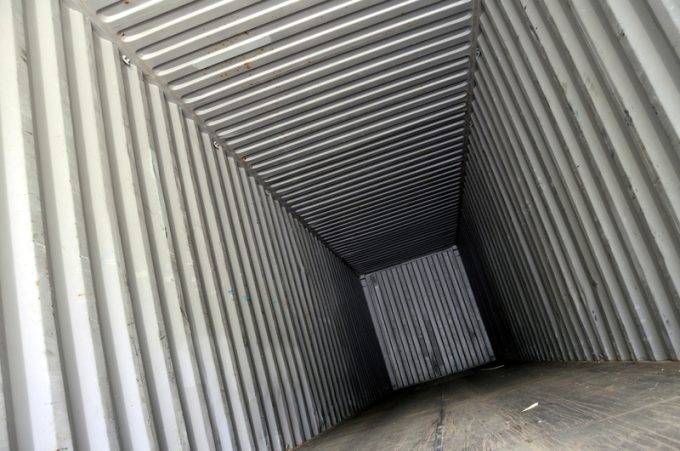
One largely unnoticed consequence of the global container trades hitting the 16m teu-plus level for three consecutive months is the accompanying rise of empty container movements.
And while container repositioning costs have always been a necessary evil for carriers, the Red Sea crisis has noticeably increased them.
Clearly, the number of empty container movements would be likely to follow the same trends defining laden container movements, but according to new research from consultancy Sea-Intelligence, it also transpires that since 2019 the proportion of empty container movements as a share of total container movements has grown at a faster clip than full container movements.

Source: Sea-Intelligence Consulting (click to expand)
With July seeing just under 16.6m teu shipped globally, according to the most recent Container Trades Statistics data, this would mean that some 4.5m teu of air was also shipped.
Sea-Intelligence also shows that in terms of teu-miles, as “the work needed to reposition empty containers also depends on the distance sailed”, and discovered that on a teu-miles basis empties accounted for 41% of all box liftings in July, compared with 31% at the beginning of 2019.

Source: Sea-Intelligence Consulting (click to expand)
However, it attributed this ramp up in empties to trade imbalances that have increased during the period, rather than the Red Sea crisis.
“The trend is relatively unaffected by the Red Sea crisis.
“Basically, indicating that the shifting of trade imbalances is relatively evenly split across trades which are, and are not, impacted by the Red Sea crisis.
“The present situation is that for every 10 miles a full container is shipped, there is now a need to ship an empty container 4.1 miles – sharply up from “just” 3.1 miles in 2019, before the pandemic market disruptions,” it writes.
However, where the Red Sea crisis has made an impact is the total distances empty containers have travelled, up 20% since the Houthis began their attacks on merchant shipping.

Source: Sea-Intelligence Consulting (click to expand)
“Clearly, the Red Sea crisis has made a strong impact on the average sailing distance for an empty container, showing that it is not just a relative increase versus the full loads, but also an additional absolute increase in the work needed.
“Consequently, the data also clearly illustrates an increasing cost pressure related to the movement of full containers, as the empty movement costs will have to be allocated to the full containers,” Sea-Intelligence writes.
So what should carriers wish for? The Red Sea crisis absorbs significant amounts of capacity and has helped to prop up rates that would probably otherwise crash.
But it also results in far higher empty repositioning costs, and reopening the Suez Canal would clearly lower those costs, and may be one reason why CMA CGM has been keen on sending vessels on backhaul Asia-Europe voyages when it deems it safe.
For the other deepsea carriers it offers a silver lining in the shape that whenever the full-scale reopening of Suez takes place, and the likely capacity shock that will follow, at least container repositioning costs will drop.
For uninterrupted access, sign in or sign up to The Daily News, Premium or The Loadstar Enterprise Plan.

Comment on this article