Brazil faces more uncertainty as Trump plans financial hit on shippers
Brazilian forwarders are dealing with yet more uncertainty after US regulators proposed slapping its southern ...


GXO: NEW WINAMZN: LTL SERVICE UPDATEGM: ENERGY PROVIDER MODELEXPD: LAYOFFS CONFIRMED DHL: DOWNSIDE RISKDHL: OVERVIEWDHL: DATE CENTRE PUSH IN APACMAERSK: HAVE A LOOKTSLA: TAILWINDS FDX: PAYOUT ADJUSTMENT UPDATEKNIN: AIR FREIGHT NETWORK EXPANSION
GXO: NEW WINAMZN: LTL SERVICE UPDATEGM: ENERGY PROVIDER MODELEXPD: LAYOFFS CONFIRMED DHL: DOWNSIDE RISKDHL: OVERVIEWDHL: DATE CENTRE PUSH IN APACMAERSK: HAVE A LOOKTSLA: TAILWINDS FDX: PAYOUT ADJUSTMENT UPDATEKNIN: AIR FREIGHT NETWORK EXPANSION
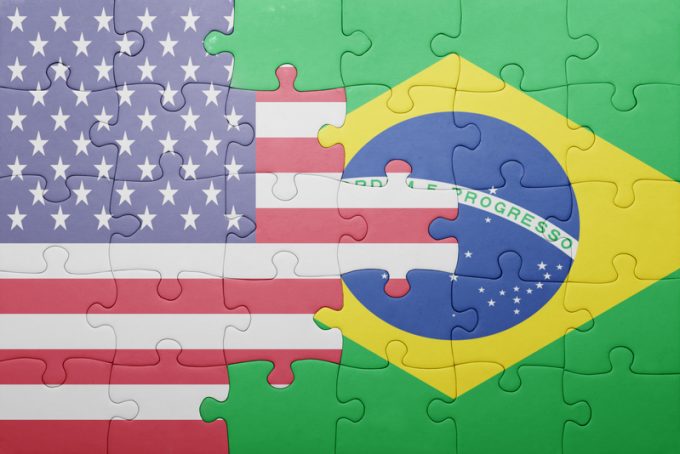
Brazil’s prospects under the Biden administration looked bright, as the US sought an alternative manufacturing hub to China.
But Donald Trump’s return to the White House may have soured those prospects, and Brazilian forwarders believe there is work at home that must be done to take advantage of opportunities elsewhere.
That souring was provoked by President Trump’s broad-reaching tariff policy – Brazil faces a 50% levy on exports to the US if a deal, including the release of former president Jair Bolsonaro, cannot be struck.
Those active in the logistics sector, however, believe reaching an agreement with the US is just one issue Brazil needs to address if it is to capitalise on its prospects as a regional, and perhaps even global, manufacturing base.
AGL Cargo’s Rodolfo Boraschi said Brazil, like most South American countries, was still struggling with a series of logistics bottlenecks, not the least of which is congestion across its primary airports, ports, and terminals.
“We are seeing bottlenecks, due to the outdated operational setup across the country’s logistics infrastructure, which are leading to delays in both imports and exports,” he told The Loadstar.
“Inland logistics is another pain point, and while road transport remains the dominant mode, Brazil’s highways are not only overburdened but are also poorly maintained in many regions, especially those outside São Paulo state.”
However, Mr Boraschi was keen to stress that efforts were being made to address the problems, with growing global interest in Brazil’s rail network, which has seen a spike in investment across corridors in the country’s mid-west and south-east.
He noted that customs processing was also seeing improvements, even if there was “still with a long way to become 100% paperless and digital”. But a “scattergun” approach to these improvements was leading to other problems, he added.
“It creates unpredictable clearance times that disrupts just-in-time manufacturing. What we need is investment in multimodal infrastructure, digitalisation of customs and documentation, and regional integration of logistics policy,” Mr Boraschi explained.
Achieving this, he said, would depend on “strategic collaboration” between logistics providers and government, alongside investment from both public and private sectors – if the government is sincere in its desire to “unlock the region’s full potential”.
AGL itself has been moving ahead in this by forging stronger partnerships with carriers and gateways, working to expand capacity closer to customers, and leveraging data analytics to anticipate and mitigate delays, he said.
Given the level of investment this may require, there may be scepticism at the willingness to do this amid the backdrop of the US tariff debacle – that 50% figure does not include President Trump’s threats to raise the levy in response to Brazilian reciprocity.
In May alone, Brazil exported $9bn worth of goods to China compared to the $3bn it sent to the US, suggesting it is nowhere near as dependent as some of its neighbours on the US.
And, interestingly, Mr Boraschi cited increased export flows to near-neighbours like Argentina, Chile, and Mexico, as well as some African countries, as offering other opportunities.
Long-term, Brazil’s willingness to look elsewhere may prove counter-productive for Washington, with suggestions that the US trade representative’s decision to launch an investigation into Brazil’s “unfair trade practices” must only push the country closer to China.
Of course, that would require Brazil to address those infrastructure issues.
For uninterrupted access, sign in or sign up to The Daily News, Premium or The Loadstar Enterprise Plan.

Comment on this article