Carriers keep the price pressure on – a 'shock and awe' PSS the standout
Container spot freight rates on the transpacific and Asia-Europe trades rose for the sixth consecutive ...


HON: DEALS ON THE MENUEXPD: NEW RECORD XPO: THE REBOUNDCAT: PAYOUT UPDHL: LIGHTHOUSEMAERSK: ANOTHER UPGRADEFWRD: HEALTHY CORRECTION R: RYDER CEO SAYS R: AMAZON LTL ANNOUNCEMENTPLD: EV INFRASTRUCTURE PUSHDHL: RAMPING UP 'NEW ENERGY LOGISTICS' GXO: NEW WINAMZN: LTL SERVICE UPDATEGM: ENERGY PROVIDER MODEL
HON: DEALS ON THE MENUEXPD: NEW RECORD XPO: THE REBOUNDCAT: PAYOUT UPDHL: LIGHTHOUSEMAERSK: ANOTHER UPGRADEFWRD: HEALTHY CORRECTION R: RYDER CEO SAYS R: AMAZON LTL ANNOUNCEMENTPLD: EV INFRASTRUCTURE PUSHDHL: RAMPING UP 'NEW ENERGY LOGISTICS' GXO: NEW WINAMZN: LTL SERVICE UPDATEGM: ENERGY PROVIDER MODEL
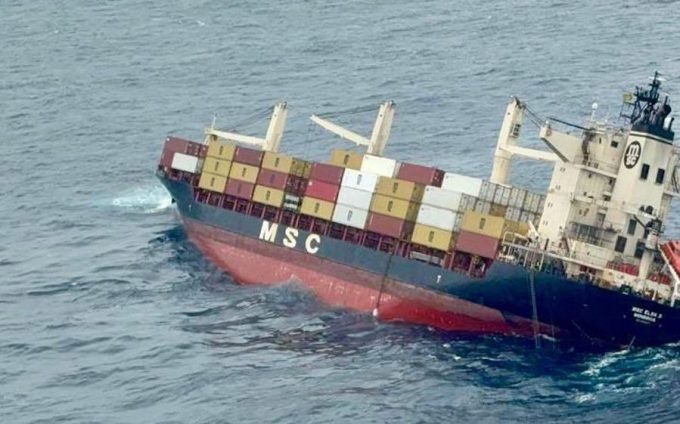
Liberia-flagged container vessel MSC Elsa 3 capsized off India’s Cochin coast on Sunday, sparking serious environmental concerns of oil spillage and hazardous cargo.
According to the marine and transit claims consultancy WK Webster, the vessel “developed a severe list in monsoon weather conditions, in a position approximately 38 nautical miles south-west of India on 24 May and subsequently sank on 25 May”.
The vessel was en route from Vizhinjam port, India’s newest transhipment hub, to Cochin port (Vallarpadam), part of MSC’s growing container relay traffic. It had some 640 containers on board, with 25 registered as containing dangerous cargo, including calcium carbide, according to industry updates.
Responding to the ship’s distress call, all 24 crew members were rescued safely by Indian maritime security agencies.
According to available data, the 184-metre MSC Elsa 3 has made five calls to Vizhinjam this month. Sources believe extreme weather combined with stowage/stability issues may have caused the vessel to drift and, ultimately, flip over.
An official cause for the casualty is still to come, and so far no customer advisory or update on the incident has been provided by the Geneva-based carrier.
As salvage operations continue, the age of the 1997-built MSC Elsa 3, which reportedly had a nominal capacity of 1,730 teu, raised eyebrows among industry watchers. And iIndustry updates indicate it has a history of accidents, including a collision near Yemen in 2016, and a pirate attack near Nigeria in 2021.
“That kind of age [28 years] is a major concern,” one Mumbai-based industry analyst told The Loadstar. “It could be that the vessel had some problems and yet it sailed [from Vizhinjam].”
It is believed MSC’s massive containership fleet includes some 200 ships aged 20 years or older, even as it operates the most modern ultra-large ships of 20,000 teu-plus capacity.
MSC Elsa 3 has featured in several of MSC’s coastal or transhipment operations along the Indian coast, including a shuttle between Tuticorin and Sri Lanka’s Colombo port, according to the eeSea liner database.
Indian maritime regulator the Directorate General of Shipping (DG Shipping) recently tightened port entry rules for foreign-flagged vessels of over 25 years old. However, the age ceiling remains at 30 years for fully-cellular box ships, and these older vessels have crowded the Indian coastal market since the government liberalised cabotage rules for foreign tonnage in coastal trades, in early 2018.
“We strongly press the DG Shipping to revisit present regulations to weed out excessively older tonnage,” said one Indian shipowner.
Meanwhile, the fate of MSC Elsa 3’s cargo and any insurance claims remain uncertain – according to industry experts, no ‘general average’ is declared when a vessel is fully lost.
Additionally, cargo insurance on behalf of shippers is generally settled subject to the circumstances of the casualty, after investigations.
“If the carrier is found liable for the incident, cargo owners have a chance to recover their losses,” one source said.
The 2010 collision between MSC Chitra, a 31-year-old containership, and breakbulk carrier Khalijia-3 along the main Mumbai fairway forced the closure of cargo terminals at Nhava Sheva port for nearly a week, and later resulted in the DG Shipping reworking vessel entry regulations.
Contact the writer at [email protected]
For uninterrupted access, sign in or sign up to The Daily News, Premium or The Loadstar Enterprise Plan.

Comment on this article
Glenn Mathias
May 27, 2025 at 10:56 pmThe investigators need to ensure that the vessel was seaworthy when it sailed from Vizhinjam viz its containers had been loaded/stowed and secured in accordance with the vessel’s Cargo Securing Manual