
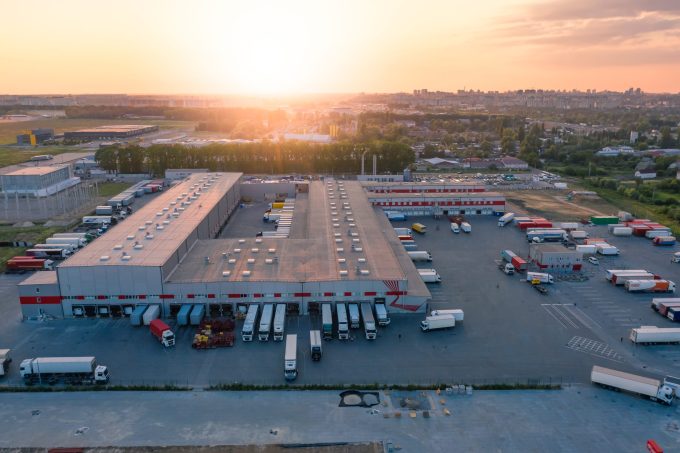
As we approach the 2025 peak season, supply chains stand at the crossroads of transformative change, driven by heightened complexity, technological innovation, and evolving customer expectations. Leaders from SnapFulfil and Kaleris share insights into critical trends that will shape the future of warehouse management and yard operations.
Automation expands its reach
Brian Kirst, chief commercial officer at SnapFulfil, emphasises the expansion of warehouse automation beyond large enterprises into mid-market operations. With accessible robotics and tailored automation becoming increasingly feasible, mid-market warehouses are set to realize significant efficiency gains. Kirst points to compelling data: nearly 80% of businesses anticipate boosting automation investments by 2025, underscoring a clear shift toward integrated automation strategies.

Brian Kirst, SnapFulfil
Similarly, Rene Alvarenga, VP of product management at Kaleris, sees optimization technology as pivotal, enabling businesses to achieve more with existing resources. Advanced optimization and AI-driven insights will support predictive analytics and proactive decision-making, essential in managing logistics and yard operations more efficiently.
Integration and real-time visibility
One common challenge faced by businesses today, highlighted by Kirst, is achieving effective integration between warehouse management systems (WMS), enterprise resource planning (ERP), and transportation management systems (TMS). Over 40% of companies identify integration as their primary technology challenge. Real-time data visibility remains essential to operational responsiveness, and modern WMS solutions that seamlessly capture real-time data are becoming central to achieving this goal.
Alvarenga echoes the sentiment by emphasizing the critical role of real-time data in logistics and yard management. A robust Yard Management System (YMS) integrated with a TMS can streamline operations by proactively coordinating trailer arrivals, dock scheduling, and resource allocation. The result: significantly reduced truck turnaround times and bottlenecks, directly enhancing operational throughput.
Workforce adaptation and augmented labour
Both executives note labor constraints as ongoing challenges. For SnapFulfil’s Kirst, the scarcity of skilled warehouse workers accelerates the adoption of user-friendly technology designed to reduce training time and boost productivity. Technology takes over routine tasks, allowing workers to concentrate on more complex, value-added activities.
Alvarenga adds that the emphasis on execution excellence involves more than just visibility—it’s about translating real-time data into actionable steps to enhance workforce efficiency. Digital transformation, in this context, demands effective training and full utilization of existing systems, fostering operational agility without overwhelming personnel.
The power of predictive analytics and AI
Predictive analytics and AI will play defining roles. SnapFulfil anticipates leveraging AI to provide advanced decision-making tools and sophisticated analytics, enhancing warehouse intelligence and operational responsiveness. Kirst notes that AI will identify inefficiencies, streamline task assignments, and dynamically adapt warehouse processes in real-time.
For Kaleris, predictive analytics transforms data into actionable insights that improve logistics planning, reduce disruptions, and optimize resource allocation. Alvarenga highlights the benefits already realized by integrating predictive capabilities within TMS and YMS solutions, which effectively manage operational complexity and drive continuous improvement.
Leveraging cloud and network strategies
Cloud-based WMS solutions offer immediate benefits such as reduced capital expenditure, rapid scalability, and faster ROI, according to Kirst. SnapFulfil emphasizes seamless integration with critical supply chain systems to enhance overall efficiency.
Similarly, Alvarenga identifies leveraging the entire yard network as a strategic asset. A connected digital infrastructure, provided by comprehensive YMS, enables businesses to balance inventory and asset capacity across multiple sites, unlocking substantial operational efficiencies and cost savings.
Preparing for future supply chain realities
Looking ahead, both experts advocate strategic flexibility and modular technology deployment as keys to future-proofing supply chain operations. SnapFulfil advises companies to embrace modularity in technology adoption, avoiding rigid, single-vendor solutions. Kaleris emphasizes that clear prioritization of operational challenges, supported by appropriate KPIs, will be crucial in leveraging digital solutions effectively.
In conclusion, the future of supply chain management through 2025 hinges on strategic automation, seamless integration, predictive analytics, and flexible, cloud-enabled systems. Companies positioned to adapt swiftly and harness real-time data and AI-driven insights will not only navigate but thrive amidst increasing supply chain complexities.
Comment on this article