Chinese shippers 'fogged down' by worsening port congestion
Foggy weather at China’s key container ports of Shanghai and Ningbo has worsened the congestion, ...


MAERSK: NEARING ONE-YEAR HIGHFDX: FEDEX FREIGHT UPSIDEBA: TIME TO DELIVERFDX: EARNINGS RISKDSV: UPSIDEKNX: TIME TO SAY GOODBYEODFL: SET THE BAR HIGHBA: PIPELINEBA: SUPPLY CHAIN TESTAMZN: AI WAVESDHL: THE FRENCH CONNECTIONJBHT: MIND THE SPREADMAERSK: GAUGE THE UPSIDE
MAERSK: NEARING ONE-YEAR HIGHFDX: FEDEX FREIGHT UPSIDEBA: TIME TO DELIVERFDX: EARNINGS RISKDSV: UPSIDEKNX: TIME TO SAY GOODBYEODFL: SET THE BAR HIGHBA: PIPELINEBA: SUPPLY CHAIN TESTAMZN: AI WAVESDHL: THE FRENCH CONNECTIONJBHT: MIND THE SPREADMAERSK: GAUGE THE UPSIDE
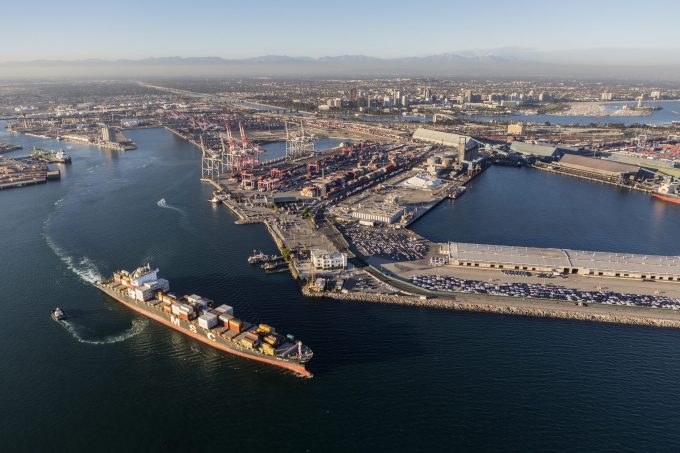
A rates war on the Asia-US West Coast tradelane is under way, as newcomer transpacific carriers offer lower rates to gain market share.
This has forced the established mainline operators to drop their rates to hold onto customers.
According to Linerlytica’s report this week, while the Shanghai-US West Coast rate on 23 August stood at $5,955 per 40ft, down 10% from the previous week, actual rates are more than $1,000 lower.
Linerlytica said: “Several of the smaller carriers and recent newcomers on the trade are slashing their rates to boost volumes, forcing their large rivals to match.”
Taiwanese intra-Asia carrier TS Lines is one of these transpacific newcomers, having joined SeaLead Shipping (itself a returnee to the transpacific) Asia-US West Coast service. Last week, TS launched a standalone Asia-USWC service, the AWC2, connecting Nansha, Shekou, Kaohsiung, Xiamen and Long Beach.
And Hede (Hong Kong) International Shipping, also newcomer to the transpacific, this month added capacity to its China-USWC service, having chartered two 2,700 teu ships, Pona and Posen, for three-and-a-half years, demonstrating commitment to the trade.
Hede, a Chinese feeder operator owned by Tangshan Port Group, entered the transpacific trade in March, with Shanghai-Los Angeles services.
Linerlytica suggested the outlook over the coming month was mixed, with carriers hoping the diversion of cargo away from the US east coast ahead of a potential dockers’ strike in October could boost the market.
Meanwhile, the short-lived Canadian rail strike last week did not result in any material increase in port congestion, although Pacific north-west ports are struggling to cope with increased inbound rail volumes.
There are, however, signs that vessel utilisation on Asia-US East Coast routes is declining, as shippers divert containers to avoid any disruptions from industrial action on the US east coast. This could help box line attempts to hike Asia-US west coast rates in September, their having failed to do so this month.
For uninterrupted access, sign in or sign up to The Daily News, Premium or The Loadstar Enterprise Plan.
Comment on this article