


There is a cool new toy in town. Shippers wondering what the latest tariffs will do to their landed costs need wonder no more – and it marks a new step in digital-first forwarding.
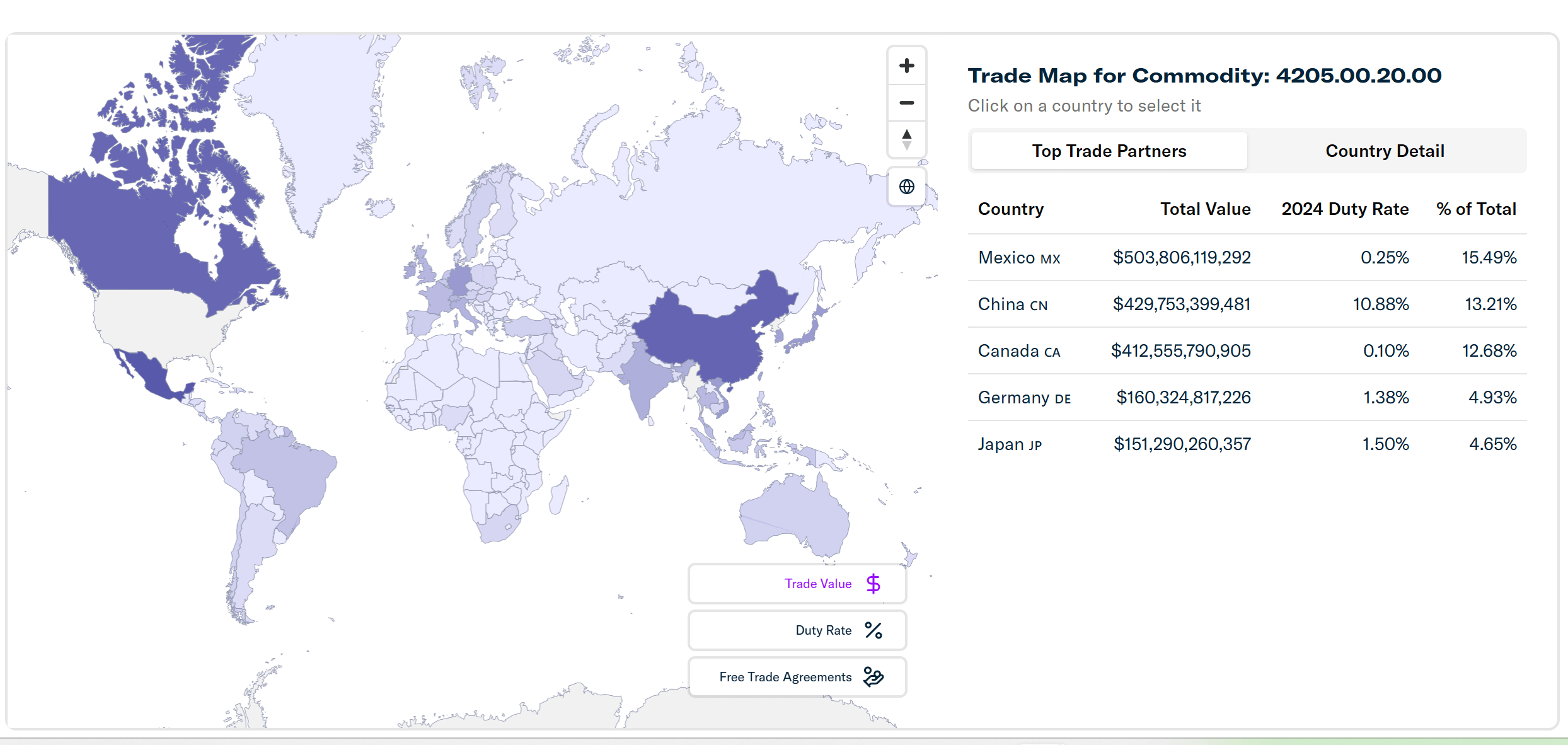
Launched at Transport Logistic in Munich this week, US forwarder Flexport is offering an up-to-date tariff platform, covering some 19,000 HTS codes.
Want to buy $10,000-worth of leather shoelaces from Mexico? The landed cost in the US is $12,500. If that’s too expensive, the platform shows you where else exports shoelaces: try India – that will save you some $1,500 over Mexico, in tariff terms at least.
It’s a platform particularly suited to Flexport’s smaller shipper customers, which don’t have the breadth to watch the ever-changing tariffs. And they are ever-changing: yesterday, for example, tariffs on steel and aluminium doubled, to 50%, for most countries.
“The small shippers are typically single-sourcing from China. So they are having more issues. That’s why we’re launching things like this, because they don’t have the trade teams to go to all these countries and figure it out,” Flexport chief operating officer Sanne Manders told The Loadstar.
“What we do here is to show what applies to you, to your HS code, and this is where you can source from.”
Sourcing diversification will be crucial, he said.
“I think that if tariffs ex-China bounce back to, let’s say, 145%, you will have an extinction of many SMEs in the US, because a lot of them are single-sourcing and won’t have time to diversify their supply chain.
“I think that until 14 August [when reciprocal tariffs could rise], we have a window of opportunity. Christmas is saved, Santa approves this deal.
“A lot of these small shippers are bringing in a lot of products, so they’re buying themselves time then to figure out how to diversify. It’s all top of mind even if you’re a small shipper. We’re trying, with these type of tools, to help them out figure it out quicker.”

Flexport is not solely exposed to smaller US shippers, its larger customers, which account for the majority of volumes, already have a diverse sourcing strategy in place.
“We work across the whole spectrum, of small shippers to large shippers. The large shippers have already diversified and source from multiple countries, including China. They have a China+1 or a China+4 strategy. So the impact of tariffs is more limited, even when China tariffs went up like crazy.”
Flexport’s new tools and platforms seem to be the signs of a maturing business.
“What is really important to understand is that building the underlying infrastructure of data is the most important part we’ve done,” explained Mr Manders. “Because that allowed us to build an operating system on top of it that is more efficient, that’s more automated; and that also allowed us to build these type of tools.
“Over the past 10 years we built the wiring and the piping. Now we’re building the application layer on top. Now the fun part comes.”
That foundation work has also allowed Flexport to launch a customer-focused AI tool to help answer questions. Mr Manders explained: “For AI, you need to be able to crunch all your data to get these types of insights. So, if you don’t have that database – that underlying infrastructure – you can’t do this.”
Earlier this year, the forwarder also launched its Control Tower for orders, booking, Customs, and visibility management.
“So if you book directly with carriers or with other forwarders, you can also go through us. We have all your data in the same place, but you’re still booking with others. This is geared towards larger customers that say ‘I can’t give you my whole spend, because I need to diversify for fiduciary reasons’. But they still want to have all their data. They then have two options.
“They can either implement a TMS and pay a lot of money, and then let all forwarders integrate it; or they take our TMS. And why can we do that? Because we built the operating system. We built the data layer, so now it’s an application layer on top of it.”
He added that the Customs site was also progressing fast, and attracting larger, Fortune 500-type customers – and the development of AI tools is also moving fast.
“When we came into this industry [in 2013], we said, ‘hey, we’re gonna digitise this industry, because no other forwarder was founded after the internet. Now another kid can come in and say, ‘I’m gonna AI this industry, because no forwarder was founded after AI’.
“So we have to be focused on AI, and learn as much as we can. The big issue with AI companies is that they don’t have the data set and the underlying layer that we have. That’s our big advantage.
“We are a tech-first company that can deploy technology very quickly, and therefore we can move very quickly. The traditional companies do have the data, but it’s not very well structured; it sits in different, disparate systems, etc. And the newer companies don’t have the data. We have both.”
Is this the start of Flexport 2.0?
“Well, hey, we are definitely much more grown up than we were.”
More to come on Flexport: profits, tariffs, and fire-sales.
This article is © The Loadstar. Reproduction, rewriting, or derivative use requires a license. Contact [email protected] for licensing enquiries.
Comment on this article