Hormuz traffic rises as US-Iran MoU sparks cautious optimism
Forwarders may be short of confidence following confirmation that the US and Iran have signed ...


WTC: ANOTHER DIFFICULT WEEK CHRW: NEW PRODUCT LAUNCHDSV: LEADING THE DROP RXO: CRATERINGDSV: WHAT TO LIKEDSV: BULLISH BAMZN: 'AI EDGE'HD: HERE IS HOW IT LOOKSAMZN: REG RISKMAERSK: MOST HARMED
WTC: ANOTHER DIFFICULT WEEK CHRW: NEW PRODUCT LAUNCHDSV: LEADING THE DROP RXO: CRATERINGDSV: WHAT TO LIKEDSV: BULLISH BAMZN: 'AI EDGE'HD: HERE IS HOW IT LOOKSAMZN: REG RISKMAERSK: MOST HARMED
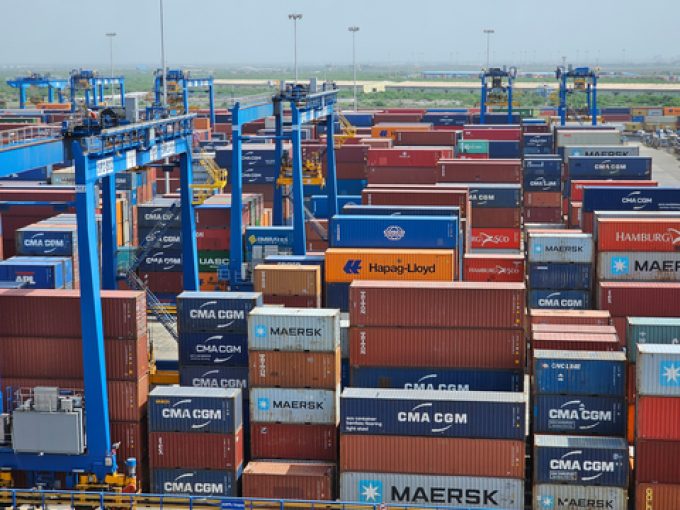
Cost relief on the port-side is growing for Indian shippers facing the onslaught of supply chain disruption sweeping through the Middle East region.
In a proactive measure under directives from the government, Mundra Port – Adani Ports’ flagship entity – has announced significant concessions for containers that had been abruptly stranded in the yards following a halt to ocean services at the beginning of the month.
Mundra operates five box terminals, accounting for a major portion of India’s containerised trade.
Adani Ports (APSEZ), in a trade advisory, said it would offer a 15-day storage fee waiver on export boxes that its terminals were holding from 28 February to 8 March for shipment to Middle East ports.
The port will also extend rebates of up to 80% on its existing reefer plug-in charges during the same period.
Additionally, APSEZ said Middle East-bound containers retrieved by customers under the “back-to-town” window would not be levied lift-on/lift-off, shutout and transportation fees.
“In the wake of ongoing disruption in the Middle East, to support the Indian shippers exporting containerised cargo to the Middle East, container terminals at Mundra Port will provide the concessions,” APSEZ said.
“This gesture is aimed at providing greater flexibility for Indian exporters shipping cargo into the Middle East and for supporting customer requirements during this period of geopolitical instability causing schedule variability,” it added.
Nhava Sheva Port (JNPA) was the first Indian port to extend tariff support for Middle East shippers.
“JNPA is committed to extending all possible assistance to the export/import community to tide over the crisis situation,” the port said.
“JNPA has decided to offer waiver on charges like ground rent and reefer plug-in charges to the stranded export containers.”
But on the ocean freight side, concerns are mounting for shippers – container booking rates for Middle East destinations are on the upswing because of restricted capacity and hefty war risk and other surcharges.
Carriers are now essentially concentrating on offering connections to Sohar (Oman) and Khor Fakkan and Fujairah in the UAE, with local trucking services for cross-border haulage to other Gulf markets.
Although wildly varying between operators, booking rates from Nhava Sheva for these discharge ports are as high as $3,500-$4,000 per 40ft, according to Indian shipper sources.
Space availability for reefer bookings is also acutely scare as carriers are restricting themselves to standard dry container pickups because of transit reliability concerns.
Meanwhile, more mainline carriers are slowly re-entering the Middle East trade. According to sources, Hapag-Lloyd is shaping plans to reopen bookings to the Persian Gulf, including for Indian customers.
The German liner has just begun offering ‘carrier haulage solutions’ across the Middle East to handle the final leg of cargo movements.
According to a Hapag-Lloyd advisory, it is offering Jeddah, the Omnai ports of Salalah and Sohar, and Kohr Fakkan as alternative ports to access markets behind the Hormuz Strait but warned that road freight capacity in the region remains in a state of lux.
“As capacity remains subject to availability at the time of booking, so we strongly encourage customers to plan shipments in advance to secure space and minimize potential delays,” it said.
You can contact the writer at [email protected].
For uninterrupted access, sign in or sign up to The Daily News, Premium or The Loadstar Enterprise Plan.

Comment on this article