Norfolk Southern's COO quit mid-merger – nobody's asking the right question
Leadership bench optimized for integration, but if the deal falls apart…


KNIN: GO GREENDSV: CHANGING OF THE GUARDS CHRW: OVERVALUEDGM: NEW BIZFDX: GROWING CAUTIOUSDHL: DOUBLE UPGRADEDSV: STOCK MARKET REACTION XOM: OIL INVENTORY WARNINGWTC: EBL DEAL DETAILSWTC: EBL DEALEXPD: 'READ MY LIPS' HON: DEALS ON THE MENU
KNIN: GO GREENDSV: CHANGING OF THE GUARDS CHRW: OVERVALUEDGM: NEW BIZFDX: GROWING CAUTIOUSDHL: DOUBLE UPGRADEDSV: STOCK MARKET REACTION XOM: OIL INVENTORY WARNINGWTC: EBL DEAL DETAILSWTC: EBL DEALEXPD: 'READ MY LIPS' HON: DEALS ON THE MENU
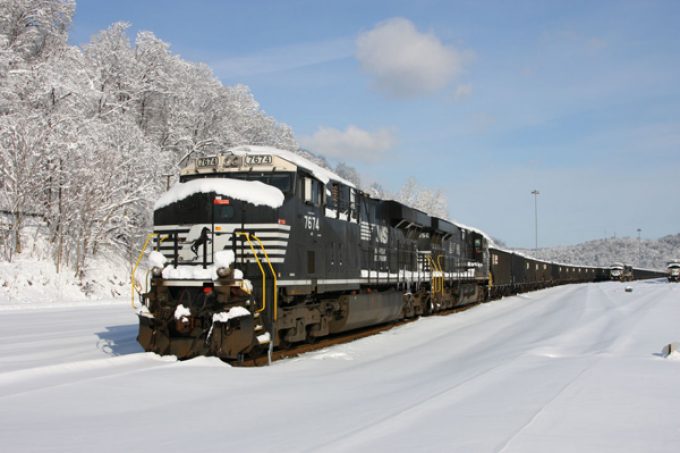
North American Class I railways are unfurling new intermodal partnerships, partly in response to the merger plan of Union Pacific (UP) and Norfolk Southern (NS). Previous attempts in this direction failed to yield decisive results.
Earlier this week UP and NS announced a new joint domestic intermodal service linking Louisville, Kentucky with Los Angeles and Lathrop in California, Seattle, Portland, Salt Lake City and Houston. Set to kick off in mid-October, the service will see interchanges between the pair in Kansas City.
According to UP, domestic containers will be moving 25% faster, cutting 25 hours out of transit between Kansas City and California, offering “truck-competitive transit times”.
The pair also announced new offerings for moving freight from Los Angeles to North Carolina and Florida.
Joint intermodal offerings are on the rise on the North American rail scene. Last week CSX and Canadian National (CN) announced plans for a joint intermodal service linking Canadian west coast ports with Nashville through an interchange in Memphis. In August CSX and BNSF unveiled an intermodal service linking southern California with North Carolina and Florida. Two months earlier BNSF teamed up with GMXT and JB Hunt for an intermodal offering for Mexican business.
Some of these moves have been at least in part triggered by the UP-NS merger plan. CN and CSX executives have been vocal that they don’t see a need for the creation of a transcontinental rail carrier, arguing that services developed in partnership would work better than a merger, which is bound to create some disruption.
Speaking at a Morgan Stanley conference last week, CN CEO Tracy Robinson argued that the existing North American rail network allows shipments to get from anywhere to anywhere, adding that it was up to the railways to figure out ways to facilitate transfers between them.
She added that CN plans to develop more partnerships going forward.
CSX CEO Joe Hinrichs, who was speaking at the same event, has been an advocate of carrier collaboration in order to grow the pie for everybody and serve customers better. He remarked that lately interest among his peers has peaked up.
At this point questions remain about that momentum, though. Two years ago there was a buzz around a number of intermodal interline deals involving NS, CSX, UP, CN and Canadian Pacific Kansas City.
According to CN CFO Ghislain Houle, today it’s all about extending the reach of each Class I carrier.
NS and UP argue that this can be achieved better through a merger, but they are facing vocal opposition from some shipper groups, such as the Freight Rail Customer Alliance (FRCA), which represents some 3,500 rail customers.
“The Freight Rail Customer Alliance has long been opposed to continued consolidation in the rail industry based on past experiences resulting in increased rates, higher fees and unreliable service,” declared FRCA president Emily Regis.
The shipper group noted that deregulation has shrunk the pool of Class I carriers from 40 to six, with four handling 90% of US rail freight – with dismal results.
“The railroads have lost market share to trucks over the past 20-plus years due to their dismal service and high rates, but the railroads keep increasing their profits and reducing their operating ratios,” commented FRCA spokesperson Ann Warner.
Shipper concerns were heightened in July, when a federal court tossed out the reciprocal switching rule implemented last year by the Surface Transportation Board (STB) to allow shippers access to alternative rail service if the Class I carrier in their area fails to meet any of three performance standards.
In August the Trump administration fired STB board member Robert Primus, who had voiced opposition to the proposed UP-NS merger.
If the merger goes ahead, the other Class I carriers will have little choice but to open their respective networks to greater access for each other and develop joint services.
For uninterrupted access, sign in or sign up to The Daily News, Premium or The Loadstar Enterprise Plan.
Comment on this article