'Top-tier international executive' Chen Lichtenstein to take the reins at Zim
Israeli carrier Zim has appointed Chen Lichtenstein (above) as its new president and CEO, to ...


AMZN: LTL SERVICE UPDATEGM: ENERGY PROVIDER MODELEXPD: LAYOFFS CONFIRMED DHL: DOWNSIDE RISKDHL: OVERVIEWDHL: DATE CENTRE PUSH IN APACMAERSK: HAVE A LOOKTSLA: TAILWINDS FDX: PAYOUT ADJUSTMENT UPDATEKNIN: AIR FREIGHT NETWORK EXPANSIONMAERSK: NEARING ONE-YEAR HIGH
AMZN: LTL SERVICE UPDATEGM: ENERGY PROVIDER MODELEXPD: LAYOFFS CONFIRMED DHL: DOWNSIDE RISKDHL: OVERVIEWDHL: DATE CENTRE PUSH IN APACMAERSK: HAVE A LOOKTSLA: TAILWINDS FDX: PAYOUT ADJUSTMENT UPDATEKNIN: AIR FREIGHT NETWORK EXPANSIONMAERSK: NEARING ONE-YEAR HIGH
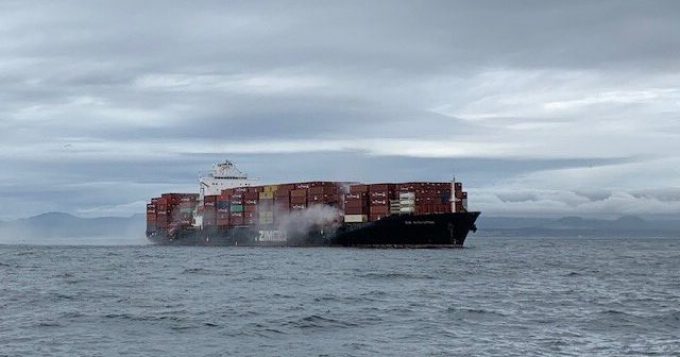
Zim is rerouting its vessels away from Turkish ports following the government in Ankara’s prohibition on port calls by Israel-linked vessels.
The carrier’s local agent warned that “vessels owned, managed or operated by an entity related to Israel”, and any ship carrying Israel-destined military cargo, would no longer be permitted entrance to Turkish gateways.
In a filing to the US Securities and Exchange Commission (SEC), Zim said:
“This regulation has been adopted with immediate effect.
“As a result, we re-routed certain company-operated vessels scheduled to call Turkish ports. If the regulation remains unchanged, it is expected to negatively impact our financial and operational results.”
However, the carrier reaffirmed its full-year guidance, issued just last week.
The Turkish ban marks the second bit of bad news for Zim in less than a week, following it recording a 6% year-on-year drop in Q2 volumes, to 895,000 teu, prompting a 15% revenue dip, to $1.64bn, pushing ebit off a cliff, down 69% year on year, to $149m.
Poor second quarters have been something of a theme for the container shipping sector this year, in no small part due to the uncertainty in the global economy.
But Turkey’s move re-emphasises how much more exposed Zim is than its competitors to geopolitical and regional tensions, with it also one of the entities designated as ‘explicit targets’ by the Yemen-based Houthi militia.
Nor is Turkey alone in making this decision, Malaysia issued a similar ban back in 2023, shortly after Israel began its war on Gaza.
However, unlike Malaysia, which counted its trade with Israel in the millions, Israeli trade with Turkey was reportedly worth some $7bn annually until Ankara cut trade ties last year. It has also banned Turkish vessels calling at Israel’s ports.
For other carriers, there is concern over the detail provided in Turkey’s announcement, with suggestions that it lacks detail.
Reports last week claimed that ‘flag of origin’ alone would not suffice, with Reuters saying carriers would be required to have local shipping agents provide guarantee letters stating that vessel owners, managers, and operators have no ties to Israel.
Furthermore, these guarantee letters would also be required to confirm no explosive, radioactive, or military materials and equipment were aboard and en route to Israel.
Get up to speed on all things supply chain!
For uninterrupted access, sign in or sign up to The Daily News, Premium or The Loadstar Enterprise Plan.

Comment on this article