

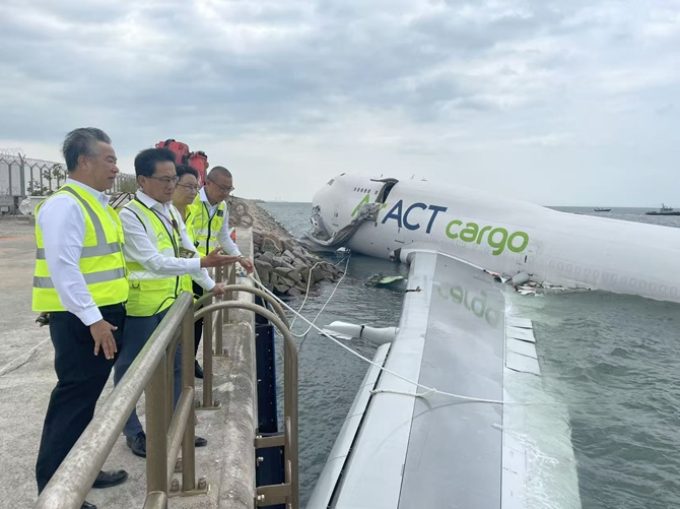
Two Airport Authority staff members were killed early Sunday when an empty Air ACT Airlines Boeing 747-400 freighter, operating on behalf of Emirates SkyCargo, collided with a ground patrol vehicle while landing at Hong Kong International Airport (HKIA).
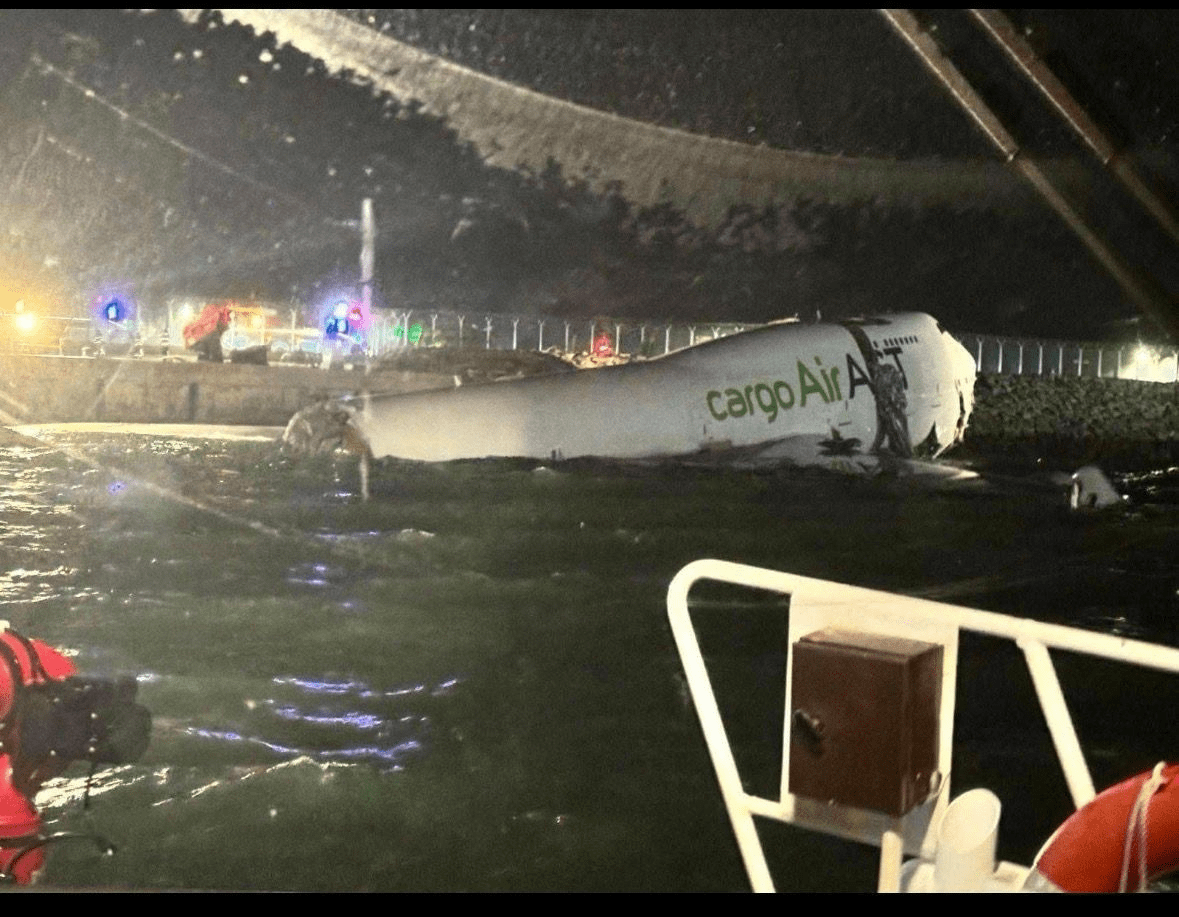
(Source PPRuNe Forums)
The converted 747-400 BDSF had departed from Dubai’s Al Maktoum International Airport and was touching down on the airport’s north runway (07L) at around 4:00 a.m. local time when the accident occurred. One employee was pronounced dead at the scene, while another later died at North Lantau Hospital. All four flight crew members escaped without injury.
The same aircraft was involved in an incident in July, on flight EK-9903 from Dubai to Amsterdam, when the crew reported the failure of the outboard right hand engine (CF6). They had tried to restart the engine without success. The aircraft continued for a safe landing about 20 minutes later, reported Aviation Herald. A year earlier, the same aircraft operating from Hong Kong to Dubai, was climbing out of Hong Kong when the crew stopped the climb due to problems with the flaps. The aircraft dumped fuel and returned to Hong Kong for a safe landing.
Last year another ACT aircraft faced trouble: a 747-400 freighter operating on behalf of Qatar Airways from Paris Charles de Gaulle to Doha in July, was climbing out of Paris when the crew stopped the climb at FL100 reporting problems with the cabin pressure. The aircraft dumped fuel and returned to Charles de Gaulle Airport for a safe landing.
Preliminary reports from Hong Kong indicate that the Boeing 747-481 BDSF veered left during the landing roll and struck the patrol vehicle positioned near the runway’s perimeter zone. The left main gear assembly was torn away, scattering debris toward the shoreline. Portions of the undercarriage came to rest in shallow water near a seawall. Airport fire and rescue crews reached the scene within minutes, extinguished a small fire, and helped the crew evacuate through the upper deck hatch.
The Hong Kong Civil Aviation Department (CAD) has opened an investigation with technical support from the Airport Authority, Boeing, and Turkey’s Directorate General of Civil Aviation. Flight Tracking date from Flightradar 24 suggest the aircraft was travelling at roughly 90 knots about 5,000 feet beyond the 07L threshold when it began to drift left. The final ADS-B transmissions showed the aircraft slowing to 49 knots as it entered shallow water, coming to a stop at 43 knots.
Weather reports cited light rain and variable surface winds at the time, though officials warned it is too early to determine a cause. Both the flight data and cockpit voice recorders have been recovered for analysis, along with air traffic communications and ground movement logs. Early indications suggest the patrol vehicle may have been operating just outside the perimeter fence, but investigators are examining why it came into conflict with an active landing operation.
Industry observers reviewing preliminary tracking data have noted that the aircraft appeared to leave the left edge of runway 07L before impact. Professional pilots contributing to specialist online forums said the sequence was consistent with a possible late touchdown or brief directional control loss on a wet surface, though they stressed that definitive conclusions should await the CAD’s formal report.
The incident closed the north runway for much of Sunday morning while recovery crews and engineers stabilized the aircraft and cleared debris. Several freighters inbound from Shanghai, Tokyo, and Seoul were diverted or held, while outbound departures faced delays of up to four hours. Cargo terminals experienced temporary congestion as handlers reprioritized consignments, with high value and temperature sensitive shipments retimed for afternoon departures after one runway reopened.
By Sunday evening both runways were operational, and the Airport Authority said the backlog would be cleared within 24 hours. Officials described the disruption as manageable and confirmed that both recorders had been sent for decoding, with a preliminary report expected within 30 days.
The collision has shaken Hong Kong’s aircargo community and renewed attention to airside coordination and nightshift patrol procedures. HKIA remains the world’s busiest cargo airport, moving more than 4.8 million tons in 2024, a 5.6% increase year on year. The tragedy, while rare at a facility renowned for efficiency and safety, served as a sobering reminder of the risks faced daily by those who keep global air freight moving through one of the world’s most vital logistics hubs.
(Former ‘Mill brat turned logistics litigator’, Adam Clermont – a seasoned US attorney with over 25 years in litigation – is now based in Hong Kong, specialising in cross-border disputes, logistics-related legal challenges, and human rights advocacy. He was involved in various cyber-security cases in the past. Adam can be contacted on LinkedIn here, or via email at [email protected]. He recently started writing for Premium on other logistics matters; all his coverage can be found here)


Comment on this article