Unions call for DB Cargo CEO's head as restructure plan is slammed
DB Cargo’s post-Schenker future looks gloomy, following a report from strategy consultancy Oliver Wyman lambasting ...

TSLA: JUST AS VW STRUGGLESBA: NEW BIG ORDERBA: THE ORDERBOOK GROWSPLD: PUSHING FOR A DEAL PLD: TIME TO DEALEXPD: ANOTHER ALL-TIME HIGH CHRW: NEW RECORD DSV: AHEAD OF EARNINGS RELEASE JBHT: NEW HIGHS EVERYWHEREPLD: STRONG DELIVERYJBHT: FAIR-VALUE CONSENSUS ESTIMATE AT ALL-TIME HIGH KNIN: AI TECH ADVANTAGEPLD: TRADING UPDATE ON THE WAY KNIN: UPSIDE
TSLA: JUST AS VW STRUGGLESBA: NEW BIG ORDERBA: THE ORDERBOOK GROWSPLD: PUSHING FOR A DEAL PLD: TIME TO DEALEXPD: ANOTHER ALL-TIME HIGH CHRW: NEW RECORD DSV: AHEAD OF EARNINGS RELEASE JBHT: NEW HIGHS EVERYWHEREPLD: STRONG DELIVERYJBHT: FAIR-VALUE CONSENSUS ESTIMATE AT ALL-TIME HIGH KNIN: AI TECH ADVANTAGEPLD: TRADING UPDATE ON THE WAY KNIN: UPSIDE
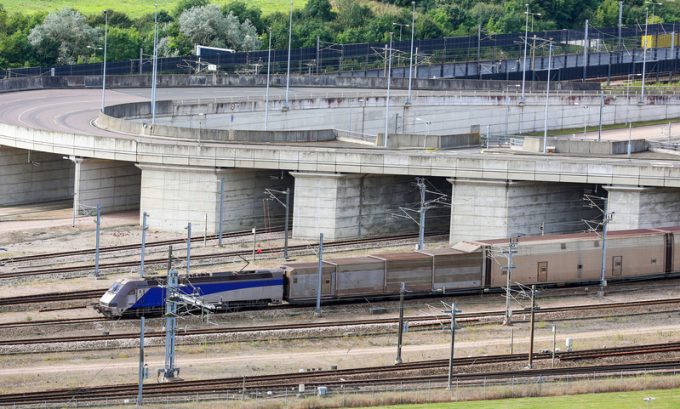
The Channel Tunnel, which opened more than 30 years ago as a major pathway for trade between the UK and continental Europe, remains significantly under-used for rail freight.
In 2023, just over 1,400 freight trains went through the tunnel – an average of only five per working day. Today, that average is down to four.
And the link’s operator, Getlink (formerly Groupe Eurotunnel), estimates this represents just 10% of the annual capacity available – one million tonnes, whereas the potential is estimated at 10m tonnes.
The common perception as to why there are so few freight trains operating through the tunnel is because of technical issues, the UK’s W9 loading gauge being incompatible with the size of international containers.
The solution would be to upgrade the Kent CTR line, linking Folkestone to Wembley via Maidstone, to the W12 intermodal gauge, but the estimated cost, of around £50m, is viewed as exorbitant in a period of austerity in public spending.
However, while that investment would be a significant step forward in the development of railfreight between continental Europe and the UK, the chairman and CEO of Getlink-owned rail firm Europorte, Raphaël Doutrebente, claims it is already technically feasible to use the W9 gauge and use the capacity available on the HS1 high-speed line between the tunnel and London to satisfy potential demand.
He argues that the real reason for the modest number of trains operating through the Tunnel is that the two incumbent operators, DB Cargo UK and GBRf, have set rates at an unreasonably high level, making rail an unviable option for shippers.
Europorte would be ready to enter the market, but did not have the Class 92 interoperable wagons and locomotives required, Mr Doutrebente added.
Somewhat ironically, back in February 2014, Europorte sold 16 Class 92 electric locomotives to GBRf, then a subsidiary of Groupe Eurotunnel.
Europorte is currently undertaking a project on behalf of Siemens to transport 42 trains from a manufacturing plant in Germany to the UK, where they will be installed on London underground services. The trains are taken to a marshalling yard near Calais, then transferred to DB Cargo UK and GBRf which ship them to London.
According to Mr Doutrebente, the monopolistic grip the two incumbents have on the market means operators such as SNCF-owned VIIA, which runs intermodal freight services to and from Calais, are transferring containers and road trailers from trains onto ferries, rather than being able to offer a seamless service via the Channel Tunnel, only a few kilometres away, because it is too expensive.
“This borders on the absurd. It’s the 21st century and yet the logistics systems being used are from another age.”
For uninterrupted access, sign in or sign up to The Daily News, Premium or The Loadstar Enterprise Plan.
Comment on this article